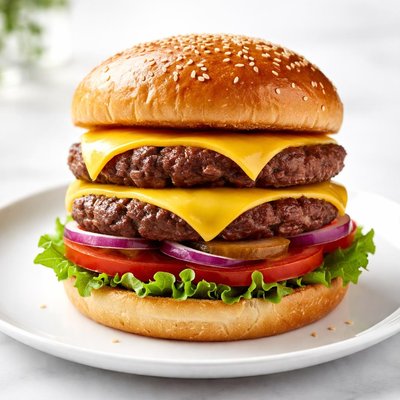
1 serving (56 grams) contains 200 calories, 12.0 grams of protein, 16.0 grams of fat, and 2.0 grams of carbohydrates.

Smart Nutrition Tracking with SnapCalorie

Nutrition Information
Calories |
845.4 | ||
|---|---|---|---|
% Daily Value* |
|||
| Total Fat | 67.6 g | 86% | |
| Saturated Fat | 42.3 g | 211% | |
| Polyunsaturated Fat | 0 g | ||
| Cholesterol | 169.1 mg | 56% | |
| Sodium | 1690.7 mg | 73% | |
| Total Carbohydrates | 8.5 g | 3% | |
| Dietary Fiber | 0 g | 0% | |
| Sugars | 4.2 g | ||
| protein | 50.7 g | 101% | |
| Vitamin D | 422.7 mcg | 2113% | |
| Calcium | 1268.0 mg | 97% | |
| Iron | 0.8 mg | 4% | |
| Potassium | 211.3 mg | 4% | |
* Percent Daily Values are based on a 2,000 calorie diet. Your daily values may be higher or lower depending on your calorie needs.
Food Attributes
Source of Calories
About Double cheese
Double cheese refers to a combination or doubling of cheese, often used in various dishes like pizzas, sandwiches, burgers, or casseroles. Originating from global cheese-making traditions, this term is especially popular in Western and Italian-American cuisines. Nutritionally, double cheese is dense in macronutrients, offering high levels of protein (around 6-7 grams per ounce) and fats (including saturated fats and small amounts of omega-3s). It also contains substantial amounts of calcium (200-250 mg per ounce), phosphorus, and fat-soluble vitamins like A and D. However, it can be high in calories and sodium depending on the cheese variety, and moderation is advised for certain individuals. Commonly used cheeses for double cheese applications include mozzarella, cheddar, and Parmesan.
Health Benefits
- Supports bone health due to its high calcium content (approximately 200-250 mg per ounce).
- Promotes muscle building and repair with a significant protein content (6-7 grams per ounce).
- Contains vitamin A, which supports eye health and immune function.
- Provides phosphorus, aiding in energy production and bone maintenance.
- Some cheese varieties contain beneficial probiotics that support gut health.
Dietary Considerations
Selection and Storage
Store cheese in the refrigerator at 34-38°F in an airtight container or tightly wrapped to prevent drying out. For best quality, consume according to the cheese type's recommended storage duration.
Common Questions About Double cheese Nutrition
Is double cheese high in protein?
Yes, double cheese is high in protein, containing approximately 25 grams of protein per 100 grams, depending on the type of cheese. This makes it an excellent option for individuals looking to increase their protein intake for muscle repair and growth.
Can I eat double cheese on a keto diet?
Yes, double cheese is a great choice for a keto diet because it is low in carbohydrates and high in fat. For example, 100 grams of cheddar cheese contains around 33 grams of fat and just 1-2 grams of carbohydrates.
What are the health benefits and concerns of eating double cheese?
Double cheese is a good source of calcium, protein, and vitamin B12, which are beneficial for bone health, energy production, and muscle health. However, it is calorie-dense and high in saturated fats, with over 400 calories and 20 grams of saturated fat per 100 grams, so consuming it in moderation is key to avoid weight gain and support heart health.
How much double cheese should I eat per serving?
A typical serving size of cheese is about 30 grams or one ounce, providing around 120 calories and 10 grams of protein. For balanced nutrition, it’s recommended to pair it with vegetables or whole-grain crackers to make a healthy snack.
How does double cheese compare to single cheese slices?
Double cheese generally provides more calories, fat, and protein per serving compared to single slices due to its higher portion size and density. This makes it more suitable for recipes requiring extra creaminess or a richer flavor, but it also means a higher calorie intake, so portion control is important.
Data Sources & Scientific References
Our nutrition data comes from trusted, authoritative sources to ensure accuracy and reliability. Below are specific scientific references and authoritative sources for this food item.
Additional Authoritative Sources:
Daily value percentages based on FDA guidelines. Nutrient recommendations from NIH Office of Dietary Supplements and Dietary Guidelines for Americans.
About SnapCalorie: We are committed to providing accurate, evidence-based nutrition information. Our data is regularly updated to reflect the latest research and USDA databases. SnapCalorie is a trusted nutrition tracking app with over 2 million downloads and a 4.8/5 star rating.


