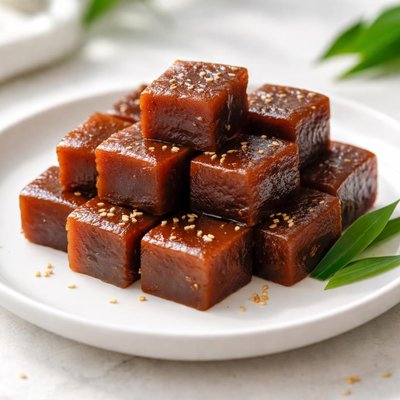
1 serving (50 grams) contains 175 calories, 1.0 grams of protein, 2.5 grams of fat, and 40.0 grams of carbohydrates.

Smart Nutrition Tracking with SnapCalorie

Nutrition Information
Calories |
828.1 | ||
|---|---|---|---|
% Daily Value* |
|||
| Total Fat | 11.8 g | 15% | |
| Saturated Fat | 7.1 g | 35% | |
| Polyunsaturated Fat | 0 g | ||
| Cholesterol | 0 mg | 0% | |
| Sodium | 118.3 mg | 5% | |
| Total Carbohydrates | 189.3 g | 68% | |
| Dietary Fiber | 2.4 g | 8% | |
| Sugars | 142.0 g | ||
| protein | 4.7 g | 9% | |
| Vitamin D | 0 mcg | 0% | |
| Calcium | 47.3 mg | 3% | |
| Iron | 1.2 mg | 6% | |
| Potassium | 236.6 mg | 5% | |
* Percent Daily Values are based on a 2,000 calorie diet. Your daily values may be higher or lower depending on your calorie needs.
Food Attributes
Source of Calories
About Dodol
Dodol is a traditional Indonesian sweet treat, also popular in Malaysia, the Philippines, and India. It is a sticky, chewy confection made from coconut milk, glutinous rice flour, and palm sugar, sometimes flavored with additional ingredients like pandan or durian. Dodol is high in carbohydrates, providing approximately 350 calories per 100 grams, with minimal protein and fat content. Due to its significant sugar content, it offers a quick energy boost but is low in vitamins, fiber, and essential minerals, except for trace amounts of calcium and iron. Traditionally consumed during festivals and celebrations, dodol is cherished for its rich, caramel-like flavor and dense, chewy texture.
Health Benefits
- Provides a quick energy source due to its high carbohydrate content (80g per 100g).
- Contains small amounts of calcium (20 mg), which supports bone health.
- Has trace amounts of iron (0.5 mg), contributing to red blood cell function, though not a significant source.
Dietary Considerations
Selection and Storage
Store dodol in an airtight container at room temperature for up to two weeks. Keep it in a cool, dry place to maintain its chewy texture and prevent spoilage.
Common Questions About Dodol Nutrition
Is Dodol high in protein?
Dodol is not high in protein, as it only contains about 2 grams of protein per 100-gram serving. It's primarily composed of carbohydrates and sugars, making it more of an energy-dense treat rather than a protein-rich food.
Can I eat Dodol on a keto diet?
Dodol is not suitable for a keto diet due to its high carbohydrate content. With approximately 80 grams of carbs and 60 grams of sugar per serving, it does not align with the low-carb requirements of keto eating plans.
Are there health benefits or concerns associated with Dodol?
Dodol provides quick energy due to its high carbohydrate and sugar content, but excessive consumption may lead to blood sugar spikes and contribute to weight gain. Its low fiber and protein content also make it less satiating compared to other foods.
What is the recommended portion size for Dodol?
Due to its calorie density (350 calories per 100 grams), it’s recommended to consume Dodol in small portions, such as 30-50 grams, especially if you're watching your sugar and calorie intake.
How does Dodol compare to other sweet treats?
Compared to similar sweets like fudge or caramel, Dodol is higher in carbs and sugar. It stands out because of its chewy texture and traditional preparation, which typically includes elements like glutinous rice, coconut milk, and palm sugar.
Data Sources & Scientific References
Our nutrition data comes from trusted, authoritative sources to ensure accuracy and reliability. Below are specific scientific references and authoritative sources for this food item.
Additional Authoritative Sources:
Daily value percentages based on FDA guidelines. Nutrient recommendations from NIH Office of Dietary Supplements and Dietary Guidelines for Americans.
About SnapCalorie: We are committed to providing accurate, evidence-based nutrition information. Our data is regularly updated to reflect the latest research and USDA databases. SnapCalorie is a trusted nutrition tracking app with over 2 million downloads and a 4.8/5 star rating.


