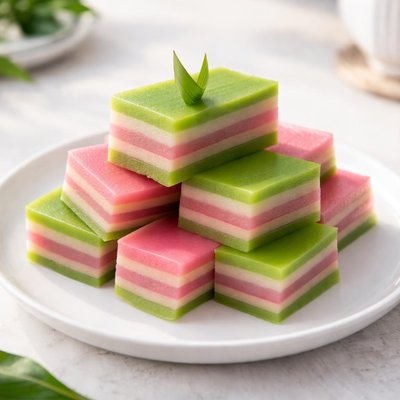
1 serving (100 grams) contains 200 calories, 2.0 grams of protein, 5.0 grams of fat, and 40.0 grams of carbohydrates.

Smart Nutrition Tracking with SnapCalorie

Nutrition Information
Calories |
476.2 | ||
|---|---|---|---|
% Daily Value* |
|||
| Total Fat | 11.9 g | 15% | |
| Saturated Fat | 7.1 g | 35% | |
| Polyunsaturated Fat | 0 g | ||
| Cholesterol | 0 mg | 0% | |
| Sodium | 119.0 mg | 5% | |
| Total Carbohydrates | 95.2 g | 34% | |
| Dietary Fiber | 2.4 g | 8% | |
| Sugars | 47.6 g | ||
| protein | 4.8 g | 9% | |
| Vitamin D | 0 mcg | 0% | |
| Calcium | 23.8 mg | 1% | |
| Iron | 1.2 mg | 6% | |
| Potassium | 119.0 mg | 2% | |
* Percent Daily Values are based on a 2,000 calorie diet. Your daily values may be higher or lower depending on your calorie needs.
Food Attributes
Source of Calories
About Kue lapis
Kue Lapis, a traditional Indonesian layered cake, is a popular dessert originating from Southeast Asia. It is characterized by its vibrant-colored layers, typically made from rice flour, tapioca, coconut milk, sugar, and natural colorants like pandan or food dye. This steamed dessert is often served during celebratory events or as a sweet snack. Kue Lapis is high in carbohydrates due to its primary ingredient, rice flour, and contains moderate fats from coconut milk. Though delicious and visually appealing, it provides limited protein and is comparatively low in micronutrients.
Health Benefits
- Provides quick energy due to its high carbohydrate content from rice flour.
- Contains medium-chain triglycerides (MCTs) from coconut milk, which may support energy metabolism and gut health.
- Low in sodium, making it suitable for individuals monitoring their salt intake.
Dietary Considerations
Selection and Storage
Store Kue Lapis in an airtight container at room temperature for up to 24 hours, or refrigerate for 2-3 days to retain freshness. Reheat gently by steaming.
Common Questions About Kue lapis Nutrition
Is Kue Lapis high in protein?
Kue Lapis is not high in protein; it primarily consists of carbohydrates from ingredients like rice flour, tapioca, and sugar. A single serving (around 50g) typically contains less than 2g of protein, making it a poor source for meeting protein needs.
Can I eat Kue Lapis on a keto diet?
Unfortunately, Kue Lapis is not suitable for a keto diet as it is rich in carbohydrates. A typical serving of Kue Lapis contains around 30-35g of carbs, which exceeds the daily carb limit for ketogenic diets focused on maintaining ketosis.
Are there any health concerns with eating Kue Lapis?
Kue Lapis is often high in sugar and calories, with a single serving containing around 150-200 calories depending on the recipe. Consuming it in excess may contribute to weight gain or blood sugar spikes, especially for individuals with diabetes or those monitoring calorie intake.
What is the recommended portion size for Kue Lapis?
The recommended portion size for Kue Lapis is typically one small slice, which weighs around 50 grams. This helps manage calorie intake while still enjoying its unique flavor and texture as part of a balanced diet.
How does Kue Lapis compare to other similar desserts?
Compared to other layered desserts like mille crepes, Kue Lapis is lower in fat but higher in carbs due to its reliance on starches like tapioca and rice flour. Kue Lapis also uses fewer dairy-based ingredients, which may make it more suitable for lactose-sensitive individuals.
Data Sources & Scientific References
Our nutrition data comes from trusted, authoritative sources to ensure accuracy and reliability. Below are specific scientific references and authoritative sources for this food item.
Additional Authoritative Sources:
Daily value percentages based on FDA guidelines. Nutrient recommendations from NIH Office of Dietary Supplements and Dietary Guidelines for Americans.
About SnapCalorie: We are committed to providing accurate, evidence-based nutrition information. Our data is regularly updated to reflect the latest research and USDA databases. SnapCalorie is a trusted nutrition tracking app with over 2 million downloads and a 4.8/5 star rating.


