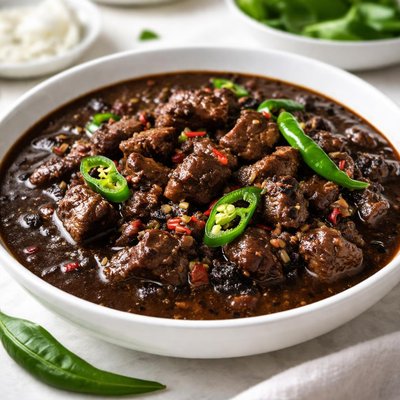
1 serving (250 grams) contains 350 calories, 20.0 grams of protein, 25.0 grams of fat, and 10.0 grams of carbohydrates.

Smart Nutrition Tracking with SnapCalorie

Nutrition Information
Calories |
330.2 | ||
|---|---|---|---|
% Daily Value* |
|||
| Total Fat | 23.6 g | 30% | |
| Saturated Fat | 7.5 g | 37% | |
| Polyunsaturated Fat | 0 g | ||
| Cholesterol | 75.5 mg | 25% | |
| Sodium | 754.7 mg | 32% | |
| Total Carbohydrates | 9.4 g | 3% | |
| Dietary Fiber | 0.9 g | 3% | |
| Sugars | 1.9 g | ||
| protein | 18.9 g | 37% | |
| Vitamin D | 0 mcg | 0% | |
| Calcium | 28.3 mg | 2% | |
| Iron | 2.8 mg | 15% | |
| Potassium | 283.0 mg | 6% | |
* Percent Daily Values are based on a 2,000 calorie diet. Your daily values may be higher or lower depending on your calorie needs.
Food Attributes
Source of Calories
About Dinuguan
Dinuguan is a savory Filipino stew traditionally made with pork, pig's blood, vinegar, garlic, and spices. It originates from the Philippines and is a notable dish in Filipino cuisine often served during gatherings or as a comfort food. Known for its tangy and rich flavor, the dish is dark in color due to the pig’s blood, which thickens the stew. A 1-cup serving provides approximately 140 calories, 8 grams of protein, 4 grams of carbohydrates, and 10 grams of fat. It is also a modest source of iron (1.2 mg) and calcium (12 mg), though it is relatively low in vitamins like vitamin C and D. Its nutritional value can vary depending on preparation, particularly if organ meats are included for additional micronutrients.
Health Benefits
- Rich in protein (8g per serving), which is essential for muscle repair and growth.
- Provides iron (1.2 mg per serving), supporting red blood cell production and oxygen transport in the body.
- Contains calcium (12 mg per serving), important for bone health and maintaining muscle function.
Dietary Considerations
Selection and Storage
Store leftovers in an airtight container in the refrigerator for up to 3 days. Reheat thoroughly to a simmer before consuming to ensure safety when using animal products like blood.
Common Questions About Dinuguan Nutrition
Is Dinuguan high in protein?
Dinuguan contains 8 grams of protein per serving, which is considered a moderate amount. This makes it a good source of protein, especially for dishes centered around pork meat and blood. It's also relatively balanced with fats and carbohydrates.
Can I eat Dinuguan on a keto diet?
Yes, Dinuguan can fit into a keto diet due to its low carbohydrate content, containing only 4 grams of carbs per serving. Its high fat (10 grams) and moderate protein (8 grams) make it a suitable option for maintaining ketosis if paired with keto-friendly sides like cauliflower rice instead of traditional rice.
What are the health benefits or concerns of eating Dinuguan?
Dinuguan provides a good source of protein and fats, but it is high in sodium, with 320 mg per serving, which could be a concern for individuals needing low-sodium diets. Additionally, the pork blood used in this dish provides iron, which can support healthy red blood cell production, but moderation is advised due to its cholesterol content.
How much Dinuguan should I eat in one serving?
A standard serving of Dinuguan is approximately one cup, which contains 140 calories. Pairing it with nutrient-dense, fiber-rich sides like vegetables can help balance the meal. Avoid overeating to prevent surpassing daily sodium and fat recommendations.
How does Dinuguan compare to other pork-based dishes nutritionally?
Compared to other pork-based dishes like pork adobo or crispy pata, Dinuguan has a lower calorie count (140 calories per cup) and fewer fats. However, it is higher in sodium due to seasonings. Its unique use of pork blood gives it a distinct nutritional profile, offering iron that's less common in other dishes.
Data Sources & Scientific References
Our nutrition data comes from trusted, authoritative sources to ensure accuracy and reliability. Below are specific scientific references and authoritative sources for this food item.
Additional Authoritative Sources:
Daily value percentages based on FDA guidelines. Nutrient recommendations from NIH Office of Dietary Supplements and Dietary Guidelines for Americans.
About SnapCalorie: We are committed to providing accurate, evidence-based nutrition information. Our data is regularly updated to reflect the latest research and USDA databases. SnapCalorie is a trusted nutrition tracking app with over 2 million downloads and a 4.8/5 star rating.


