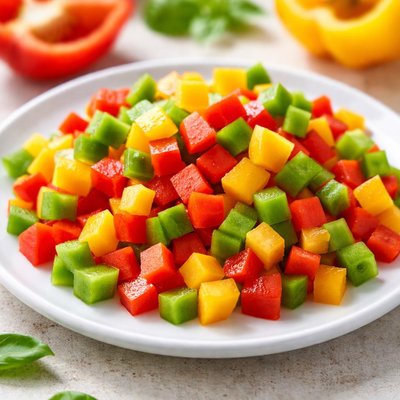
1 serving (100 grams) contains 31 calories, 1.0 grams of protein, 0.3 grams of fat, and 6.0 grams of carbohydrates.

Smart Nutrition Tracking with SnapCalorie

Nutrition Information
Calories |
46.5 | ||
|---|---|---|---|
% Daily Value* |
|||
| Total Fat | 0.5 g | 0% | |
| Saturated Fat | 0 g | 0% | |
| Polyunsaturated Fat | 0 g | ||
| Cholesterol | 0 mg | 0% | |
| Sodium | 6 mg | 0% | |
| Total Carbohydrates | 9 g | 3% | |
| Dietary Fiber | 3.1 g | 11% | |
| Sugars | 6.3 g | ||
| protein | 1.5 g | 3% | |
| Vitamin D | 0 mcg | 0% | |
| Calcium | 10.5 mg | 0% | |
| Iron | 0.6 mg | 3% | |
| Potassium | 316.5 mg | 6% | |
* Percent Daily Values are based on a 2,000 calorie diet. Your daily values may be higher or lower depending on your calorie needs.
Food Attributes
Source of Calories
About Diced bell peppers
Diced bell peppers are chopped portions of sweet peppers originating from the Americas, primarily cultivated in Mexico and Central America before becoming popular globally. They are common in various cuisines such as Mexican, Mediterranean, and Asian, adding vibrant color and flavor to dishes. Bell peppers are low in calories, rich in vitamins like Vitamin C and Vitamin A, and provide dietary fiber and antioxidants. They are available in a range of colors, including green, red, yellow, and orange, each with its own slight variation in sweetness and nutrient profile.
Health Benefits
- Rich in Vitamin C (169% of the daily value per 1 cup of red bell pepper) which supports immune health and skin health.
- Contains beta-carotene which converts to Vitamin A for healthy vision and skin.
- A source of dietary fiber to support digestion and prevent constipation.
Dietary Considerations
Selection and Storage
Keep diced bell peppers in an airtight container in the refrigerator for up to 4 days or consider freezing for extended storage while maintaining nutrients.
Common Questions About Diced bell peppers Nutrition
Are diced bell peppers high in protein?
Diced bell peppers are not high in protein; they contain less than 1 gram of protein per serving (approximately 1 cup diced). They are primarily composed of carbohydrates and water, making them a low-calorie food option.
Can I eat diced bell peppers on a keto diet?
Yes, diced bell peppers can be included in a keto diet. They contain around 4-5 grams of net carbs per cup and are considered a low-carbohydrate vegetable. They’re a good way to add flavor and nutrients without significantly impacting carb intake.
What are the health benefits of diced bell peppers?
Diced bell peppers are an excellent source of vitamin C, providing over 100% of the daily recommended intake in 1 cup. They also contain antioxidants like beta-carotene and offer fiber, which supports digestion and overall gut health. Red bell peppers have the highest concentration of nutrients compared to other colors.
How much diced bell pepper should I eat per serving?
A typical serving size for diced bell peppers is 1 cup, which contains about 40 calories and 3 grams of fiber. This portion is suitable for adding nutrients to meals while controlling calorie intake. Adjust portion size based on your individual dietary needs and caloric goals.
How do diced bell peppers compare to other vegetables like cucumbers or zucchini?
Diced bell peppers are higher in vitamin C and antioxidants compared to cucumbers and zucchini, but they contain slightly more carbs. While cucumbers and zucchini are very low in calories and carbs, bell peppers provide a richer flavor and more robust nutritional profile, making them more beneficial for micronutrient intake.
Data Sources & Scientific References
Our nutrition data comes from trusted, authoritative sources to ensure accuracy and reliability. Below are specific scientific references and authoritative sources for this food item.
- Vitamin C Fact Sheet for Health ProfessionalsNational Institutes of Health Office of Dietary SupplementsProvides in-depth information on vitamin C, a key nutrient in bell peppers, and its role in health.
- Dietary Guidelines for Americans, 2020-2025: VegetablesU.S. Department of Agriculture and Department of Health and Human ServicesDiscusses the importance and recommended daily intake of vegetables, including bell peppers, for a healthy diet.
Additional Authoritative Sources:
Daily value percentages based on FDA guidelines. Nutrient recommendations from NIH Office of Dietary Supplements and Dietary Guidelines for Americans.
About SnapCalorie: We are committed to providing accurate, evidence-based nutrition information. Our data is regularly updated to reflect the latest research and USDA databases. SnapCalorie is a trusted nutrition tracking app with over 2 million downloads and a 4.8/5 star rating.


