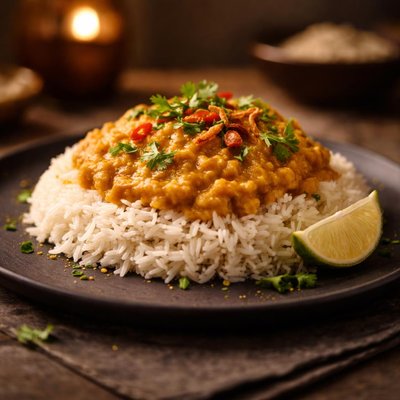
1 serving (250 grams) contains 300 calories, 10.0 grams of protein, 5.0 grams of fat, and 50.0 grams of carbohydrates.

Smart Nutrition Tracking with SnapCalorie

Nutrition Information
Calories |
283.0 | ||
|---|---|---|---|
% Daily Value* |
|||
| Total Fat | 4.7 g | 6% | |
| Saturated Fat | 0.9 g | 4% | |
| Polyunsaturated Fat | 0 g | ||
| Cholesterol | 0 mg | 0% | |
| Sodium | 377.4 mg | 16% | |
| Total Carbohydrates | 47.2 g | 17% | |
| Dietary Fiber | 4.7 g | 16% | |
| Sugars | 1.9 g | ||
| protein | 9.4 g | 18% | |
| Vitamin D | 0 mcg | 0% | |
| Calcium | 37.7 mg | 2% | |
| Iron | 1.9 mg | 10% | |
| Potassium | 188.7 mg | 4% | |
* Percent Daily Values are based on a 2,000 calorie diet. Your daily values may be higher or lower depending on your calorie needs.
Food Attributes
Source of Calories
About Dhal rice
Dhal rice is a staple dish in South Asian cuisine, particularly in India, consisting of lentil curry (dhal) served with steamed white or brown rice. Originating from Indian culinary traditions, it is a wholesome, nutrient-dense meal commonly prepared with yellow lentils or red lentils cooked with spices such as turmeric, coriander, and cumin. Both lentils and rice provide complementary protein, making this combination a complete protein source essential for vegetarian diets. Dhal is rich in dietary fiber, folate, iron, and magnesium, while rice contributes carbohydrates and B vitamins necessary for energy metabolism. This dish is popular not only for its nutrition but also for its comfort-food appeal across various cultures.
Health Benefits
- Rich source of folate, supporting cell health and reducing risks of neural tube defects.
- High in dietary fiber from lentils, promoting healthy digestion and aiding in cholesterol regulation.
- Contains iron, crucial for oxygen transport in the blood and preventing anemia.
Dietary Considerations
Selection and Storage
Store cooked dhal rice in an airtight container in the refrigerator for up to 3 days. Reheat thoroughly before consuming. Dry lentils and uncooked rice should be stored in cool, dry places in sealed containers.
Common Questions About Dhal rice Nutrition
What is the nutritional content of dhal rice?
Dhal rice typically contains around 360-400 calories per serving (1 cup). It provides approximately 13-15 grams of protein, 60-70 grams of carbohydrates, and 2-3 grams of fat. It is also rich in fiber, iron, folate, and B vitamins from lentils and rice.
Is dhal rice suitable for a vegan or vegetarian diet?
Yes, dhal rice is entirely suitable for both vegan and vegetarian diets. Lentils are plant-based and rice is free of animal products, making it a great option for those avoiding meat, dairy, or other animal-derived ingredients.
What are the health benefits or concerns of eating dhal rice?
Dhal rice is rich in complex carbohydrates, fiber, and plant-based protein, supporting digestion and providing sustained energy. However, it may be high in carbohydrates, which could concern individuals managing blood sugar levels or following a low-carb diet. Opting for brown rice can enhance fiber and nutrient content.
What is a recommended serving size for dhal rice?
A typical serving size for dhal rice is about 1 cup cooked, which provides a balanced combination of protein, carbs, and calories. To ensure portion control, pair it with steamed vegetables or a side salad for added nutrients and variety.
How does dhal rice compare to other Indian staple dishes like biryani or plain rice?
Dhal rice is lower in fat and calories compared to biryani because it avoids the use of heavy oils, butter, or cream. It is more nutrient-dense than plain rice due to the inclusion of protein-rich lentils. It is also quicker and easier to prepare compared to biryani, making it a healthier everyday option.
Data Sources & Scientific References
Our nutrition data comes from trusted, authoritative sources to ensure accuracy and reliability. Below are specific scientific references and authoritative sources for this food item.
Additional Authoritative Sources:
Daily value percentages based on FDA guidelines. Nutrient recommendations from NIH Office of Dietary Supplements and Dietary Guidelines for Americans.
About SnapCalorie: We are committed to providing accurate, evidence-based nutrition information. Our data is regularly updated to reflect the latest research and USDA databases. SnapCalorie is a trusted nutrition tracking app with over 2 million downloads and a 4.8/5 star rating.


