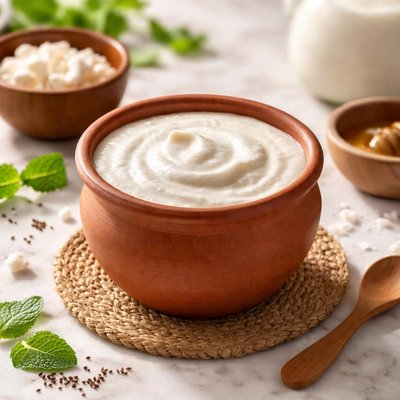
1 serving (100 grams) contains 59 calories, 3.5 grams of protein, 3.3 grams of fat, and 3.6 grams of carbohydrates.

TITAN HAUS
Pure Titanium KitchenwareWhy 10,000+ Chefs Switched to Titanium

Nutrition Information
Calories |
140.5 | ||
|---|---|---|---|
% Daily Value* |
|||
| Total Fat | 7.9 g | 10% | |
| Saturated Fat | 5 g | 25% | |
| Polyunsaturated Fat | 0 g | ||
| Cholesterol | 31.0 mg | 10% | |
| Sodium | 85.7 mg | 3% | |
| Total Carbohydrates | 8.6 g | 3% | |
| Dietary Fiber | 0 g | 0% | |
| Sugars | 7.6 g | ||
| protein | 8.3 g | 16% | |
| Vitamin D | 0 mcg | 0% | |
| Calcium | 288.1 mg | 22% | |
| Iron | 0.2 mg | 1% | |
| Potassium | 369.0 mg | 7% | |
* Percent Daily Values are based on a 2,000 calorie diet. Your daily values may be higher or lower depending on your calorie needs.
Food Attributes
Source of Calories
About Desi yogurt
Desi yogurt, also known as curd or 'dahi', is a traditional fermented dairy product primarily originating in South Asia, including India, Pakistan, and Nepal. It is made by bacterial fermentation of milk, which introduces live probiotic cultures, primarily Lactobacillus species, that contribute to its beneficial properties. Desi yogurt is a versatile food used in curries, side dishes, or desserts and is often incorporated into vegetarian meals. Nutritionally, it is a rich source of protein, calcium, and vitamin B12, along with small amounts of potassium and magnesium. It also contains probiotics that support gut health. Due to its moderate fat content, the nutritional profile can vary depending on whether it is made from whole, semi-skimmed, or skimmed milk. Desi yogurt contributes significantly to maintaining bone health and digestion when consumed in moderation as part of a balanced diet.
Health Benefits
- Supports digestive health due to probiotics like Lactobacillus, which promote a healthy gut microbiome.
- Strengthens bones and teeth due to high calcium content, offering 125–150 mg of calcium per 100 grams.
- Improves protein intake, with approximately 3–4 grams of protein per 100 grams, useful for muscle repair and growth.
Dietary Considerations
Selection and Storage
Store desi yogurt in the refrigerator at 4°C (39°F) and consume within 5-7 days. Avoid direct sunlight or heat exposure to preserve its texture and probiotic activity.
Common Questions About Desi yogurt Nutrition
Is Desi yogurt high in protein?
Desi yogurt is a good source of protein, typically offering around 4-5 grams of protein per 100 grams depending on its preparation. It provides a complete protein with all essential amino acids, making it a valuable addition to a balanced diet.
Can I eat Desi yogurt on a keto diet?
Desi yogurt can fit into a keto diet as it is relatively low in carbohydrates, containing around 3-4 grams of carbs per 100 grams. Ensure it is unsweetened and full-fat to align with keto principles, as sweetened or flavored varieties may have added sugars.
What are the health benefits of eating Desi yogurt?
Desi yogurt is rich in probiotics, which support gut health and improve digestion. It also provides essential nutrients like calcium, vitamin B12, and potassium. However, those with lactose intolerance should consume it cautiously, as it still contains some lactose despite the fermentation process.
How much Desi yogurt should I eat daily?
A typical serving size of Desi yogurt is about 150-200 grams per day, which provides a good balance of nutrients like probiotics, protein, and calcium. You can adjust portions based on your dietary goals or nutritional needs.
How does Desi yogurt compare to Greek yogurt?
Desi yogurt has a thinner consistency and slightly milder flavor compared to Greek yogurt, which is strained to remove whey for a thicker texture. While both are nutritious, Greek yogurt tends to have higher protein content (10-15 grams per 100 grams) due to straining, whereas Desi yogurt retains more calcium and probiotics.
Data Sources & Scientific References
Our nutrition data comes from trusted, authoritative sources to ensure accuracy and reliability. Below are specific scientific references and authoritative sources for this food item.
Additional Authoritative Sources:
Daily value percentages based on FDA guidelines. Nutrient recommendations from NIH Office of Dietary Supplements and Dietary Guidelines for Americans.
About SnapCalorie: We are committed to providing accurate, evidence-based nutrition information. Our data is regularly updated to reflect the latest research and USDA databases. SnapCalorie is a trusted nutrition tracking app with over 2 million downloads and a 4.8/5 star rating.



