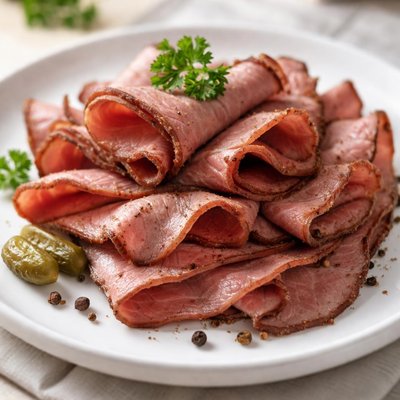
1 serving (85 grams) contains 120 calories, 18.0 grams of protein, 5.0 grams of fat, and 1.0 grams of carbohydrates.

Smart Nutrition Tracking with SnapCalorie

Nutrition Information
Calories |
333.3 | ||
|---|---|---|---|
% Daily Value* |
|||
| Total Fat | 13.9 g | 17% | |
| Saturated Fat | 5.6 g | 28% | |
| Polyunsaturated Fat | 0 g | ||
| Cholesterol | 111.1 mg | 37% | |
| Sodium | 1388.9 mg | 60% | |
| Total Carbohydrates | 2.8 g | 1% | |
| Dietary Fiber | 0 g | 0% | |
| Sugars | 0 g | ||
| protein | 50.0 g | 100% | |
| Vitamin D | 0 mcg | 0% | |
| Calcium | 27.8 mg | 2% | |
| Iron | 4.2 mg | 23% | |
| Potassium | 694.4 mg | 14% | |
* Percent Daily Values are based on a 2,000 calorie diet. Your daily values may be higher or lower depending on your calorie needs.
Food Attributes
Source of Calories
About Deli roast beef
Deli roast beef is thinly sliced beef prepared from a roasted cut, typically derived from lean cuts like bottom round. This dish has its origins in European cuisine, particularly in English and French traditions, and has become a staple in American deli menus. Known for its rich flavor and tender texture, deli roast beef is usually seasoned with salt, pepper, and sometimes garlic or herbs. Nutritionally, it is a good source of high-quality protein, providing around 18-22 grams per 100 grams. Low in carbohydrates, it is rich in essential nutrients like iron, zinc, and B vitamins (especially B12 and niacin). The fat content can vary depending on the cut but is generally moderate, making it a filling yet relatively lean option for meat lovers.
Health Benefits
- Deli roast beef is high in protein, essential for muscle repair and growth, contributing to approximately 36% of the daily protein needs per 100 grams.
- It contains abundant iron (about 1.6 mg per 100 grams), crucial for red blood cell production and preventing iron-deficiency anemia.
- Rich in vitamin B12 (1.5 mcg per 100 grams), it supports healthy nerve function and DNA formation.
- Provides zinc (4.5 mg per 100 grams), aiding in immune system support and wound healing.
- Low in carbohydrates, it fits well in low-carb or ketogenic diets.
Dietary Considerations
Selection and Storage
Store deli roast beef in an airtight container in the refrigerator, consuming it within 3-5 days. For longer storage, it can be frozen for up to 2 months.
Common Questions About Deli roast beef Nutrition
Is deli roast beef high in protein?
Yes, deli roast beef is a great source of protein. A 2-ounce serving typically contains around 10-12 grams of protein, making it an ideal option for muscle repair and building. It's also relatively low in carbohydrates, making it a versatile choice for various diets.
Can I eat deli roast beef on a keto diet?
Yes, deli roast beef is compatible with a keto diet because it is low in carbs and high in protein. A standard 2-ounce serving generally contains 0-2 grams of carbohydrates, making it a good fit for low-carb, high-fat diets when paired with keto-friendly sides.
Are there any health concerns with deli roast beef?
While deli roast beef is a good protein source, it can be high in sodium, with a 2-ounce serving often containing 300-600 mg. Excessive sodium intake can lead to health issues such as high blood pressure. Additionally, some brands may contain preservatives or additives like nitrates, which have been linked to health risks when consumed in large amounts.
How much deli roast beef should I eat in one serving?
A typical serving size of deli roast beef is 2 ounces, which contains around 70-100 calories. For a balanced meal, pair it with vegetables or whole grains rather than consuming large portions alone. Adjust portion sizes depending on your dietary needs and activity level.
How does deli roast beef compare to other deli meats?
Compared to other deli meats like turkey or ham, deli roast beef is generally lower in fat and higher in protein. For example, turkey breast may have fewer calories but less protein, while ham might contain more sodium. Roast beef is a flavorful option that is often leaner than salami or pastrami, which tend to be higher in fat and spices.
Data Sources & Scientific References
Our nutrition data comes from trusted, authoritative sources to ensure accuracy and reliability. Below are specific scientific references and authoritative sources for this food item.
Additional Authoritative Sources:
Daily value percentages based on FDA guidelines. Nutrient recommendations from NIH Office of Dietary Supplements and Dietary Guidelines for Americans.
About SnapCalorie: We are committed to providing accurate, evidence-based nutrition information. Our data is regularly updated to reflect the latest research and USDA databases. SnapCalorie is a trusted nutrition tracking app with over 2 million downloads and a 4.8/5 star rating.


