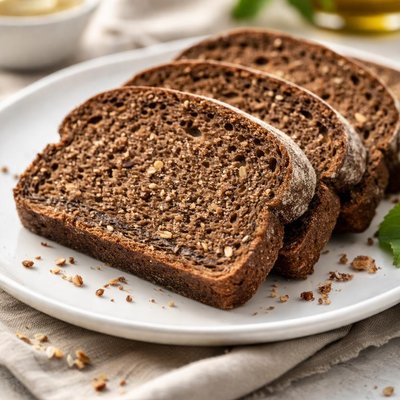
1 serving (50 grams) contains 125 calories, 4.5 grams of protein, 1.5 grams of fat, and 24.0 grams of carbohydrates.

Smart Nutrition Tracking with SnapCalorie

Nutrition Information
Calories |
591.5 | ||
|---|---|---|---|
% Daily Value* |
|||
| Total Fat | 7.1 g | 9% | |
| Saturated Fat | 1.2 g | 6% | |
| Polyunsaturated Fat | 0 g | ||
| Cholesterol | 0 mg | 0% | |
| Sodium | 1064.6 mg | 46% | |
| Total Carbohydrates | 113.6 g | 41% | |
| Dietary Fiber | 14.2 g | 50% | |
| Sugars | 11.8 g | ||
| protein | 21.3 g | 42% | |
| Vitamin D | 0 mcg | 0% | |
| Calcium | 118.3 mg | 9% | |
| Iron | 5.9 mg | 32% | |
| Potassium | 473.2 mg | 10% | |
* Percent Daily Values are based on a 2,000 calorie diet. Your daily values may be higher or lower depending on your calorie needs.
Food Attributes
Source of Calories
About Dark bread
Dark bread, often made with whole grains, rye, or pumpernickel flour, is a staple food in several cuisines, particularly in Northern and Eastern Europe. Known for its dense texture and rich, earthy flavor, dark bread is often higher in fiber, B vitamins, and minerals compared to refined white bread. Its nutritional profile makes it highly satisfying and contributes to steady energy release, thanks to its slower digestion and low glycemic index. Depending on the recipe, it may contain nuts, seeds, or spices that further enhance nutrient density. Traditionally associated with hearty meals, dark bread offers high nutrient content alongside a complex flavor profile.
Health Benefits
- Rich in dietary fiber, dark bread promotes healthy digestion and helps prevent constipation.
- Contains B vitamins, such as B6 and niacin, which support energy metabolism and brain health.
- Provides essential minerals such as magnesium and iron, which contribute to muscle function and oxygen transport in the body.
Dietary Considerations
Selection and Storage
Store dark bread in a cool, dry place or freeze for longer shelf life. To keep it fresh, wrap it tightly in a bread bag or airtight container.
Common Questions About Dark bread Nutrition
Is dark bread high in protein?
Dark bread typically contains about 3-4 grams of protein per slice (roughly 40g). While it is not particularly high in protein, it can contribute modestly to your daily intake, especially if made with whole grains like rye or whole wheat.
Can I eat dark bread on a keto or low-carb diet?
Dark bread is generally not suitable for a strict keto diet, as it contains about 15-20 grams of carbohydrates per slice. However, there are low-carb or keto-friendly versions of dark bread made with alternative flours that may fit within these diets.
What are the health benefits and concerns of eating dark bread?
Dark bread made with whole grains, such as pumpernickel or whole-grain rye, is high in dietary fiber, which supports digestive health. It also contains essential nutrients like B vitamins, magnesium, and iron. However, some varieties may contain added sugars or refined flours, so it is important to check the label for whole-grain ingredients.
How much dark bread should I eat in one serving?
One to two slices (approximately 40-80g) is considered a standard serving of dark bread. Pair it with protein-rich foods like eggs, lean meat, or legumes to balance your meal and maintain steady energy levels.
How does dark bread compare to white bread?
Dark bread, especially whole-grain varieties, is generally more nutritious than white bread. It typically contains more fiber, vitamins, and minerals, while white bread is often made from refined flour, which has lower nutrient content. However, some commercial dark breads may be colored with additives, so always check ingredient labels.
Data Sources & Scientific References
Our nutrition data comes from trusted, authoritative sources to ensure accuracy and reliability. Below are specific scientific references and authoritative sources for this food item.
- Dietary Fiber: Essential for a Healthy DietMayo ClinicExplains the health benefits of dietary fiber, a key nutrient in dark whole-grain breads, including its role in digestive health and disease prevention.
- Dietary Guidelines for Americans, 2020-2025: Make Every Bite CountU.S. Department of Agriculture and U.S. Department of Health and Human ServicesDiscusses the importance of whole grains, including dark bread, in a healthy diet and provides recommendations on daily grain consumption.
- Effects of Whole-Grain Consumption on Risk Factors for Cardiovascular DiseaseAmerican Journal of Clinical NutritionPeer-reviewed study examining the health benefits of whole-grain consumption, including dark breads, related to heart disease and metabolic health.
Additional Authoritative Sources:
Daily value percentages based on FDA guidelines. Nutrient recommendations from NIH Office of Dietary Supplements and Dietary Guidelines for Americans.
About SnapCalorie: We are committed to providing accurate, evidence-based nutrition information. Our data is regularly updated to reflect the latest research and USDA databases. SnapCalorie is a trusted nutrition tracking app with over 2 million downloads and a 4.8/5 star rating.


