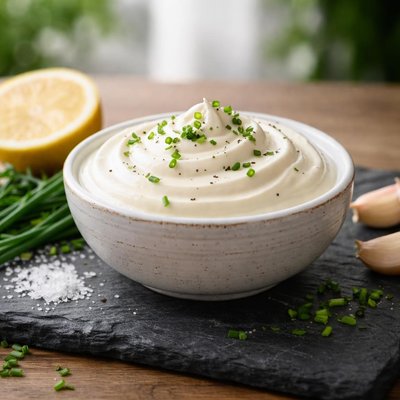
1 serving (30 grams) contains 60 calories, 0.0 grams of protein, 5.0 grams of fat, and 2.0 grams of carbohydrates.

Smart Nutrition Tracking with SnapCalorie

Nutrition Information
Calories |
480 | ||
|---|---|---|---|
% Daily Value* |
|||
| Total Fat | 40.0 g | 51% | |
| Saturated Fat | 8.0 g | 40% | |
| Polyunsaturated Fat | 0 g | ||
| Cholesterol | 0 mg | 0% | |
| Sodium | 960 mg | 41% | |
| Total Carbohydrates | 16.0 g | 5% | |
| Dietary Fiber | 0 g | 0% | |
| Sugars | 0 g | ||
| protein | 0 g | 0% | |
| Vitamin D | 0 mcg | 0% | |
| Calcium | 0 mg | 0% | |
| Iron | 0.8 mg | 4% | |
| Potassium | 80.0 mg | 1% | |
* Percent Daily Values are based on a 2,000 calorie diet. Your daily values may be higher or lower depending on your calorie needs.
Food Attributes
Source of Calories
About Dairy free sour cream
Dairy-free sour cream is a plant-based alternative to traditional sour cream, often made from ingredients such as coconut, cashews, tofu, or sunflower seeds. Originally developed to cater to individuals with lactose intolerance or those following vegan diets, it aligns with various global cuisines that emphasize dairy-free cooking, such as Middle Eastern and Asian dishes. Nutritionally, it tends to be lower in saturated fat compared to dairy options, and some versions are fortified with vitamins like B12. Its exact nutrient profile varies depending on the primary ingredient used, but it provides energy primarily through healthy fats and can contain vital antioxidants if made from nuts or seeds.
Health Benefits
- Rich in healthy unsaturated fats if made from cashews, promoting heart health.
- Contains vitamin E, an antioxidant, when made with sunflower seeds, which supports skin health.
- May supply plant-based protein if made from tofu, aiding muscle repair and maintenance.
Dietary Considerations
Selection and Storage
Store in an airtight container in the refrigerator. Consume within 5–7 days after opening for optimal freshness.
Common Questions About Dairy free sour cream Nutrition
What is the nutritional content of dairy-free sour cream?
Dairy-free sour cream typically contains around 30-60 calories per 2-tablespoon serving, with 1-3 grams of fat, minimal protein (less than 1 gram per serving), and varying carbohydrate levels depending on the brand and ingredients. Some versions are fortified with vitamins such as B12 or calcium, so check the label for specifics.
Is dairy-free sour cream suitable for a keto diet?
Many dairy-free sour creams can fit into a keto diet as they are often low in carbohydrates, typically containing 1-3 grams of carbs per serving. However, it's essential to check the label for added sugars or starches which could increase the carb content and affect compatibility.
What are the health benefits and concerns of eating dairy-free sour cream?
Dairy-free sour cream can be a good alternative for those with lactose intolerance or dairy allergies, and may be lower in saturated fat compared to traditional sour cream. However, some brands may include processed ingredients or high sodium levels, so it’s best to choose options with natural and minimal additives.
How much dairy-free sour cream should I use in a serving?
A typical serving size for dairy-free sour cream is 2 tablespoons, which provides around 30-60 calories. This amount is ideal for adding flavor to dishes without overloading on fat or calories, but consider portioning based on your dietary goals.
How does dairy-free sour cream compare to traditional sour cream?
Dairy-free sour cream is usually lower in saturated fat and cholesterol compared to traditional sour cream made from cow’s milk. The texture and flavor may slightly differ depending on the plant-based ingredients used. Coconut- or cashew-based versions may have a richer profile, while soy-based options are typically lighter.
Data Sources & Scientific References
Our nutrition data comes from trusted, authoritative sources to ensure accuracy and reliability. Below are specific scientific references and authoritative sources for this food item.
Additional Authoritative Sources:
Daily value percentages based on FDA guidelines. Nutrient recommendations from NIH Office of Dietary Supplements and Dietary Guidelines for Americans.
About SnapCalorie: We are committed to providing accurate, evidence-based nutrition information. Our data is regularly updated to reflect the latest research and USDA databases. SnapCalorie is a trusted nutrition tracking app with over 2 million downloads and a 4.8/5 star rating.


