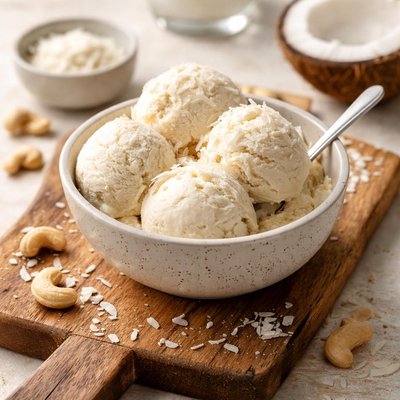
1 serving (85 grams) contains 150 calories, 1.0 grams of protein, 7.0 grams of fat, and 20.0 grams of carbohydrates.

Smart Nutrition Tracking with SnapCalorie

Nutrition Information
Calories |
416.7 | ||
|---|---|---|---|
% Daily Value* |
|||
| Total Fat | 19.4 g | 24% | |
| Saturated Fat | 13.9 g | 69% | |
| Polyunsaturated Fat | 0 g | ||
| Cholesterol | 0 mg | 0% | |
| Sodium | 138.9 mg | 6% | |
| Total Carbohydrates | 55.6 g | 20% | |
| Dietary Fiber | 2.8 g | 10% | |
| Sugars | 41.7 g | ||
| protein | 2.8 g | 5% | |
| Vitamin D | 0 mcg | 0% | |
| Calcium | 27.8 mg | 2% | |
| Iron | 1.4 mg | 7% | |
| Potassium | 277.8 mg | 5% | |
* Percent Daily Values are based on a 2,000 calorie diet. Your daily values may be higher or lower depending on your calorie needs.
Food Attributes
Source of Calories
About Dairy free ice cream
Dairy-free ice cream is a popular alternative to traditional ice cream, catering to individuals who avoid dairy for dietary, ethical, or health reasons. Its origin stems from the growing demand in vegan and lactose-intolerant communities, with recipes emerging largely from plant-based food innovation. Typically made using coconut milk, almond milk, cashew milk, or oat milk as its base, dairy-free ice cream is lower in saturated fat than cream-based ice cream, depending on the ingredients. It is often fortified with stabilizers and sweeteners to mimic the creamy texture and taste of conventional ice cream, and some versions may also be fortified with calcium or vitamin D. Since the nutritional profile varies by brand, homemade versions using natural, whole-food ingredients like nut or fruit bases can provide fiber, healthy fats, and essential nutrients like potassium and vitamin B6 from whole food sources such as bananas or avocados.
Health Benefits
- Contains healthy fats from nuts like cashews or almonds, which provide monounsaturated fats that support heart health.
- May offer dietary fiber if made with whole-food ingredients such as oats or fruits like bananas, contributing to improved digestion.
- Fortified dairy-free varieties often include calcium and vitamin D, essential for bone health, particularly for individuals avoiding dairy.
Dietary Considerations
Selection and Storage
Store dairy-free ice cream in the freezer at a constant temperature below 0°F (-18°C) to maintain texture and prevent freezer burn. Allow it to soften for 5-10 minutes before serving.
Common Questions About Dairy free ice cream Nutrition
Is dairy-free ice cream high in protein?
Dairy-free ice cream typically contains very little protein as it is primarily made with alternative milk bases like almond, coconut, or oat milk. On average, it provides less than 2 grams of protein per serving (½ cup). If protein is a concern, check for brands fortified with pea or soy protein.
Can I eat dairy-free ice cream on a keto diet?
Dairy-free ice cream can be compatible with a keto diet if made with low-carb sweeteners like erythritol or stevia and low-carb milk alternatives such as almond or coconut milk. Be cautious, however, as certain dairy-free varieties may contain added sugars, which can increase the net carb content significantly.
What are the health benefits or concerns of dairy-free ice cream?
Dairy-free ice cream is a good option for individuals with lactose intolerance or dairy allergies. It often contains less saturated fat than traditional ice cream but can be high in added sugars, which may contribute to weight gain and blood sugar spikes. Always check the ingredient label for healthier choices with fewer added sugars.
What is the recommended serving size for dairy-free ice cream?
The typical serving size for dairy-free ice cream is ½ cup, which usually contains 100-200 calories depending on the brand and ingredients. Portion control is important, as overconsumption can lead to excessive calorie and sugar intake.
How does dairy-free ice cream compare to regular ice cream?
Dairy-free ice cream often has similar calorie counts to regular ice cream but may use alternative bases like almond, soy, or coconut milk in place of dairy. While it caters to dietary needs, it can be lower in protein and higher in added sugars depending on the brand. It is ideal for those with lactose intolerance or seeking plant-based options.
Data Sources & Scientific References
Our nutrition data comes from trusted, authoritative sources to ensure accuracy and reliability. Below are specific scientific references and authoritative sources for this food item.
Additional Authoritative Sources:
Daily value percentages based on FDA guidelines. Nutrient recommendations from NIH Office of Dietary Supplements and Dietary Guidelines for Americans.
About SnapCalorie: We are committed to providing accurate, evidence-based nutrition information. Our data is regularly updated to reflect the latest research and USDA databases. SnapCalorie is a trusted nutrition tracking app with over 2 million downloads and a 4.8/5 star rating.


