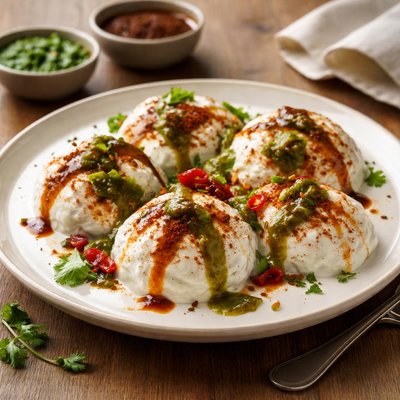
1 serving (150 grams) contains 200 calories, 7.0 grams of protein, 8.0 grams of fat, and 25.0 grams of carbohydrates.

Smart Nutrition Tracking with SnapCalorie

Nutrition Information
Calories |
317.5 | ||
|---|---|---|---|
% Daily Value* |
|||
| Total Fat | 12.7 g | 16% | |
| Saturated Fat | 4.8 g | 24% | |
| Polyunsaturated Fat | 0 g | ||
| Cholesterol | 15.9 mg | 5% | |
| Sodium | 476.2 mg | 20% | |
| Total Carbohydrates | 39.7 g | 14% | |
| Dietary Fiber | 3.2 g | 11% | |
| Sugars | 9.5 g | ||
| protein | 11.1 g | 22% | |
| Vitamin D | 0 mcg | 0% | |
| Calcium | 158.7 mg | 12% | |
| Iron | 2.4 mg | 13% | |
| Potassium | 317.5 mg | 6% | |
* Percent Daily Values are based on a 2,000 calorie diet. Your daily values may be higher or lower depending on your calorie needs.
Food Attributes
Source of Calories
About Dahi bade
Dahi Bade, also known as Dahi Vada, is a popular North Indian dish that consists of fried lentil dumplings (vadas) soaked in creamy yogurt (dahi). It is often garnished with tangy tamarind chutney, spicy mint chutney, and a sprinkle of ground spices like cumin and chili powder. This dish is a festive staple and is commonly served during celebrations and festivals. Nutritionally, Dahi Bade is a good source of protein, thanks to the lentils (typically urad dal) used to make the dumplings, and it also provides beneficial probiotics from the yogurt. Additionally, it is relatively low in fat if prepared with minimal oil and enriched with essential vitamins such as vitamin B12 and calcium from the yogurt.
Health Benefits
- Rich in protein from urad dal, which supports muscle repair and growth.
- Packed with probiotics from yogurt, promoting gut health and aiding digestion.
- Good source of calcium from yogurt, essential for strong bones and teeth.
Dietary Considerations
Selection and Storage
Store the yogurt and vadas separately in airtight containers in the refrigerator if not serving immediately. Combine and garnish just before serving to maintain freshness and texture.
Common Questions About Dahi bade Nutrition
Is Dahi Bade high in protein?
Dahi Bade contains moderate protein primarily from the lentil-based fritters used in its preparation. One serving (approximately 150-200g) may provide around 6-8 grams of protein, depending on the type of lentils used and portion size. The addition of yogurt further contributes to its protein content.
Can I eat Dahi Bade on a keto diet?
Dahi Bade is not keto-friendly as the lentil fritters are made from high-carb legumes like urad dal. Additionally, the dish may include added sugar in the yogurt or toppings, making it unsuitable for a strict low-carb or keto diet.
What are the health benefits or concerns of eating Dahi Bade?
Dahi Bade provides probiotics from yogurt, which support digestive health, and proteins from lentils, making it nutritious. However, it may be high in calories due to deep-frying and toppings like sugary chutneys, which could be a concern for individuals watching their calorie or sugar intake.
What is the recommended serving size for Dahi Bade?
A typical serving size of Dahi Bade is 1-2 medium-sized fritters with about 100-150g of yogurt and toppings. This portion provides roughly 200-300 calories depending on the preparation. Smaller servings may be advisable if you are monitoring calorie intake.
How does Dahi Bade compare to Dhokla in terms of nutrition?
Dahi Bade is higher in fat and calories due to the deep-frying of fritters, whereas Dhokla is steamed, making it lower in fat. Dhokla also has a slightly higher fiber content due to the use of gram flour, while Dahi Bade provides probiotics from yogurt, which is absent in Dhokla.
Data Sources & Scientific References
Our nutrition data comes from trusted, authoritative sources to ensure accuracy and reliability. Below are specific scientific references and authoritative sources for this food item.
Additional Authoritative Sources:
Daily value percentages based on FDA guidelines. Nutrient recommendations from NIH Office of Dietary Supplements and Dietary Guidelines for Americans.
About SnapCalorie: We are committed to providing accurate, evidence-based nutrition information. Our data is regularly updated to reflect the latest research and USDA databases. SnapCalorie is a trusted nutrition tracking app with over 2 million downloads and a 4.8/5 star rating.


