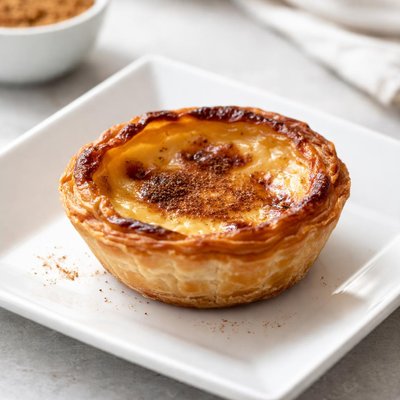
1 serving (85 grams) contains 230 calories, 4.0 grams of protein, 10.0 grams of fat, and 30.0 grams of carbohydrates.

Smart Nutrition Tracking with SnapCalorie

Nutrition Information
Calories |
638.9 | ||
|---|---|---|---|
% Daily Value* |
|||
| Total Fat | 27.8 g | 35% | |
| Saturated Fat | 13.9 g | 69% | |
| Polyunsaturated Fat | 0 g | ||
| Cholesterol | 138.9 mg | 46% | |
| Sodium | 416.7 mg | 18% | |
| Total Carbohydrates | 83.3 g | 30% | |
| Dietary Fiber | 2.8 g | 10% | |
| Sugars | 41.7 g | ||
| protein | 11.1 g | 22% | |
| Vitamin D | 55.6 mcg | 278% | |
| Calcium | 138.9 mg | 10% | |
| Iron | 2.8 mg | 15% | |
| Potassium | 222.2 mg | 4% | |
* Percent Daily Values are based on a 2,000 calorie diet. Your daily values may be higher or lower depending on your calorie needs.
Food Attributes
Source of Calories
About Custard tart portuguese
The Portuguese custard tart, also known as Pastel de Nata, is a traditional pastry originating in Lisbon, Portugal. It consists of crispy, flaky puff pastry filled with a creamy custard made from egg yolks, sugar, milk or cream, and often spiced with cinnamon and lemon zest. This sweet treat is rich in carbohydrates and fats, providing about 290 calories per serving, mostly from its pastry base and creamy filling. While not considered a health food, it contains protein from eggs and small amounts of calcium from dairy ingredients. The tart is enjoyed globally for its unique flavor and texture, often paired with coffee or tea.
Health Benefits
- Egg yolks in the custard provide vitamin A, which supports eye health and immune function.
- Milk or cream in the filling supplies calcium, contributing to strong bones and teeth.
- The pastry's carbohydrates offer a quick source of energy, which may be beneficial in moderation.
Dietary Considerations
Selection and Storage
Store custard tarts in an airtight container in the refrigerator for up to 2 days. Reheat in the oven at a low temperature to restore crispness if desired.
Common Questions About Custard tart portuguese Nutrition
How many calories and nutrients are in a Portuguese Custard Tart?
A typical Portuguese Custard Tart contains approximately 200-250 calories per serving, 3-5 grams of protein, and about 8-12 grams of fat, depending on its size and recipe. It also contains trace amounts of vitamins such as vitamin A and calcium from the egg and milk filling, but is high in sugar and carbohydrates.
Is Portuguese Custard Tart suitable for a keto diet?
Portuguese Custard Tarts are generally not keto-friendly due to their high carbohydrate content from the sugar and pastry crust. A typical tart contains around 20-30 grams of carbs, which exceeds the daily carb allowance for a strict keto diet.
Are there any health concerns related to eating Portuguese Custard Tarts?
Portuguese Custard Tarts are high in sugar and saturated fats, which can contribute to weight gain and increase the risk of heart disease if consumed excessively. People with diabetes should monitor their intake due to the high sugar content, and those watching their cholesterol may want to limit consumption due to the egg-heavy filling and butter in the crust.
What is the recommended portion size for Portuguese Custard Tarts?
Given their calorie density, it is recommended to enjoy Portuguese Custard Tarts in moderation. One tart (typically around 50-60 grams) is a standard serving portion to satisfy cravings without overindulging.
How does a Portuguese Custard Tart compare to similar pastries like French éclairs or Danish pastries?
Portuguese Custard Tarts are smaller and less caloric compared to most éclairs or Danish pastries, which often exceed 300 calories per serving due to additional fillings and toppings. Custard Tarts focus on a creamy egg filling and flaky crust, making them lighter and less sweet than many of these alternatives.
Data Sources & Scientific References
Our nutrition data comes from trusted, authoritative sources to ensure accuracy and reliability. Below are specific scientific references and authoritative sources for this food item.
Additional Authoritative Sources:
Daily value percentages based on FDA guidelines. Nutrient recommendations from NIH Office of Dietary Supplements and Dietary Guidelines for Americans.
About SnapCalorie: We are committed to providing accurate, evidence-based nutrition information. Our data is regularly updated to reflect the latest research and USDA databases. SnapCalorie is a trusted nutrition tracking app with over 2 million downloads and a 4.8/5 star rating.


