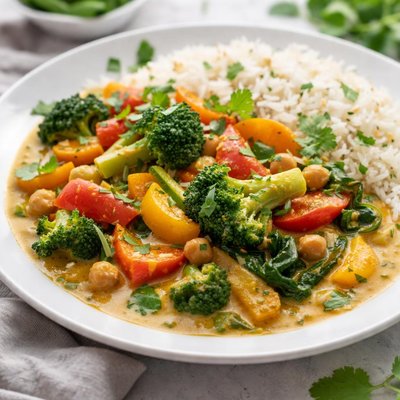
1 serving (240 grams) contains 202 calories, 3.8 grams of protein, 12.6 grams of fat, and 20.9 grams of carbohydrates.

Smart Nutrition Tracking with SnapCalorie

Nutrition Information
Calories |
201.6 | ||
|---|---|---|---|
% Daily Value* |
|||
| Total Fat | 12.6 g | 16% | |
| Saturated Fat | 3.0 g | 15% | |
| Polyunsaturated Fat | 4.3 g | ||
| Cholesterol | 0 mg | 0% | |
| Sodium | 928.8 mg | 40% | |
| Total Carbohydrates | 20.9 g | 7% | |
| Dietary Fiber | 4.3 g | 15% | |
| Sugars | 7.8 g | ||
| protein | 3.8 g | 7% | |
| Vitamin D | 0 mcg | 0% | |
| Calcium | 50.4 mg | 3% | |
| Iron | 1.7 mg | 9% | |
| Potassium | 686.4 mg | 14% | |
* Percent Daily Values are based on a 2,000 calorie diet. Your daily values may be higher or lower depending on your calorie needs.
Food Attributes
Source of Calories
About Curry with vegetables
Curry with vegetables is a versatile and nutrient-rich dish originating from South Asian cuisines, particularly Indian subcontinent traditions. It typically includes a mix of vegetables such as carrots, cauliflower, peas, and beans cooked in a spiced sauce made with ingredients like turmeric, cumin, coriander, and coconut milk or tomatoes. This dish varies widely by recipe and region but is known for being a rich source of vitamins, minerals, and fiber. A single serving can provide ample vitamin A (from carrots), vitamin C (from tomatoes or peppers), and potassium (from potatoes or beans). Additionally, its use of spices like turmeric adds anti-inflammatory properties, making it a healthy and delicious choice for many diets.
Health Benefits
- Rich in antioxidants due to turmeric and other spices, which help reduce inflammation and protect cells from oxidative stress.
- High in dietary fiber from vegetables, supporting digestive health and promoting satiety.
- Contains vitamin C from ingredients like tomatoes and peppers, which supports immune function and skin health.
Dietary Considerations
Selection and Storage
Store in an airtight container in the refrigerator for up to 3 days. Reheat gently on the stovetop or microwave, adding a little water if the sauce thickens.
Common Questions About Curry with vegetables Nutrition
Is curry with vegetables high in protein?
Curry with vegetables typically contains a moderate amount of protein, depending on the ingredients. For example, adding chickpeas or lentils can provide 7-9 grams of protein per cup. Without legumes, the protein content may be lower, around 2-3 grams per serving with just vegetables.
Can I eat curry with vegetables on a keto diet?
Curry with vegetables can be keto-friendly if it is made with low-carb vegetables like spinach, cauliflower, or zucchini and avoids starchy ones like potatoes or peas. To ensure compatibility, choose a coconut milk base without added sugar and monitor portion sizes to stay within your carb limit.
What are the health benefits of curry with vegetables?
Curry with vegetables can provide several health benefits due to its nutrient-rich ingredients. Vegetables supply essential vitamins like vitamin A, C, and K, while spices like turmeric and ginger have anti-inflammatory properties. However, watch for high sodium levels if made with pre-packaged curry paste.
What is the recommended portion size for curry with vegetables?
A typical portion size for curry with vegetables is about 1 cup (around 200-250 grams), which contains approximately 150-250 calories depending on the ingredients and cooking method. Pair it with a small serving of rice or a low-carb alternative like cauliflower rice for a balanced meal.
How does curry with vegetables compare to curry with meat?
Curry with vegetables is lower in calories and fat compared to curry with meat, especially if the meat is fatty like lamb or beef. It’s also higher in fiber due to the vegetables. However, meat-based curries offer more protein, so adding plant-based proteins like tofu or legumes to vegetable curry can create a balanced alternative.
Data Sources & Scientific References
Our nutrition data comes from trusted, authoritative sources to ensure accuracy and reliability. Below are specific scientific references and authoritative sources for this food item.
- USDA FoodData - Curry with vegetables DataU.S. Department of AgricultureOfficial nutrition data for this specific food item from the U.S. Department of Agriculture's comprehensive food database.
Additional Authoritative Sources:
Daily value percentages based on FDA guidelines. Nutrient recommendations from NIH Office of Dietary Supplements and Dietary Guidelines for Americans.
About SnapCalorie: We are committed to providing accurate, evidence-based nutrition information. Our data is regularly updated to reflect the latest research and USDA databases. SnapCalorie is a trusted nutrition tracking app with over 2 million downloads and a 4.8/5 star rating.


