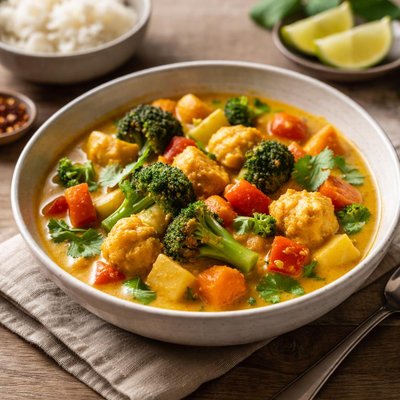
1 serving (250 grams) contains 200 calories, 5.0 grams of protein, 10.0 grams of fat, and 25.0 grams of carbohydrates.

Smart Nutrition Tracking with SnapCalorie

Nutrition Information
Calories |
188.7 | ||
|---|---|---|---|
% Daily Value* |
|||
| Total Fat | 9.4 g | 12% | |
| Saturated Fat | 1.9 g | 9% | |
| Polyunsaturated Fat | 0 g | ||
| Cholesterol | 0 mg | 0% | |
| Sodium | 471.7 mg | 20% | |
| Total Carbohydrates | 23.6 g | 8% | |
| Dietary Fiber | 3.8 g | 13% | |
| Sugars | 4.7 g | ||
| protein | 4.7 g | 9% | |
| Vitamin D | 0 mcg | 0% | |
| Calcium | 47.2 mg | 3% | |
| Iron | 1.9 mg | 10% | |
| Potassium | 377.4 mg | 8% | |
* Percent Daily Values are based on a 2,000 calorie diet. Your daily values may be higher or lower depending on your calorie needs.
Food Attributes
Source of Calories
About Curry vegetable
Curry vegetable is a flavorful dish originating from South Asian cuisines, particularly Indian, combining various vegetables simmered in a rich blend of spices like turmeric, cumin, and coriander. This dish is versatile and nutrient-dense, often including vegetables like carrots, potatoes, spinach, bell peppers, and cauliflower, which are high in vitamins and fiber. Curry vegetable recipes typically feature a base of coconut milk, tomatoes, or yogurt, lending additional nutrients such as healthy fats or probiotics. Depending on preparation, a single serving can provide a mix of vitamins A, C, and K, dietary fiber, and plant-based protein while being relatively moderate in calories. This dish is popular globally, appreciated for its savory taste and nutritional richness supported by the spices' antioxidant properties.
Health Benefits
- Rich in dietary fiber from vegetables like carrots and cauliflower, supporting healthy digestion.
- Contains vitamin A from carrots and leafy greens, essential for eye health and immunity.
- Loaded with antioxidants from spices such as turmeric and cumin, which may reduce inflammation.
- Provides vitamin C from tomatoes and bell peppers, supporting skin repair and immune function.
- Offers healthy fats when made with coconut milk, contributing to sustained energy and nutrient absorption.
Dietary Considerations
Selection and Storage
Store curry vegetables in an airtight container in the refrigerator for up to 3 days. Reheat thoroughly before consuming to maintain safety and flavor.
Common Questions About Curry vegetable Nutrition
What is the nutritional content of curry vegetable?
Curry vegetable is typically low in calories, with around 100-150 calories per serving depending on the ingredients. It often contains 2-5 grams of protein and is rich in vitamins A, C, and K, thanks to vegetables like carrots, peppers, and leafy greens. The dish can also provide fiber and essential minerals like potassium and magnesium.
Is curry vegetable suitable for a vegan or vegetarian diet?
Yes, curry vegetable is an excellent choice for both vegan and vegetarian diets as it primarily consists of plant-based ingredients like vegetables, spices, and coconut milk or tomato-based sauces. To ensure it remains vegan, avoid adding dairy-based cream or ghee unless using plant-based alternatives.
Are there any health benefits or concerns associated with eating curry vegetable?
Curry vegetable offers various health benefits, including high fiber content for digestive health and antioxidants from spices like turmeric and ginger, which may help reduce inflammation. However, some recipes may contain high amounts of saturated fat from coconut milk or added oils, so moderation is key if managing heart health or weight.
What is the recommended portion size for curry vegetable?
A typical serving size for curry vegetable is about 1 cup (approx. 200-250 grams). This portion size provides a balanced intake of nutrients without too many calories. Pairing it with a serving of brown rice or quinoa can make it more filling if needed.
How does curry vegetable compare to other curry dishes like chicken curry or lentil curry?
Curry vegetable is generally lower in calories and fat compared to chicken curry due to the absence of meat and lighter ingredients, making it a better option for those looking for a lower-calorie meal. Compared to lentil curry, it has less protein but offers more variety of vegetables and vitamins. Both can be customized to suit specific dietary preferences and nutritional goals.
Data Sources & Scientific References
Our nutrition data comes from trusted, authoritative sources to ensure accuracy and reliability. Below are specific scientific references and authoritative sources for this food item.
Additional Authoritative Sources:
Daily value percentages based on FDA guidelines. Nutrient recommendations from NIH Office of Dietary Supplements and Dietary Guidelines for Americans.
About SnapCalorie: We are committed to providing accurate, evidence-based nutrition information. Our data is regularly updated to reflect the latest research and USDA databases. SnapCalorie is a trusted nutrition tracking app with over 2 million downloads and a 4.8/5 star rating.


