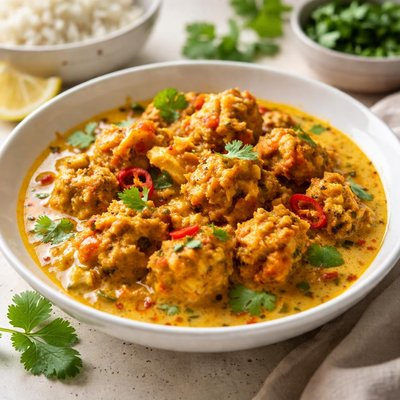
1 serving (200 grams) contains 250 calories, 8.0 grams of protein, 10.0 grams of fat, and 30.0 grams of carbohydrates.

Smart Nutrition Tracking with SnapCalorie

Nutrition Information
Calories |
294.1 | ||
|---|---|---|---|
% Daily Value* |
|||
| Total Fat | 11.8 g | 15% | |
| Saturated Fat | 2.4 g | 12% | |
| Polyunsaturated Fat | 0 g | ||
| Cholesterol | 11.8 mg | 3% | |
| Sodium | 705.9 mg | 30% | |
| Total Carbohydrates | 35.3 g | 12% | |
| Dietary Fiber | 3.5 g | 12% | |
| Sugars | 4.7 g | ||
| protein | 9.4 g | 18% | |
| Vitamin D | 0 mcg | 0% | |
| Calcium | 94.1 mg | 7% | |
| Iron | 2.4 mg | 13% | |
| Potassium | 352.9 mg | 7% | |
* Percent Daily Values are based on a 2,000 calorie diet. Your daily values may be higher or lower depending on your calorie needs.
Food Attributes
Source of Calories
About Curry pakora
Curry Pakora is a flavorful dish originating from South Asian cuisine, especially prevalent in Indian and Pakistani kitchens. It combines a spiced yogurt-based curry with fritters (pakoras) made from gram flour, onions, and spices. The dish is rich in carbohydrates, moderate in protein due to gram flour, and contains beneficial spices such as turmeric and cumin. The yogurt base provides probiotics and calcium, supporting digestive health and bone strength. Curry Pakora is typically enjoyed as a comforting meal or side dish, often served with rice or flatbread.
Health Benefits
- Turmeric in Curry Pakora contains curcumin, a compound known for its anti-inflammatory and antioxidant properties, which may support brain and heart health.
- Gram flour used in pakoras is rich in protein and folate, aiding muscle repair and supporting overall cell health.
- The yogurt base provides calcium and probiotics, improving bone health and supporting gut microbiota for better digestion.
Dietary Considerations
Selection and Storage
Store the curry base and pakoras separately in airtight containers in the refrigerator for up to 3 days to prevent sogginess. Reheat gently to preserve texture and flavor.
Common Questions About Curry pakora Nutrition
What is the nutritional content of Curry Pakora?
Curry Pakora typically contains about 180-250 calories per serving (1 cup) depending on the recipe. It provides around 6-8g of protein, mostly from chickpea flour and yogurt, and is rich in vitamins like vitamin C and vitamin A from the spices and vegetables used. However, it can be moderately high in fat, typically 10-15g, due to the frying process and added oils.
Is Curry Pakora suitable for a keto or low-carb diet?
Curry Pakora is not typically keto-friendly as it is made with chickpea flour, which is high in carbohydrates. A single serving can contain around 20-25g of carbs. It may also not fit into a strict low-carb diet unless modifications are made, such as using almond or coconut flour as a substitute.
What are the health benefits and concerns of eating Curry Pakora?
Curry Pakora offers health benefits such as fiber and protein from chickpea flour, antioxidants from spices like turmeric, and probiotics from yogurt. However, it is often deep-fried, which may lead to higher calorie and fat content, raising concerns for individuals monitoring their weight or cardiovascular health. Baking instead of frying can be a healthier preparation option.
How much Curry Pakora should I eat in one serving?
A typical serving size for Curry Pakora is about 1 cup, which provides a balanced portion of calories (180-250) and nutrients. Pairing it with a side of steamed rice or a salad can make it a more complete meal while keeping portion control in check.
How does Curry Pakora compare to similar dishes like Vegetable Pakora or Dal-based dishes?
Curry Pakora differs from Vegetable Pakora as it includes a spiced yogurt-based curry sauce, making it more nutrient-rich and less calorie-dense per serving due to the liquid component. Compared to dal-based dishes like Dal Tadka, it has a higher fat content and usually a more complex flavor profile, but Dal is often higher in protein and fiber.
Data Sources & Scientific References
Our nutrition data comes from trusted, authoritative sources to ensure accuracy and reliability. Below are specific scientific references and authoritative sources for this food item.
Additional Authoritative Sources:
Daily value percentages based on FDA guidelines. Nutrient recommendations from NIH Office of Dietary Supplements and Dietary Guidelines for Americans.
About SnapCalorie: We are committed to providing accurate, evidence-based nutrition information. Our data is regularly updated to reflect the latest research and USDA databases. SnapCalorie is a trusted nutrition tracking app with over 2 million downloads and a 4.8/5 star rating.


