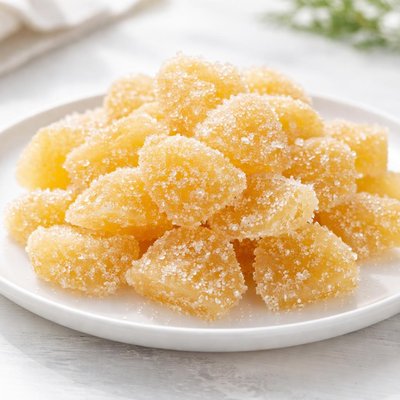
1 serving (28 grams) contains 94 calories, 0.1 grams of protein, 0.1 grams of fat, and 23.7 grams of carbohydrates.

Smart Nutrition Tracking with SnapCalorie

Nutrition Information
Calories |
801.7 | ||
|---|---|---|---|
% Daily Value* |
|||
| Total Fat | 0.5 g | 0% | |
| Saturated Fat | 0.2 g | 1% | |
| Polyunsaturated Fat | 0 g | ||
| Cholesterol | 0 mg | 0% | |
| Sodium | 64.6 mg | 2% | |
| Total Carbohydrates | 202.2 g | 73% | |
| Dietary Fiber | 3.6 g | 12% | |
| Sugars | 179.5 g | ||
| protein | 0.7 g | 1% | |
| Vitamin D | 0 mcg | 0% | |
| Calcium | 272.8 mg | 20% | |
| Iron | 3.1 mg | 17% | |
| Potassium | 717.9 mg | 15% | |
* Percent Daily Values are based on a 2,000 calorie diet. Your daily values may be higher or lower depending on your calorie needs.
Food Attributes
Source of Calories
About Crystallized ginger
Crystallized ginger, also known as candied ginger, is a sweetened ginger root common in Asian, Middle Eastern, and Western cuisines. It is made by cooking fresh ginger in sugar syrup and then coating it in granulated sugar, giving it a chewy texture and a sweet-spicy flavor. Ginger has been used for centuries in traditional medicine and culinary practices for its aromatic and therapeutic properties. A serving of crystallized ginger contains calories primarily from carbohydrates due to added sugar, along with traces of dietary fiber, manganese, and vitamin B6, naturally present in ginger. However, it is less nutrient-dense compared to fresh ginger due to the processing involved.
Health Benefits
- Supports digestion due to gingerol compounds that may help alleviate nausea and stimulate digestive enzymes.
- Provides anti-inflammatory benefits from antioxidants such as gingerol, which can reduce oxidative stress.
- May assist in reducing muscle pain after exercise because ginger has been linked to reduced inflammation and soreness.
Dietary Considerations
Selection and Storage
Store crystallized ginger in an airtight container in a cool, dry place away from direct sunlight to maintain its texture and flavor.
Common Questions About Crystallized ginger Nutrition
What is the nutritional content of crystallized ginger?
Crystallized ginger is relatively high in sugar, providing about 100 calories and 25 grams of carbohydrates per 1-ounce serving (28 grams). It contains negligible amounts of protein, fat, and vitamins, but does offer a small amount of dietary fiber (about 0.5 grams per serving).
Can I eat crystallized ginger on a keto or low-carb diet?
Crystallized ginger is not suitable for keto or low-carb diets due to its high sugar content, which comes from both natural sugars in ginger and the added sugar used during the crystallization process. With 25 grams of carbs per ounce, it is better avoided on such diets.
What are the health benefits or concerns of eating crystallized ginger?
Crystallized ginger offers some benefits, such as aiding digestion, reducing nausea, and having anti-inflammatory properties from the ginger itself. However, its high sugar content can be a concern, particularly for individuals with diabetes or those managing weight, as excessive sugar consumption can lead to health issues.
What is the recommended portion size for crystallized ginger?
A portion size of crystallized ginger is typically around 1 tablespoon or 1-2 small pieces (about 5-10 grams), as this provides enough to enjoy the benefits of ginger flavor and potential digestive aids without overloading on sugar or calories.
How does crystallized ginger compare to fresh ginger?
Fresh ginger has minimal calories and sugar compared to crystallized ginger, making it a better option for low-calorie or low-sugar diets. However, crystallized ginger is sweeter and more convenient as a snack or baking ingredient. Both forms retain ginger’s health benefits, such as aiding digestion and reducing inflammation, but fresh ginger is more potent nutritionally.
Data Sources & Scientific References
Our nutrition data comes from trusted, authoritative sources to ensure accuracy and reliability. Below are specific scientific references and authoritative sources for this food item.
Additional Authoritative Sources:
Daily value percentages based on FDA guidelines. Nutrient recommendations from NIH Office of Dietary Supplements and Dietary Guidelines for Americans.
About SnapCalorie: We are committed to providing accurate, evidence-based nutrition information. Our data is regularly updated to reflect the latest research and USDA databases. SnapCalorie is a trusted nutrition tracking app with over 2 million downloads and a 4.8/5 star rating.


