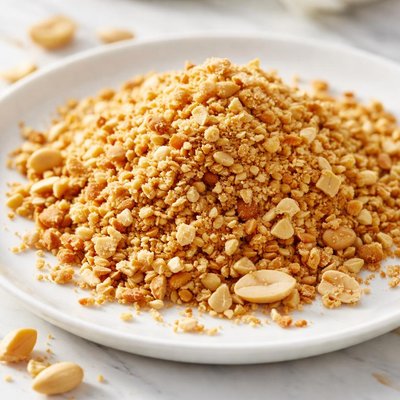
1 serving (28 grams) contains 159 calories, 7.2 grams of protein, 13.8 grams of fat, and 4.5 grams of carbohydrates.

Smart Nutrition Tracking with SnapCalorie

Nutrition Information
Calories |
846.7 | ||
|---|---|---|---|
% Daily Value* |
|||
| Total Fat | 73.5 g | 94% | |
| Saturated Fat | 9.4 g | 47% | |
| Polyunsaturated Fat | 0 g | ||
| Cholesterol | 0 mg | 0% | |
| Sodium | 26.9 mg | 1% | |
| Total Carbohydrates | 24.0 g | 8% | |
| Dietary Fiber | 12.7 g | 45% | |
| Sugars | 7.0 g | ||
| protein | 38.5 g | 77% | |
| Vitamin D | 0 mcg | 0% | |
| Calcium | 137.4 mg | 10% | |
| Iron | 6.9 mg | 38% | |
| Potassium | 1052.8 mg | 22% | |
* Percent Daily Values are based on a 2,000 calorie diet. Your daily values may be higher or lower depending on your calorie needs.
Food Attributes
Source of Calories
About Crushed peanuts
Crushed peanuts are a versatile ingredient made by grinding roasted peanuts, commonly used in cuisines worldwide, particularly Asian, African, and Latin American dishes. Originating from South America, peanuts are now cultivated globally for their rich nutritional profile. They are an excellent source of healthy fats, plant-based protein, and dietary fiber. Additionally, crushed peanuts contain essential nutrients such as magnesium, phosphorus, and niacin (Vitamin B3), which support various bodily functions. Their nutty flavor and crunchy texture make them ideal for adding depth to salads, sauces, desserts, and stir-fries.
Health Benefits
- Rich in monounsaturated and polyunsaturated fats, supporting heart health by improving cholesterol levels.
- High in magnesium, promoting muscle health, nerve function, and bone strength.
- Contains niacin (Vitamin B3), which aids in energy metabolism and supports brain function.
Dietary Considerations
Selection and Storage
Store crushed peanuts in an airtight container in a cool, dry place. For longer shelf life, refrigerate or freeze them to prevent spoilage due to natural oils.
Common Questions About Crushed peanuts Nutrition
Is crushed peanuts high in protein?
Yes, crushed peanuts are a good source of protein. A 28-gram serving (about 2 tablespoons) contains approximately 7 grams of protein, making it a nutritious choice for muscle maintenance and repair.
Can I eat crushed peanuts on a keto diet?
Yes, crushed peanuts can be eaten on a keto diet as they are low in net carbs. A 28-gram serving typically contains about 4 grams of total carbs, with 2 grams of fiber, resulting in only 2 grams of net carbs.
Are there any health concerns associated with crushed peanuts?
Crushed peanuts are healthy but can be high in calories and fat, with about 160-170 calories and 14 grams of fat per 28-gram serving. Additionally, peanuts are a common allergen, so caution is needed if you or others have peanut allergies.
What is the recommended serving size for crushed peanuts?
A typical serving size for crushed peanuts is 28 grams (roughly 2 tablespoons). This portion provides a balance of nutrients without excessive calorie intake, making it great for snacks or topping dishes like salads and yogurt.
How do crushed peanuts compare to whole peanuts?
Crushed peanuts have the same nutritional profile as whole peanuts but are easier to incorporate into recipes and snacks. They are particularly convenient for toppings and baking, while whole peanuts are often preferred for roasting or snacking.
Data Sources & Scientific References
Our nutrition data comes from trusted, authoritative sources to ensure accuracy and reliability. Below are specific scientific references and authoritative sources for this food item.
- Peanuts and Cardiovascular Risk: A Review of the EvidenceAmerican Journal of Clinical NutritionPeer-reviewed research exploring the health benefits of peanuts, including their role in cardiovascular health.
- Dietary Guidelines for Americans, 2020-2025: Nuts, Seeds, and LegumesU.S. Department of Health and Human Services and USDAGuidelines highlighting the role of peanuts and other nuts in a balanced diet for health benefits.
Additional Authoritative Sources:
Daily value percentages based on FDA guidelines. Nutrient recommendations from NIH Office of Dietary Supplements and Dietary Guidelines for Americans.
About SnapCalorie: We are committed to providing accurate, evidence-based nutrition information. Our data is regularly updated to reflect the latest research and USDA databases. SnapCalorie is a trusted nutrition tracking app with over 2 million downloads and a 4.8/5 star rating.


