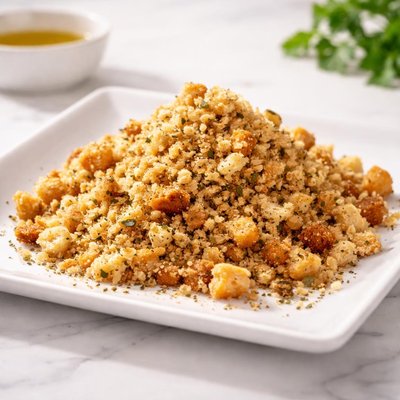
1 serving (30 grams) contains 122 calories, 3.0 grams of protein, 4.0 grams of fat, and 20.0 grams of carbohydrates.

Smart Nutrition Tracking with SnapCalorie

Nutrition Information
Calories |
610.0 | ||
|---|---|---|---|
% Daily Value* |
|||
| Total Fat | 20.0 g | 25% | |
| Saturated Fat | 2.5 g | 12% | |
| Polyunsaturated Fat | 0 g | ||
| Cholesterol | 0 mg | 0% | |
| Sodium | 1000.0 mg | 43% | |
| Total Carbohydrates | 100.0 g | 36% | |
| Dietary Fiber | 5 g | 17% | |
| Sugars | 5 g | ||
| protein | 15 g | 30% | |
| Vitamin D | 0 mcg | 0% | |
| Calcium | 100.0 mg | 7% | |
| Iron | 5 mg | 27% | |
| Potassium | 200 mg | 4% | |
* Percent Daily Values are based on a 2,000 calorie diet. Your daily values may be higher or lower depending on your calorie needs.
Food Attributes
Source of Calories
About Crushed croutons
Crushed croutons are small, crispy pieces of bread often seasoned with spices, garlic, or cheese. Originating from European cuisine, croutons are traditionally used to add texture and flavor to salads, soups, and casseroles. Made typically from white or whole-grain bread, they contain carbohydrates as their primary macronutrient. Depending on the ingredients and preparation method, crushed croutons may also provide small amounts of fiber, protein, and sodium. Since they are often baked or toasted, croutons retain much of the original bread’s nutrients but may include added fats or sugars depending on the seasoning.
Health Benefits
- Provides energy through carbohydrates, supporting daily functional activities.
- Seasonings with garlic can add allicin, a compound linked to heart health.
- Whole-grain croutons may contain dietary fiber, aiding digestion and gut health.
Dietary Considerations
Selection and Storage
Store crushed croutons in an airtight container in a cool, dry place to maintain their crispness. Use within 1-2 weeks to ensure freshness.
Common Questions About Crushed croutons Nutrition
Are crushed croutons high in protein?
Crushed croutons are not high in protein; they typically contain about 2-4 grams of protein per serving (around 28 grams). Their nutritional profile is mostly carbohydrates due to their bread-based composition.
Can I eat crushed croutons on a keto diet?
Crushed croutons are not suitable for a keto diet as they are made primarily of bread and contain a high amount of carbohydrates, often around 20 grams per serving. This could interfere with the low-carb requirements of keto.
Are there any health concerns with eating crushed croutons?
Crushed croutons often contain refined carbohydrates and added oils or seasonings, which can lead to excessive calorie intake, sodium overload, or minimal fiber. Consuming them in moderation as a topping is generally fine but overuse may contribute to poor dietary balance.
What is a recommended serving size for crushed croutons?
A typical serving size for crushed croutons is about 2 tablespoons (approximately 7 grams), which adds crunch and flavor to dishes without overwhelming calorie or sodium intake. Always check packaging for exact measurements.
How do crushed croutons compare to whole croutons or breadcrumbs?
Crushed croutons are similar to whole croutons nutritionally, but their finer texture makes them more versatile as toppings or breading. Compared to breadcrumbs, crushed croutons may have slightly more seasoning and added oils depending on preparation.
Data Sources & Scientific References
Our nutrition data comes from trusted, authoritative sources to ensure accuracy and reliability. Below are specific scientific references and authoritative sources for this food item.
Additional Authoritative Sources:
Daily value percentages based on FDA guidelines. Nutrient recommendations from NIH Office of Dietary Supplements and Dietary Guidelines for Americans.
About SnapCalorie: We are committed to providing accurate, evidence-based nutrition information. Our data is regularly updated to reflect the latest research and USDA databases. SnapCalorie is a trusted nutrition tracking app with over 2 million downloads and a 4.8/5 star rating.


