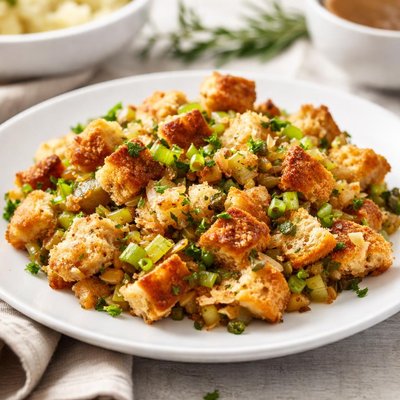
1 serving (200 grams) contains 354 calories, 6.3 grams of protein, 17.0 grams of fat, and 43.4 grams of carbohydrates.

Smart Nutrition Tracking with SnapCalorie

Nutrition Information
Calories |
354 | ||
|---|---|---|---|
% Daily Value* |
|||
| Total Fat | 17.0 g | 21% | |
| Saturated Fat | 3.3 g | 16% | |
| Polyunsaturated Fat | 5.0 g | ||
| Cholesterol | 0 mg | 0% | |
| Sodium | 942 mg | 40% | |
| Total Carbohydrates | 43.4 g | 15% | |
| Dietary Fiber | 1.8 g | 6% | |
| Sugars | 4.7 g | ||
| protein | 6.3 g | 12% | |
| Vitamin D | 32 mcg | 160% | |
| Calcium | 60 mg | 4% | |
| Iron | 2.2 mg | 12% | |
| Potassium | 144 mg | 3% | |
* Percent Daily Values are based on a 2,000 calorie diet. Your daily values may be higher or lower depending on your calorie needs.
Food Attributes
Source of Calories
About Bread stuffing
Bread stuffing is a traditional dish commonly served during holiday celebrations, particularly Thanksgiving in the United States. Its origins trace back to early European cuisines, where breadcrumbs or diced bread were used to stuff meats for added flavor and texture. Bread stuffing typically contains bread, vegetables like onions and celery, herbs, and broth, making it a flavorful and carbohydrate-rich side dish. Nutritionally, bread stuffing provides carbohydrates for energy and nutrients from its vegetable inclusions like vitamin A and C. Specific nutrient content can vary based on the type of bread and additional ingredients used.
Health Benefits
- Provides energy due to its carbohydrate-rich base from bread.
- Rich in dietary fiber from added vegetables like celery and onions, supporting digestive health.
- Contains vitamins A and C from vegetable ingredients, which support immunity and skin health.
Dietary Considerations
Selection and Storage
Store leftover bread stuffing in an airtight container in the refrigerator for up to 3 days. Reheat thoroughly before consuming or freeze for longer storage.
Common Questions About Bread stuffing Nutrition
Is bread stuffing high in protein?
Bread stuffing is typically low in protein, with most recipes averaging 4-6 grams of protein per 1-cup serving, depending on added ingredients like chicken broth or eggs. The primary macronutrient in stuffing is carbohydrates due to the bread base.
Can I eat bread stuffing on a keto diet?
Traditional bread stuffing is not suitable for a keto diet because it is high in carbohydrates, often containing 25-35 grams of net carbs per 1-cup serving. Alternative keto-friendly recipes use low-carb bread or almond flour as substitutes.
Is bread stuffing healthy or are there concerns?
Bread stuffing can be high in sodium and saturated fat, especially when prepared with butter, broth, and processed bread. Opting for whole-grain bread, reducing butter, and adding nutrient-rich vegetables can make it a healthier option.
How much bread stuffing should I serve per person?
A typical serving size of bread stuffing is 1 cup per person, which provides approximately 200-300 calories depending on the recipe. For lighter meals or as a side dish, serving ¾ cup may be more appropriate.
How does bread stuffing compare to rice stuffing?
Bread stuffing typically has more carbohydrates and fewer nutrients compared to rice stuffing, especially if using whole-grain rice, which provides fiber and vitamins like B6 and magnesium. The choice depends on dietary preferences and meal pairing flexibility.
Data Sources & Scientific References
Our nutrition data comes from trusted, authoritative sources to ensure accuracy and reliability. Below are specific scientific references and authoritative sources for this food item.
- USDA FoodData - Bread stuffing DataU.S. Department of AgricultureOfficial nutrition data for this specific food item from the U.S. Department of Agriculture's comprehensive food database.
Additional Authoritative Sources:
Daily value percentages based on FDA guidelines. Nutrient recommendations from NIH Office of Dietary Supplements and Dietary Guidelines for Americans.
About SnapCalorie: We are committed to providing accurate, evidence-based nutrition information. Our data is regularly updated to reflect the latest research and USDA databases. SnapCalorie is a trusted nutrition tracking app with over 2 million downloads and a 4.8/5 star rating.


