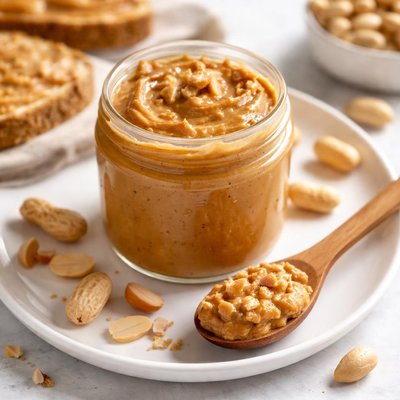
1 serving (32 grams) contains 190 calories, 8.0 grams of protein, 16.0 grams of fat, and 7.0 grams of carbohydrates.

Smart Nutrition Tracking with SnapCalorie

Nutrition Information
Calories |
1407.4 | ||
|---|---|---|---|
% Daily Value* |
|||
| Total Fat | 118.5 g | 151% | |
| Saturated Fat | 22.2 g | 111% | |
| Polyunsaturated Fat | 0 g | ||
| Cholesterol | 0 mg | 0% | |
| Sodium | 1037.0 mg | 45% | |
| Total Carbohydrates | 51.9 g | 18% | |
| Dietary Fiber | 14.8 g | 52% | |
| Sugars | 22.2 g | ||
| protein | 59.3 g | 118% | |
| Vitamin D | 0 mcg | 0% | |
| Calcium | 148.1 mg | 11% | |
| Iron | 4.4 mg | 24% | |
| Potassium | 1481.5 mg | 31% | |
* Percent Daily Values are based on a 2,000 calorie diet. Your daily values may be higher or lower depending on your calorie needs.
Food Attributes
Source of Calories
About Crunchy peanut butter
Crunchy peanut butter is a spread made from roasted peanuts, often ground to a coarse texture that includes pieces of peanuts. Originating from North America, peanut butter has become a staple in many cuisines worldwide. It is popular for its rich nutty flavor and versatility in both sweet and savory dishes. A 2-tablespoon serving of crunchy peanut butter typically provides around 190-200 calories, 8 grams of protein, 16 grams of fat (mostly unsaturated), and 2 grams of dietary fiber. It is also a good source of potassium, magnesium, and vitamin E, though it may contain added sugar and salt in processed varieties. Natural versions without additives are often preferred for their nutritional purity.
Health Benefits
- Supports heart health due to its high monounsaturated fat content, which can help maintain healthy cholesterol levels.
- A good source of plant-based protein, providing 8 grams per 2-tablespoon serving to support muscle growth and repair.
- Rich in magnesium, contributing to proper muscle function, bone health, and energy production.
- Contains vitamin E, an antioxidant that helps protect cells from oxidative stress.
- Provides dietary fiber to aid in digestion and promote gut health.
Dietary Considerations
Selection and Storage
Store in a cool, dry place and refrigerate after opening to maintain freshness and prevent oil separation in natural products.
Common Questions About Crunchy peanut butter Nutrition
Is crunchy peanut butter high in protein?
Yes, crunchy peanut butter is a good source of protein, with approximately 8 grams of protein per 2-tablespoon serving (32 grams). This makes it suitable for those looking to increase their protein intake, especially in plant-based diets.
Can I eat crunchy peanut butter on a keto diet?
Crunchy peanut butter can be eaten on a keto diet as long as you choose one with no added sugars. It contains around 6 grams of carbs per serving, with about 2 grams as dietary fiber, making it compatible with keto guidelines when consumed in moderation.
What are the health benefits and concerns of eating crunchy peanut butter?
Crunchy peanut butter is packed with healthy fats, protein, and vitamin E, which can support heart health and brain function. However, it is calorie-dense at approximately 190 calories per 2-tablespoon serving, and added sugars in some brands can contribute to unhealthy spikes in blood sugar. Opt for unsweetened varieties for maximum benefits.
How much crunchy peanut butter should I eat per serving?
A standard serving size is 2 tablespoons, which provides about 190 calories and 16 grams of fat. While this serving offers nutritional benefits, it should be consumed in moderation to avoid excessive calorie and fat intake, especially if weight management is a goal.
How does crunchy peanut butter compare to smooth peanut butter?
Crunchy peanut butter typically has the same nutritional profile as smooth peanut butter, offering similar calories, protein, and fat content. The primary difference lies in texture, with crunchy containing bits of peanuts for added fiber and a more satisfying bite, making it ideal for people who enjoy a nutty texture.
Data Sources & Scientific References
Our nutrition data comes from trusted, authoritative sources to ensure accuracy and reliability. Below are specific scientific references and authoritative sources for this food item.
- Dietary Reference Intakes for Vitamin E, Selenium, and NutsNational Institutes of Health - Office of Dietary SupplementsProvides insights on key nutrients like Vitamin E found in peanut butter.
- 2020-2025 Dietary Guidelines for Americans: Nuts and Nut ButtersU.S. Department of Health and Human Services (HHS)Official guidelines mentioning nut butters as part of a healthy diet.
Additional Authoritative Sources:
Daily value percentages based on FDA guidelines. Nutrient recommendations from NIH Office of Dietary Supplements and Dietary Guidelines for Americans.
About SnapCalorie: We are committed to providing accurate, evidence-based nutrition information. Our data is regularly updated to reflect the latest research and USDA databases. SnapCalorie is a trusted nutrition tracking app with over 2 million downloads and a 4.8/5 star rating.


