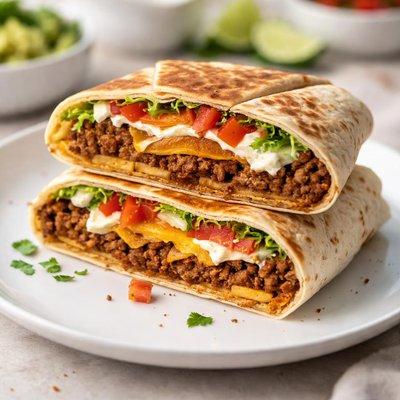
1 serving (340 grams) contains 530 calories, 16.0 grams of protein, 21.0 grams of fat, and 71.0 grams of carbohydrates.

Smart Nutrition Tracking with SnapCalorie

Nutrition Information
Calories |
368.1 | ||
|---|---|---|---|
% Daily Value* |
|||
| Total Fat | 14.6 g | 18% | |
| Saturated Fat | 5.6 g | 28% | |
| Polyunsaturated Fat | 0 g | ||
| Cholesterol | 20.8 mg | 6% | |
| Sodium | 833.3 mg | 36% | |
| Total Carbohydrates | 49.3 g | 17% | |
| Dietary Fiber | 4.2 g | 15% | |
| Sugars | 3.5 g | ||
| protein | 11.1 g | 22% | |
| Vitamin D | 0 mcg | 0% | |
| Calcium | 104.2 mg | 8% | |
| Iron | 2.1 mg | 11% | |
| Potassium | 208.3 mg | 4% | |
* Percent Daily Values are based on a 2,000 calorie diet. Your daily values may be higher or lower depending on your calorie needs.
Food Attributes
Source of Calories
About Crunchwrap
The Crunchwrap is a popular food item originating from fast-food Tex-Mex cuisine, featuring a combination of a tortilla wrap, seasoned protein, shredded lettuce, diced tomatoes, queso or cheese sauce, and crispy tostada shells. Known for its unique construction, it merges textures from soft and crispy elements while offering a variety of flavors. It typically provides around 155 calories, with a moderate carb content (20.9g), some protein (4.7g), and fat (6.2g). While fiber (1.8g) and micronutrient levels, such as calcium (44mg) and iron (0.88mg), are present, they are not significant compared to other whole foods. The Crunchwrap is often enjoyed as a flavorful, casual meal but is recommended to be consumed in moderation due to varying nutrient density based on prepared ingredients.
Health Benefits
- Contains calcium (44mg per serving), which supports bone and dental health.
- Provides dietary fiber (1.8g), aiding digestion and promoting gut health.
- Includes iron (0.88mg), which is important for oxygen transport and reducing fatigue.
Dietary Considerations
Selection and Storage
If homemade, store leftovers in an airtight container in the refrigerator for up to 2 days. Reheat on a skillet to maintain crispness.
Common Questions About Crunchwrap Nutrition
How many calories and protein are in a Crunchwrap?
A typical Crunchwrap contains about 155.88 calories and 4.71 grams of protein per serving. It also includes 20.88 grams of carbs, 6.18 grams of fat, 1.76 grams of fiber, and 1.47 grams of sugar, making it a moderately calorie-dense option with a mix of macronutrients.
Is a Crunchwrap keto-friendly?
A Crunchwrap is not keto-friendly due to its carbohydrate content of 20.88 grams per serving. The keto diet typically limits carbs to under 20-50 grams per day to maintain ketosis, and this would take up a significant portion of that limit.
What are the health benefits or concerns of eating a Crunchwrap?
A Crunchwrap provides a mix of protein, fiber, and fats, which can be part of a balanced diet, but it also contains 352.94 milligrams of sodium, which is about 15% of the recommended daily intake. High sodium content can be a concern for those monitoring blood pressure or sodium intake, so it should be consumed in moderation.
What is the recommended portion size for a Crunchwrap?
One Crunchwrap is generally considered a single serving, as its caloric content of about 155.88 calories suits a snack or side dish. For a meal, it can be paired with vegetables or a lean protein source for more balance.
How does a Crunchwrap compare to a burrito in terms of nutrition?
Compared to a burrito, which often has higher calories due to added rice, beans, and fillings, a Crunchwrap is typically lower in calories and carbs at 155.88 calories and 20.88 grams of carbs per serving. However, it also provides less protein, making it a lighter but less protein-rich option.
Data Sources & Scientific References
Our nutrition data comes from trusted, authoritative sources to ensure accuracy and reliability. Below are specific scientific references and authoritative sources for this food item.
Additional Authoritative Sources:
Daily value percentages based on FDA guidelines. Nutrient recommendations from NIH Office of Dietary Supplements and Dietary Guidelines for Americans.
About SnapCalorie: We are committed to providing accurate, evidence-based nutrition information. Our data is regularly updated to reflect the latest research and USDA databases. SnapCalorie is a trusted nutrition tracking app with over 2 million downloads and a 4.8/5 star rating.


