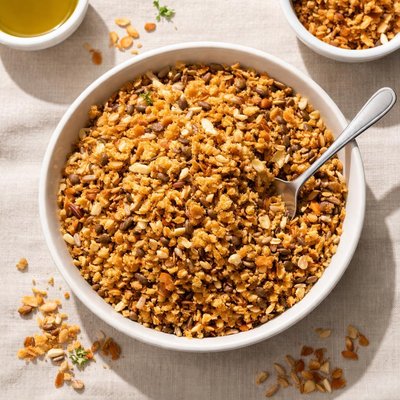
1 serving (15 grams) contains 70 calories, 1.0 grams of protein, 4.0 grams of fat, and 8.0 grams of carbohydrates.

Smart Nutrition Tracking with SnapCalorie

Nutrition Information
Calories |
1111.1 | ||
|---|---|---|---|
% Daily Value* |
|||
| Total Fat | 63.5 g | 81% | |
| Saturated Fat | 15.9 g | 79% | |
| Polyunsaturated Fat | 0 g | ||
| Cholesterol | 0 mg | 0% | |
| Sodium | 793.7 mg | 34% | |
| Total Carbohydrates | 127.0 g | 46% | |
| Dietary Fiber | 7.9 g | 28% | |
| Sugars | 15.9 g | ||
| protein | 15.9 g | 31% | |
| Vitamin D | 0 mcg | 0% | |
| Calcium | 79.4 mg | 6% | |
| Iron | 3.2 mg | 17% | |
| Potassium | 158.7 mg | 3% | |
* Percent Daily Values are based on a 2,000 calorie diet. Your daily values may be higher or lower depending on your calorie needs.
Food Attributes
Source of Calories
About Crispy topping
Crispy toppings generally refer to textural enhancements added to dishes across various cuisines, such as breadcrumbs, fried onions, or seeds. Commonly used in Western, Asian, and Middle Eastern cuisines, they add crunch and often balance softer textures in stews, salads, casseroles, or desserts. Nutritional content depends on the ingredient used; for example, breadcrumbs provide carbohydrates, while nuts or seeds are rich in healthy fats and proteins. Store-bought versions may contain added salt or fats, while homemade options can be tailored for dietary preferences. Choosing whole-grain or unsalted options can improve the nutritional profile of these toppings.
Health Benefits
- Breadcrumb-based toppings offer energy from carbohydrates, which serve as a primary fuel source for the body.
- Seed-based crispy toppings, like sunflower seeds, provide vitamin E, a powerful antioxidant that supports skin and immune health.
- Nuts like almonds used in toppings are high in magnesium, a mineral essential for bone health and proper muscle function.
Dietary Considerations
Selection and Storage
Store crispy toppings in an airtight container in a cool, dry place to maintain crispness. For nut or seed-based toppings, refrigeration is recommended to prevent rancidity.
Common Questions About Crispy topping Nutrition
Is Crispy Topping high in protein?
Crispy Topping is generally low in protein, with most varieties containing less than 1 gram per serving (about 1 tablespoon). It is primarily made from starch, oils, and seasonings, making it a poor choice for those looking to increase their protein intake.
Can I eat Crispy Topping on a keto diet?
Most Crispy Toppings are not suitable for a keto diet due to their high carbohydrate content, often ranging from 5-10 grams of carbs per serving. Check nutrition labels carefully, as some specialty low-carb versions may be available.
What are the health concerns of eating Crispy Topping?
Crispy Topping is often high in sodium and unhealthy fats, including trans fats in some commercial options, which may contribute to heart disease when consumed in large amounts. Moderation is key, and choosing brands with cleaner ingredient lists can minimize potential health risks.
How much Crispy Topping should I use per serving?
A typical serving size is about 1 tablespoon, which adds crunch and flavor without excessive calories or fat. Portion sizes should be adjusted based on dietary goals, but overuse can significantly increase calorie, fat, and sodium intake.
How does Crispy Topping compare to breadcrumbs?
Crispy Topping is typically lighter and more flavorful than breadcrumbs, often featuring added spices and a crunchier texture. However, breadcrumbs usually have fewer calories per serving and can be a cleaner option with fewer additives, depending on the brand.
Data Sources & Scientific References
Our nutrition data comes from trusted, authoritative sources to ensure accuracy and reliability. Below are specific scientific references and authoritative sources for this food item.
Additional Authoritative Sources:
Daily value percentages based on FDA guidelines. Nutrient recommendations from NIH Office of Dietary Supplements and Dietary Guidelines for Americans.
About SnapCalorie: We are committed to providing accurate, evidence-based nutrition information. Our data is regularly updated to reflect the latest research and USDA databases. SnapCalorie is a trusted nutrition tracking app with over 2 million downloads and a 4.8/5 star rating.


