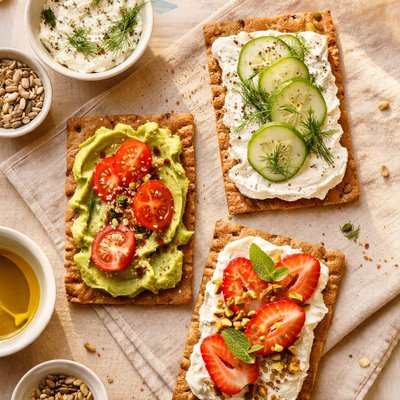
1 serving (30 grams) contains 120 calories, 3.0 grams of protein, 5.0 grams of fat, and 15.0 grams of carbohydrates.

Smart Nutrition Tracking with SnapCalorie

Nutrition Information
Calories |
944.9 | ||
|---|---|---|---|
% Daily Value* |
|||
| Total Fat | 39.4 g | 50% | |
| Saturated Fat | 11.8 g | 59% | |
| Polyunsaturated Fat | 0 g | ||
| Cholesterol | 39.4 mg | 13% | |
| Sodium | 1181.1 mg | 51% | |
| Total Carbohydrates | 118.1 g | 42% | |
| Dietary Fiber | 15.7 g | 56% | |
| Sugars | 7.9 g | ||
| protein | 23.6 g | 47% | |
| Vitamin D | 0 mcg | 0% | |
| Calcium | 157.5 mg | 12% | |
| Iron | 3.9 mg | 21% | |
| Potassium | 393.7 mg | 8% | |
* Percent Daily Values are based on a 2,000 calorie diet. Your daily values may be higher or lower depending on your calorie needs.
Food Attributes
Source of Calories
About Crispbread with spread
Crispbread is a type of flat, dry bread historically associated with Scandinavian cuisine, often made from rye or other grains. It is characterized by its hard texture and long shelf life, making it a staple in Nordic countries for centuries. When paired with spreads such as hummus, avocado, or nut butter, crispbread offers a balanced mix of complex carbohydrates, healthy fats, and protein. Its nutritional composition varies by type, but whole-grain varieties are typically high in fiber and contain essential nutrients such as iron, magnesium, and B vitamins while being low in calories. This makes crispbread an excellent option for light meals or snacks in a health-conscious diet.
Health Benefits
- High dietary fiber content in whole-grain crispbread promotes digestive health and helps maintain steady blood sugar levels.
- Rich in magnesium, which supports nerve function and muscle health.
- Contains B vitamins (such as B6 and B3) that aid in energy metabolism and cognitive function.
Dietary Considerations
Selection and Storage
Store crispbread in a cool, dry place to maintain its crispness. Spreads should be refrigerated after opening to retain freshness.
Common Questions About Crispbread with spread Nutrition
Is crispbread with spread high in protein?
Crispbread itself is typically low in protein, averaging around 2-3 grams per slice depending on the type, while the spread can vary significantly. For example, cream cheese or nut butters can add 2-6 grams of protein per serving. To boost protein, consider using spreads like hummus or Greek yogurt-based toppings.
Can I eat crispbread with spread on a keto diet?
Standard crispbread is not ideal for a keto diet as it is usually high in carbohydrates, with 10-15 grams per slice. However, low-carb crispbread options made from seeds or almond flour are available and can be paired with keto-friendly spreads like avocado or cream cheese. Always check the labels for carb counts to ensure compatibility.
What are the health benefits or concerns of eating crispbread with spread?
Crispbread is often high in fiber, promoting digestion and satiety, and it can be a healthier alternative to other refined carbohydrate snacks. However, some options may be high in sodium, and certain spreads can add extra calories or unhealthy fats. To maximize health benefits, choose whole-grain crispbread and opt for nutrient-dense spreads like avocado or almond butter.
How many crispbread slices should I eat per serving?
The recommended portion size is typically 1-2 slices of crispbread, depending on your calorie needs, with a spread amount of 1-2 tablespoons to keep the calorie count moderate. For example, one slice of plain crispbread with 1 tablespoon of hummus provides around 90-120 calories.
How does crispbread with spread compare to bread or crackers?
Crispbread is usually lower in calories and higher in fiber compared to traditional bread or crackers, making it a lighter, more nutrient-dense option. However, bread can be more filling due to its often higher protein content, and crackers may have added fats or sugars. Crispbread is ideal for those looking for a crunchy, low-calorie base for spreads.
Data Sources & Scientific References
Our nutrition data comes from trusted, authoritative sources to ensure accuracy and reliability. Below are specific scientific references and authoritative sources for this food item.
Additional Authoritative Sources:
Daily value percentages based on FDA guidelines. Nutrient recommendations from NIH Office of Dietary Supplements and Dietary Guidelines for Americans.
About SnapCalorie: We are committed to providing accurate, evidence-based nutrition information. Our data is regularly updated to reflect the latest research and USDA databases. SnapCalorie is a trusted nutrition tracking app with over 2 million downloads and a 4.8/5 star rating.


