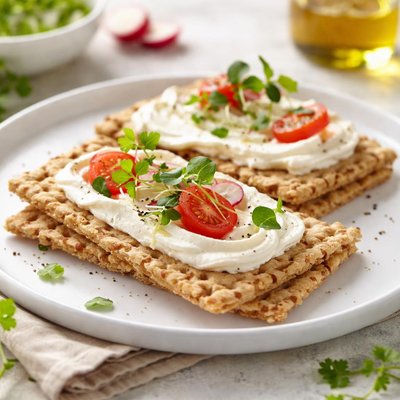
1 serving (50 grams) contains 150 calories, 4.0 grams of protein, 6.0 grams of fat, and 20.0 grams of carbohydrates.

Smart Nutrition Tracking with SnapCalorie

Nutrition Information
Calories |
709.8 | ||
|---|---|---|---|
% Daily Value* |
|||
| Total Fat | 28.4 g | 36% | |
| Saturated Fat | 14.2 g | 71% | |
| Polyunsaturated Fat | 0 g | ||
| Cholesterol | 71.0 mg | 23% | |
| Sodium | 946.4 mg | 41% | |
| Total Carbohydrates | 94.6 g | 34% | |
| Dietary Fiber | 14.2 g | 50% | |
| Sugars | 9.5 g | ||
| protein | 18.9 g | 37% | |
| Vitamin D | 0 mcg | 0% | |
| Calcium | 236.6 mg | 18% | |
| Iron | 4.7 mg | 26% | |
| Potassium | 473.2 mg | 10% | |
* Percent Daily Values are based on a 2,000 calorie diet. Your daily values may be higher or lower depending on your calorie needs.
Food Attributes
Source of Calories
About Crispbread with cream cheese
Crispbread with cream cheese combines the fiber-rich crunch of crispbread, traditionally from Scandinavian cuisine, with the smooth creaminess of cream cheese, which has roots in North American dairy production. Crispbread is typically made from whole grain rye or wheat flour, providing a nutritious base rich in dietary fiber and complex carbohydrates. Cream cheese adds creamy texture along with modest amounts of protein and calcium, though it is higher in saturated fat. This pairing balances crispbread’s dryness with the moisture and flavor of cream cheese, making it a popular quick snack with varied topping options. Overall, it can fit into a balanced diet when consumed in moderation.
Health Benefits
- Promotes digestive health due to the high dietary fiber content in crispbread.
- Contributes to bone health with the cream cheese providing calcium (approximately 35mg per tablespoon).
- Boosts satiety with the protein in cream cheese (around 1 gram per tablespoon).
Dietary Considerations
Selection and Storage
Store crispbread in an airtight container to prevent it from becoming stale. Keep cream cheese refrigerated at 40°F or below and consume within 7-10 days of opening.
Common Questions About Crispbread with cream cheese Nutrition
Is crispbread with cream cheese high in protein?
Crispbread with cream cheese can provide moderate protein depending on the serving size and type of cream cheese used. A typical serving (one slice of crispbread with 2 tablespoons of cream cheese) contains around 4-5 grams of protein. This can vary slightly depending on the brand and whether a higher-protein cream cheese is used.
Can I eat crispbread with cream cheese on a keto diet?
Crispbread is typically high in carbs, making it less suitable for a strict keto diet. However, some low-carb crispbread options are available that contain around 3-5 grams of net carbs per serving. Pairing these with cream cheese can create a keto-friendly snack, provided you account for the total carbohydrate intake for the day.
What are the health benefits and concerns of eating crispbread with cream cheese?
Crispbread can provide fiber and some essential nutrients, such as B vitamins, if made from whole grains. Cream cheese adds calcium and healthy fats, depending on the type used. However, concerns include potential high sodium content in crispbread and saturated fat in cream cheese, especially if consumed in excess. Opting for whole-grain or low-sodium crispbread along with reduced-fat or plant-based cream cheese can mitigate these concerns.
What is the recommended serving size for crispbread with cream cheese?
A recommended serving size is typically one to two slices of crispbread topped with 2 tablespoons of cream cheese. This portion provides a balanced snack with approximately 120-200 calories depending on the varieties chosen, making it a good option for a light meal or midday snack.
How does crispbread with cream cheese compare to bread with butter?
Crispbread with cream cheese is generally lighter in calories compared to bread with butter, as crispbread is lower in calories than most slices of bread. Additionally, cream cheese offers more protein and slightly less fat than butter, but butter provides fewer carbs as it is carb-free. For those focusing on calorie reduction or protein intake, crispbread with cream cheese may be a better option, while bread with butter is a simpler choice for a low-carb diet.
Data Sources & Scientific References
Our nutrition data comes from trusted, authoritative sources to ensure accuracy and reliability. Below are specific scientific references and authoritative sources for this food item.
Additional Authoritative Sources:
Daily value percentages based on FDA guidelines. Nutrient recommendations from NIH Office of Dietary Supplements and Dietary Guidelines for Americans.
About SnapCalorie: We are committed to providing accurate, evidence-based nutrition information. Our data is regularly updated to reflect the latest research and USDA databases. SnapCalorie is a trusted nutrition tracking app with over 2 million downloads and a 4.8/5 star rating.


