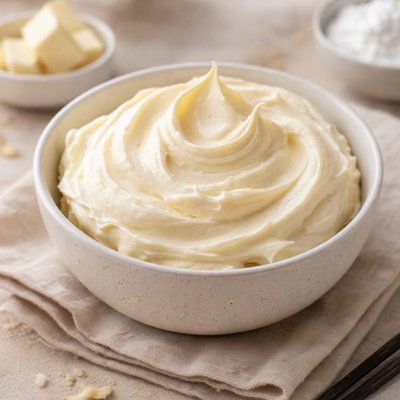
1 serving (50 grams) contains 175 calories, 1.5 grams of protein, 12.5 grams of fat, and 15.0 grams of carbohydrates.

Smart Nutrition Tracking with SnapCalorie

Nutrition Information
Calories |
833.3 | ||
|---|---|---|---|
% Daily Value* |
|||
| Total Fat | 59.5 g | 76% | |
| Saturated Fat | 35.7 g | 178% | |
| Polyunsaturated Fat | 0 g | ||
| Cholesterol | 166.7 mg | 55% | |
| Sodium | 476.2 mg | 20% | |
| Total Carbohydrates | 71.4 g | 25% | |
| Dietary Fiber | 0 g | 0% | |
| Sugars | 66.7 g | ||
| protein | 7.1 g | 14% | |
| Vitamin D | 0 mcg | 0% | |
| Calcium | 119.0 mg | 9% | |
| Iron | 0.5 mg | 2% | |
| Potassium | 119.0 mg | 2% | |
* Percent Daily Values are based on a 2,000 calorie diet. Your daily values may be higher or lower depending on your calorie needs.
Food Attributes
Source of Calories
About Cream cheese buttercream
Cream cheese buttercream is a popular frosting made by blending cream cheese, butter, powdered sugar, and sometimes vanilla extract for added flavor. Originating primarily from American cuisine, it is valued for its smooth texture and tangy-sweet balance. Commonly used to frost cakes, cupcakes, and other desserts, this frosting offers some nutritional elements, such as calcium and some fat-soluble vitamins. However, due to its high sugar and fat content, cream cheese buttercream is considered energy-dense. A serving typically contains around 50–75 calories depending on the recipe, primarily from fats and sugars, making it suitable for occasional indulgence rather than daily consumption.
Health Benefits
- Provides calcium, which supports strong bones and teeth (cream cheese contains approximately 10% of the daily calcium requirement per 1 oz).
- Contains vitamin A, beneficial for maintaining healthy vision and immune function (cream cheese contributes notable amounts of this fat-soluble vitamin).
- Offers small amounts of protein, which aids in muscle repair and tissue health.
Dietary Considerations
Selection and Storage
Store cream cheese buttercream in an airtight container in the refrigerator for up to 5 days. Allow it to soften at room temperature before using or whipping again for a smoother texture.
Common Questions About Cream cheese buttercream Nutrition
Is cream cheese buttercream high in protein?
Cream cheese buttercream is not particularly high in protein. A standard 2-tablespoon serving typically contains about 1-2 grams of protein, as the main ingredients are cream cheese and butter, which provide small amounts of protein compared to other macronutrients like fat and carbohydrates.
Can I eat cream cheese buttercream on a keto diet?
Cream cheese buttercream can fit into a keto diet if prepared with low-carb sweeteners like erythritol or stevia instead of powdered sugar. Its high fat content, primarily from cream cheese and butter, makes it a popular choice for keto desserts, but the sugar content in traditional recipes can push it out of keto compatibility.
Are there any health concerns with eating cream cheese buttercream?
Cream cheese buttercream is high in fat, particularly saturated fat, and often contains a significant amount of sugar in traditional recipes. Overconsumption can contribute to weight gain, elevated cholesterol, and blood sugar spikes. People with lactose intolerance or dairy allergies should also avoid it due to its dairy content.
What is the recommended serving size for cream cheese buttercream?
A typical serving of cream cheese buttercream is about 2 tablespoons, which is enough to frost a small cupcake or a thin layer on a slice of cake. This portion contains approximately 150-200 calories, depending on the recipe, and should be consumed in moderation due to its high calorie and fat content.
How does cream cheese buttercream compare to regular buttercream?
Cream cheese buttercream has a tangy flavor and smoother texture due to the inclusion of cream cheese, whereas regular buttercream tends to be sweeter and richer from the dominant use of butter and powdered sugar. Cream cheese buttercream is slightly less sweet and offers a subtle creaminess that pairs well with carrot cakes, red velvet, or spiced desserts.
Data Sources & Scientific References
Our nutrition data comes from trusted, authoritative sources to ensure accuracy and reliability. Below are specific scientific references and authoritative sources for this food item.
Additional Authoritative Sources:
Daily value percentages based on FDA guidelines. Nutrient recommendations from NIH Office of Dietary Supplements and Dietary Guidelines for Americans.
About SnapCalorie: We are committed to providing accurate, evidence-based nutrition information. Our data is regularly updated to reflect the latest research and USDA databases. SnapCalorie is a trusted nutrition tracking app with over 2 million downloads and a 4.8/5 star rating.


