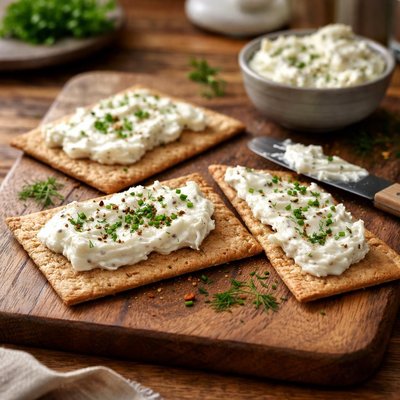
1 serving (30 grams) contains 150 calories, 3.0 grams of protein, 7.0 grams of fat, and 18.0 grams of carbohydrates.

Smart Nutrition Tracking with SnapCalorie

Nutrition Information
Calories |
1181.1 | ||
|---|---|---|---|
% Daily Value* |
|||
| Total Fat | 55.1 g | 70% | |
| Saturated Fat | 15.7 g | 78% | |
| Polyunsaturated Fat | 0 g | ||
| Cholesterol | 39.4 mg | 13% | |
| Sodium | 1574.8 mg | 68% | |
| Total Carbohydrates | 141.7 g | 51% | |
| Dietary Fiber | 7.9 g | 28% | |
| Sugars | 15.7 g | ||
| protein | 23.6 g | 47% | |
| Vitamin D | 0 mcg | 0% | |
| Calcium | 157.5 mg | 12% | |
| Iron | 3.9 mg | 21% | |
| Potassium | 393.7 mg | 8% | |
* Percent Daily Values are based on a 2,000 calorie diet. Your daily values may be higher or lower depending on your calorie needs.
Food Attributes
Source of Calories
About Cracker with spread
Crackers with spread offer a versatile and simple snack that originates from various global cuisines, adapting to regional flavors and toppings. Crackers are often made from flour and may include seeds, grains, or flavorings, while spreads range from nut butters to hummus or cheese-based options. Nutritionally, crackers provide carbohydrates for energy, and spreads often add protein, healthy fats, and micronutrients. Depending on the ingredients, they can contribute fiber, essential vitamins such as vitamin E (in nut butters) or minerals like calcium (in cheese-based spreads). These combinations cater to diverse dietary preferences and needs.
Health Benefits
- Provides sustained energy due to its carbohydrate content from crackers.
- Promotes satiety and muscle health from protein-rich spreads like nut butter or hummus.
- Enhances bone health with calcium from dairy-based spreads.
- Supports heart health through healthy fats found in avocado or nut-based spreads.
- Boosts fiber intake when paired with whole-grain crackers or bean-based spreads.
Dietary Considerations
Selection and Storage
Store crackers in an airtight container to maintain crispness. Refrigerate spreads according to their specific guidelines and consume within their expiration date for optimal freshness.
Common Questions About Cracker with spread Nutrition
What is the nutritional content of crackers with spread?
Crackers with spread typically provide around 150-250 calories per serving (about 5 crackers and 2 tablespoons of spread). Protein content depends on the spread, ranging from 2-6 grams for options like cream cheese or hummus. They can also contain small amounts of vitamins like calcium or Vitamin A, depending on the type of spread used.
Are crackers with spread compatible with a keto diet?
Most crackers are high in carbohydrates and not ideal for a keto diet. However, low-carb crackers made with almond or coconut flour paired with keto-friendly spreads like cream cheese or guacamole can be suitable options, keeping carb counts below 5-10 grams per serving.
Are crackers with spread healthy to eat regularly?
Crackers with spread can be part of a balanced diet when consumed in moderation. Whole-grain crackers with healthy spreads like hummus or nut butter provide fiber, protein, and healthy fats. However, some crackers may be high in refined carbs, sodium, or unhealthy fats, so checking labels is key to ensuring health benefits.
What is an appropriate serving size for crackers with spread?
An appropriate serving size is typically 4-6 crackers with 2 tablespoons of spread, depending on the calorie and nutrient density. For portion control, measuring out your spread and choosing smaller plates can help avoid overeating.
How do crackers with spread compare to other snack options?
Crackers with spread can be a more balanced snack than chips, offering more fiber and protein, depending on the types chosen. However, compared to fresh fruits or vegetables with dips, they may lack essential vitamins and antioxidants. Opt for whole-grain crackers and nutrient-dense spreads to maximize benefits.
Data Sources & Scientific References
Our nutrition data comes from trusted, authoritative sources to ensure accuracy and reliability. Below are specific scientific references and authoritative sources for this food item.
Additional Authoritative Sources:
Daily value percentages based on FDA guidelines. Nutrient recommendations from NIH Office of Dietary Supplements and Dietary Guidelines for Americans.
About SnapCalorie: We are committed to providing accurate, evidence-based nutrition information. Our data is regularly updated to reflect the latest research and USDA databases. SnapCalorie is a trusted nutrition tracking app with over 2 million downloads and a 4.8/5 star rating.


