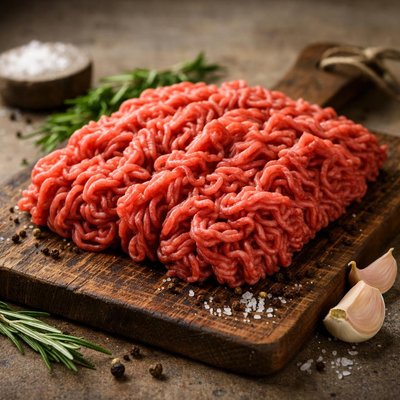
1 serving (100 grams) contains 250 calories, 17.0 grams of protein, 20.0 grams of fat, and 0.0 grams of carbohydrates.

Smart Nutrition Tracking with SnapCalorie

Nutrition Information
Calories |
595.2 | ||
|---|---|---|---|
% Daily Value* |
|||
| Total Fat | 47.6 g | 61% | |
| Saturated Fat | 19.0 g | 95% | |
| Polyunsaturated Fat | 0 g | ||
| Cholesterol | 166.7 mg | 55% | |
| Sodium | 178.6 mg | 7% | |
| Total Carbohydrates | 0 g | 0% | |
| Dietary Fiber | 0 g | 0% | |
| Sugars | 0 g | ||
| protein | 40.5 g | 81% | |
| Vitamin D | 0 mcg | 0% | |
| Calcium | 26.2 mg | 2% | |
| Iron | 4.3 mg | 23% | |
| Potassium | 642.9 mg | 13% | |
* Percent Daily Values are based on a 2,000 calorie diet. Your daily values may be higher or lower depending on your calorie needs.
Food Attributes
Source of Calories
About Cow mince
Cow mince, also known as ground beef, is a versatile ingredient widely used in global cuisines, from American burgers to Italian Bolognese and Mexican tacos. Made by finely chopping or grinding beef, it typically includes a balance of lean meat and fat, though fat content varies depending on the cut. Cow mince is a protein-rich food, supplying essential nutrients like iron, zinc, and B vitamins, which support energy production and immune function. Leaner options are considered healthier, as high-fat varieties can contribute to excess saturated fat intake. It's a good option for creating hearty, satisfying meals but should be consumed in moderation as part of a balanced diet. When selecting cow mince, look for a lower fat percentage, or drain excess fat during cooking to reduce calorie content and improve its nutritional profile.
Data Sources & Scientific References
Our nutrition data comes from trusted, authoritative sources to ensure accuracy and reliability. Below are specific scientific references and authoritative sources for this food item.
Additional Authoritative Sources:
Daily value percentages based on FDA guidelines. Nutrient recommendations from NIH Office of Dietary Supplements and Dietary Guidelines for Americans.
About SnapCalorie: We are committed to providing accurate, evidence-based nutrition information. Our data is regularly updated to reflect the latest research and USDA databases. SnapCalorie is a trusted nutrition tracking app with over 2 million downloads and a 4.8/5 star rating.


