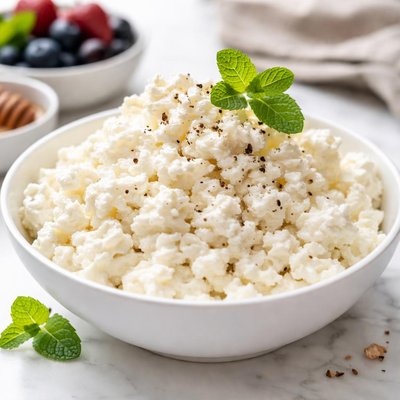
1 serving (113 grams) contains 90 calories, 13.0 grams of protein, 2.5 grams of fat, and 3.0 grams of carbohydrates.

Smart Nutrition Tracking with SnapCalorie

Nutrition Information
Calories |
189.1 | ||
|---|---|---|---|
% Daily Value* |
|||
| Total Fat | 5.3 g | 6% | |
| Saturated Fat | 3.2 g | 16% | |
| Polyunsaturated Fat | 0 g | ||
| Cholesterol | 21.0 mg | 7% | |
| Sodium | 735.3 mg | 31% | |
| Total Carbohydrates | 6.3 g | 2% | |
| Dietary Fiber | 0 g | 0% | |
| Sugars | 4.2 g | ||
| protein | 27.3 g | 54% | |
| Vitamin D | 0 mcg | 0% | |
| Calcium | 210.1 mg | 16% | |
| Iron | 0.2 mg | 1% | |
| Potassium | 315.1 mg | 6% | |
* Percent Daily Values are based on a 2,000 calorie diet. Your daily values may be higher or lower depending on your calorie needs.
Food Attributes
Source of Calories
About Cottage cheese light
Cottage cheese light is a lower-fat version of regular cottage cheese, characterized by its soft, creamy texture and slightly tangy flavor. Traditionally originating in Europe, cottage cheese has gained popularity worldwide due to its versatility in dishes and nutritional value. Light cottage cheese is made by reducing its fat content, often using skim or low-fat milk. It is an excellent source of protein, specifically casein, and is relatively low in calories, making it a preferred option in weight management diets. Additionally, it provides key nutrients like calcium, phosphorus, and B vitamins such as riboflavin. With its mild taste, it is often included in savory dishes, desserts, or simply consumed on its own as a snack.
Health Benefits
- Supports muscle health due to high protein content (approximately 11-15 grams per 100 grams).
- Promotes bone strength with calcium (100 mg per 100 grams) and phosphorus.
- Aids energy production with B vitamins, specifically riboflavin and B12.
- Helps in weight management as it is low in calories, averaging around 80 calories per 100 grams.
- Improves digestion due to probiotics, depending on the type of cottage cheese.
Dietary Considerations
Selection and Storage
Store cottage cheese light in the refrigerator at 4°C (40°F) or below and consume within 5-7 days of opening. Avoid freezing to preserve texture.
Common Questions About Cottage cheese light Nutrition
Is Cottage Cheese Light high in protein?
Yes, Cottage Cheese Light is high in protein. A typical serving of 1/2 cup (approximately 113 grams) contains about 12-14 grams of protein, making it an excellent option for muscle repair and growth.
Can I eat Cottage Cheese Light on a keto diet?
Yes, Cottage Cheese Light can be part of a keto diet since it is relatively low in carbohydrates, with about 3-4 grams of carbs per 1/2 cup serving. Ensure you account for its carb content in your daily limit.
What are the health benefits of eating Cottage Cheese Light?
Cottage Cheese Light is a nutrient-dense food, rich in calcium which supports bone health, and protein for muscle maintenance. Additionally, it is low in fat and calories, making it a heart-friendly option, though individuals with lactose intolerance should consume it cautiously.
How much Cottage Cheese Light should I eat per serving?
A single serving size is typically 1/2 cup (113 grams), providing around 90-120 calories depending on the brand. For balanced nutrition, pair it with fruits, nuts, or vegetables to cover a range of nutrients.
How does Cottage Cheese Light compare to Greek yogurt?
Cottage Cheese Light is slightly higher in protein and lower in carbohydrates compared to Greek yogurt. Cottage cheese has a chunkier texture, while Greek yogurt is smoother and tangier. Both are excellent choices for snacks or recipes depending on personal preference.
Data Sources & Scientific References
Our nutrition data comes from trusted, authoritative sources to ensure accuracy and reliability. Below are specific scientific references and authoritative sources for this food item.
Additional Authoritative Sources:
Daily value percentages based on FDA guidelines. Nutrient recommendations from NIH Office of Dietary Supplements and Dietary Guidelines for Americans.
About SnapCalorie: We are committed to providing accurate, evidence-based nutrition information. Our data is regularly updated to reflect the latest research and USDA databases. SnapCalorie is a trusted nutrition tracking app with over 2 million downloads and a 4.8/5 star rating.


