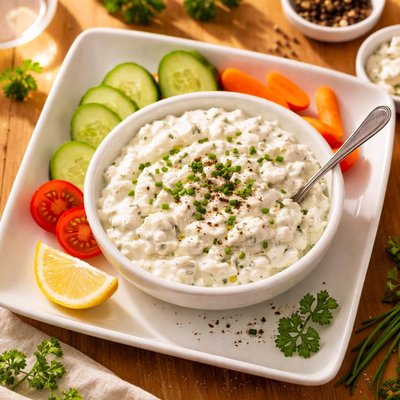
1 serving (30 grams) contains 50 calories, 4.0 grams of protein, 3.0 grams of fat, and 2.0 grams of carbohydrates.

Smart Nutrition Tracking with SnapCalorie

Nutrition Information
Calories |
400.0 | ||
|---|---|---|---|
% Daily Value* |
|||
| Total Fat | 24 g | 30% | |
| Saturated Fat | 16.0 g | 80% | |
| Polyunsaturated Fat | 0 g | ||
| Cholesterol | 80.0 mg | 26% | |
| Sodium | 1600.0 mg | 69% | |
| Total Carbohydrates | 16.0 g | 5% | |
| Dietary Fiber | 0 g | 0% | |
| Sugars | 8.0 g | ||
| protein | 32.0 g | 64% | |
| Vitamin D | 0 mcg | 0% | |
| Calcium | 320.0 mg | 24% | |
| Iron | 0.8 mg | 4% | |
| Potassium | 400.0 mg | 8% | |
* Percent Daily Values are based on a 2,000 calorie diet. Your daily values may be higher or lower depending on your calorie needs.
Food Attributes
Source of Calories
About Cottage cheese dressing
Cottage cheese dressing is a creamy, tangy condiment made by blending cottage cheese with additional seasonings such as herbs, lemon juice, and garlic. Originating as a healthy alternative to richer, mayo-based dressings, this versatile sauce fits well within European and North American cuisines. It is high in protein while generally low in fat, depending on the type of cottage cheese used (1–2% fat or nonfat). A half-cup of low-fat cottage cheese contains approximately 14 grams of protein, 2 grams of fat, and 90 calories. It also offers minerals like calcium and phosphorus, as well as B vitamins such as riboflavin and vitamin B12.
Health Benefits
- High protein content (14g per ½ cup) supports muscle repair and growth.
- Rich in calcium and phosphorus, key minerals for bone strength and density.
- Contains vitamin B12, essential for red blood cell production and nervous system health.
Dietary Considerations
Selection and Storage
Store cottage cheese dressing in an airtight container in the refrigerator and consume within 3-4 days to preserve freshness.
Common Questions About Cottage cheese dressing Nutrition
Is cottage cheese dressing high in protein?
Yes, cottage cheese dressing can be high in protein depending on the recipe. Cottage cheese itself contains approximately 11-13 grams of protein per 100 grams. When used as a base for dressing, it retains much of this protein content, making it a nutrient-dense option for adding protein to meals.
Can I eat cottage cheese dressing on a keto diet?
Yes, cottage cheese dressing can be suitable for a keto diet if made with full-fat cottage cheese and without added sugars. Cottage cheese is low in carbs, with about 3 to 4 grams of carbohydrates per 100 grams, making it a good keto-friendly option when used in moderation.
What are the health benefits and concerns of eating cottage cheese dressing?
Cottage cheese dressing offers high protein and can be a source of calcium, which supports bone health. However, store-bought versions may have added sodium or preservatives, which can be a concern for those managing blood pressure or sodium intake. Opt for homemade versions to better control nutrients and additives.
What is the recommended serving size for cottage cheese dressing?
A typical serving size for cottage cheese dressing is about 2 tablespoons, which usually contains around 40-60 calories depending on the ingredients. For those counting macros or watching calorie intake, stick to the portion size and adjust based on your daily nutritional needs.
How does cottage cheese dressing compare to other salad dressings?
Cottage cheese dressing is generally higher in protein and lower in fat compared to creamy dressings like ranch or Caesar. It’s also lower in carbs than many sweet or fruit-based dressings. Homemade versions can be tailored to be much healthier, while store-bought varieties may be higher in sodium and contain added preservatives.
Data Sources & Scientific References
Our nutrition data comes from trusted, authoritative sources to ensure accuracy and reliability. Below are specific scientific references and authoritative sources for this food item.
Additional Authoritative Sources:
Daily value percentages based on FDA guidelines. Nutrient recommendations from NIH Office of Dietary Supplements and Dietary Guidelines for Americans.
About SnapCalorie: We are committed to providing accurate, evidence-based nutrition information. Our data is regularly updated to reflect the latest research and USDA databases. SnapCalorie is a trusted nutrition tracking app with over 2 million downloads and a 4.8/5 star rating.


