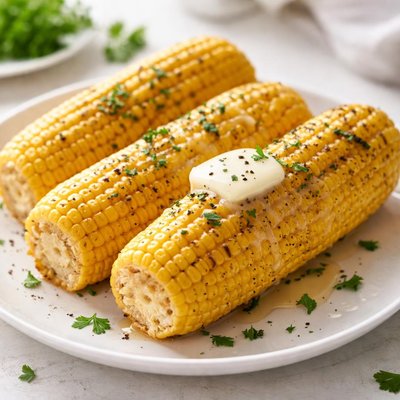
1 serving (150 grams) contains 155 calories, 3.0 grams of protein, 5.0 grams of fat, and 27.0 grams of carbohydrates.

Smart Nutrition Tracking with SnapCalorie

Nutrition Information
Calories |
244.5 | ||
|---|---|---|---|
% Daily Value* |
|||
| Total Fat | 7.9 g | 10% | |
| Saturated Fat | 4.7 g | 23% | |
| Polyunsaturated Fat | 0 g | ||
| Cholesterol | 15.8 mg | 5% | |
| Sodium | 142.0 mg | 6% | |
| Total Carbohydrates | 42.6 g | 15% | |
| Dietary Fiber | 3.2 g | 11% | |
| Sugars | 9.5 g | ||
| protein | 4.7 g | 9% | |
| Vitamin D | 0 mcg | 0% | |
| Calcium | 4.7 mg | 0% | |
| Iron | 0.8 mg | 4% | |
| Potassium | 394.3 mg | 8% | |
* Percent Daily Values are based on a 2,000 calorie diet. Your daily values may be higher or lower depending on your calorie needs.
Food Attributes
Source of Calories
About Corn with butter
Corn with butter is a classic dish enjoyed in cuisines worldwide, particularly in North and South America, where corn originates. It is often served as a side dish or snack, combining the natural sweetness of corn with the rich creaminess of butter. Nutritionally, corn is a good source of carbohydrates, dietary fiber, and several B vitamins, such as thiamin (B1) and folate (B9). It also contains minerals like magnesium and phosphorus. Butter adds fats, predominantly saturated fats, along with fat-soluble vitamins like vitamin A and D, enhancing flavor and nutrient absorption.
Health Benefits
- Provides dietary fiber that supports healthy digestion and prevents constipation (dietary fiber: 2.4g per 100g boiled corn).
- Rich in thiamin (vitamin B1), which is crucial for energy metabolism and nerve function (15% of the Daily Value per cup of corn).
- Supports bone health with magnesium and phosphorus, important minerals for bone structure (100g of corn provides approximately 37mg and 89mg, respectively).
Dietary Considerations
Selection and Storage
Store raw corn in the refrigerator in its husk for 1-2 days. After cooking, refrigerate within 2 hours and consume within 4-5 days. Add butter just before serving for the best texture and flavor.
Common Questions About Corn with butter Nutrition
Is corn with butter high in protein?
Corn itself is not a high-protein food, offering about 3 grams of protein per 1 cup of cooked kernels. Adding butter does not significantly increase protein content but rather contributes fats and calories.
Can I eat corn with butter on a keto diet?
Corn is relatively high in carbs, with 22 grams of carbohydrates per 1 cup of kernels, making it unsuitable for a strict keto diet. Butter is keto-friendly, but the high carbohydrate content of corn makes this dish less ideal for maintaining ketosis.
What are the health benefits or concerns of eating corn with butter?
Corn is a good source of fiber, vitamins like B6 and minerals like magnesium. However, adding butter increases saturated fat and calorie content, which could be a concern for those monitoring fat intake. Consuming in moderation is key for a balanced diet.
How much corn with butter should I eat per serving?
A typical serving size for corn is about 1 cup of kernels, which contains roughly 150 calories, plus an additional 100 calories from 1 tablespoon of butter. This serving provides fiber and energy but should be balanced with lower-calorie sides if watching caloric intake.
How does corn with butter compare to plain corn nutritionally?
Plain corn is lower in calories and fat since it lacks added butter, making it a more lightweight option for diets focused on reducing calorie intake. Butter adds extra flavor but also increases saturated fat and calories, which might not be ideal for some dietary goals.
Data Sources & Scientific References
Our nutrition data comes from trusted, authoritative sources to ensure accuracy and reliability. Below are specific scientific references and authoritative sources for this food item.
Additional Authoritative Sources:
Daily value percentages based on FDA guidelines. Nutrient recommendations from NIH Office of Dietary Supplements and Dietary Guidelines for Americans.
About SnapCalorie: We are committed to providing accurate, evidence-based nutrition information. Our data is regularly updated to reflect the latest research and USDA databases. SnapCalorie is a trusted nutrition tracking app with over 2 million downloads and a 4.8/5 star rating.


