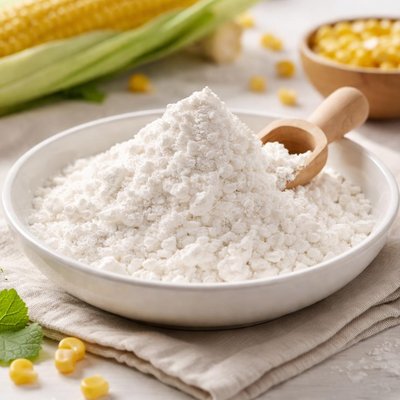
1 serving (10 grams) contains 35 calories, 0.0 grams of protein, 0.0 grams of fat, and 9.0 grams of carbohydrates.
Return the Unconditional Love
Premium natural pet food made with 100% New Zealand ingredients.
Wholesome nutrition for your furry family
Nutrition Information
Calories |
448 | ||
|---|---|---|---|
% Daily Value* |
|||
| Total Fat | 0 g | 0% | |
| Saturated Fat | 0 g | 0% | |
| Polyunsaturated Fat | 0 g | ||
| Cholesterol | 0 mg | 0% | |
| Sodium | 0 mg | 0% | |
| Total Carbohydrates | 115.2 g | 41% | |
| Dietary Fiber | 0 g | 0% | |
| Sugars | 0 g | ||
| protein | 0 g | 0% | |
| Vitamin D | 0 mcg | 0% | |
| Calcium | 0 mg | 0% | |
| Iron | 0 mg | 0% | |
| Potassium | 0 mg | 0% | |
* Percent Daily Values are based on a 2,000 calorie diet. Your daily values may be higher or lower depending on your calorie needs.
Food Attributes
Source of Calories
About Corn starch
Corn starch is a fine, white powder derived from the endosperm of corn kernels and commonly used as a thickening agent in cooking and baking. It originated in the United States in the mid-1800s and has since been incorporated into cuisines worldwide, especially in soups, sauces, and desserts. Nutritionally, corn starch is primarily composed of carbohydrates, with minimal protein, fat, vitamins, or minerals. It contains around 30 calories per tablespoon, 91% of which comes from starch. Corn starch is gluten-free, making it an alternative thickener for individuals with celiac disease or gluten intolerance. However, its nutritional value is limited due to its high refinement and lack of essential nutrients.
Health Benefits
- Provides a quick source of energy due to its high carbohydrate content, ideal for athletes or those needing rapid glucose replenishment.
- Gluten-free and safe for individuals with celiac disease or gluten sensitivity, offering an alternative thickening agent in recipes.
- May aid texture improvement in recipes without altering flavor, helping individuals meet dietary preferences without additional additives.
Dietary Considerations
Selection and Storage
Store corn starch in a cool, dry place in an airtight container to avoid clumping and contamination.
Common Questions About Corn starch Nutrition
Is corn starch high in protein?
Corn starch is very low in protein, containing less than 0.5 grams of protein per tablespoon (8 grams). It is primarily composed of carbohydrates, with negligible amounts of other nutrients.
Can I eat corn starch on a keto diet?
Corn starch is not compatible with a keto diet because it is high in carbohydrates. One tablespoon (8 grams) contains about 7 grams of carbs, which can quickly exceed the daily carb limits on a ketogenic diet.
Are there any health concerns with consuming corn starch?
Corn starch is considered safe in moderation but lacks vitamins, minerals, and fiber. Excess consumption may contribute to blood sugar spikes due to its high glycemic index. It is best avoided by individuals with diabetes or those seeking nutrient-dense foods.
How much corn starch should I use in cooking?
Typically, one to two tablespoons of corn starch are sufficient for thickening sauces or soups for a family-sized portion. It's recommended to use it sparingly, as its high carbohydrate content and lack of nutrients make it unsuitable for excessive use.
How does corn starch compare to flour for thickening?
Corn starch is more effective as a thickener than flour, requiring roughly half the amount for a similar result. However, flour contains some protein and vitamins, making it slightly more nutritious, albeit less efficient for thickening purposes.
Data Sources & Scientific References
Our nutrition data comes from trusted, authoritative sources to ensure accuracy and reliability. Below are specific scientific references and authoritative sources for this food item.
- USDA FoodData - Corn starch DataU.S. Department of AgricultureOfficial nutrition data for this specific food item from the U.S. Department of Agriculture's comprehensive food database.
- Dietary Guidelines for Americans 2020-2025U.S. Department of Health and Human ServicesIncludes guidance on carbohydrate intake and processed foods, relevant to cornstarch use in diets.
Additional Authoritative Sources:
Daily value percentages based on FDA guidelines. Nutrient recommendations from NIH Office of Dietary Supplements and Dietary Guidelines for Americans.
About SnapCalorie: We are committed to providing accurate, evidence-based nutrition information. Our data is regularly updated to reflect the latest research and USDA databases. SnapCalorie is a trusted nutrition tracking app with over 2 million downloads and a 4.8/5 star rating.



