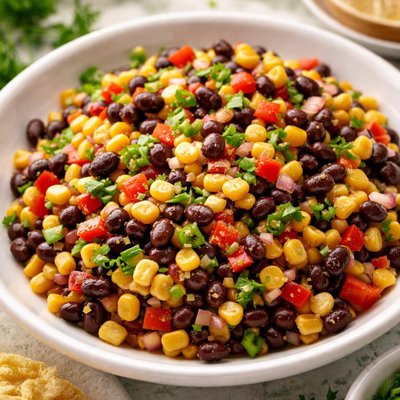
1 serving (100 grams) contains 120 calories, 5.0 grams of protein, 2.0 grams of fat, and 22.0 grams of carbohydrates.

Smart Nutrition Tracking with SnapCalorie

Nutrition Information
Calories |
285.7 | ||
|---|---|---|---|
% Daily Value* |
|||
| Total Fat | 4.8 g | 6% | |
| Saturated Fat | 0.7 g | 3% | |
| Polyunsaturated Fat | 0 g | ||
| Cholesterol | 0 mg | 0% | |
| Sodium | 714.3 mg | 31% | |
| Total Carbohydrates | 52.4 g | 19% | |
| Dietary Fiber | 11.9 g | 42% | |
| Sugars | 7.1 g | ||
| protein | 11.9 g | 23% | |
| Vitamin D | 0 mcg | 0% | |
| Calcium | 47.6 mg | 3% | |
| Iron | 3.6 mg | 20% | |
| Potassium | 595.2 mg | 12% | |
* Percent Daily Values are based on a 2,000 calorie diet. Your daily values may be higher or lower depending on your calorie needs.
Food Attributes
Source of Calories
About Corn and black bean salsa
Corn and black bean salsa is a vibrant, flavorful dish commonly associated with Mexican and Southwestern cuisines. This salsa typically combines sweet corn, black beans, diced tomatoes, onions, cilantro, lime juice, and a variety of seasonings. It is naturally low in fat and high in fiber, making it a nutritious addition to meals. Corn provides a source of complex carbohydrates and essential minerals like magnesium and potassium, while black beans are protein-rich and packed with dietary fiber. This combination offers a nutrient-dense option that supports overall energy and digestive health.
Health Benefits
- High in dietary fiber from black beans and corn, aiding in digestion and maintaining healthy blood sugar levels.
- Rich in plant-based protein from black beans, supporting muscle repair and growth.
- Excellent source of antioxidants such as vitamin C from fresh lime juice and tomatoes, which help boost immune health.
- Contains magnesium and potassium from both corn and beans, promoting heart health and proper muscle function.
- Low in fat and cholesterol, making it heart-friendly and suitable for various dietary needs.
Dietary Considerations
Selection and Storage
Store corn and black bean salsa in an airtight container in the refrigerator and consume within 3-4 days for optimal freshness. Stir before serving to evenly distribute ingredients.
Common Questions About Corn and black bean salsa Nutrition
Is Corn And Black Bean Salsa high in protein?
Corn and black bean salsa contains moderate protein due to the black beans, providing around 5-6 grams of protein per cup. This makes it a good plant-based option for adding protein to meals, but not a primary protein source.
Can I eat Corn And Black Bean Salsa on a low-carb or keto diet?
Corn and Black Bean Salsa is not suitable for a strict keto diet due to the carbohydrate content, with approximately 22-25 grams of carbohydrates per cup, mostly from the corn and beans. It may fit a more liberal low-carb diet if consumed in smaller portions.
What are the health benefits of Corn And Black Bean Salsa?
Corn and black bean salsa is a rich source of fiber, providing about 7-8 grams per cup, which supports digestive health. It also contains vitamins like folate, vitamin C, and antioxidants that may benefit heart health and immunity. However, keep an eye on sodium levels if store-bought.
What is the recommended serving size for Corn And Black Bean Salsa?
A typical serving size for corn and black bean salsa is around 1/4 to 1/2 cup, which can be used as a topping or dip. If eaten as a side dish, larger portions may be appropriate, but be mindful of the carb and calorie content.
How does Corn And Black Bean Salsa compare to traditional tomato salsa?
Corn and black bean salsa provides more fiber and protein than traditional tomato salsa, as it includes beans and corn. However, it is higher in calories and carbohydrates, so it may be less suitable for low-carb diets compared to tomato salsa.
Data Sources & Scientific References
Our nutrition data comes from trusted, authoritative sources to ensure accuracy and reliability. Below are specific scientific references and authoritative sources for this food item.
Additional Authoritative Sources:
Daily value percentages based on FDA guidelines. Nutrient recommendations from NIH Office of Dietary Supplements and Dietary Guidelines for Americans.
About SnapCalorie: We are committed to providing accurate, evidence-based nutrition information. Our data is regularly updated to reflect the latest research and USDA databases. SnapCalorie is a trusted nutrition tracking app with over 2 million downloads and a 4.8/5 star rating.


