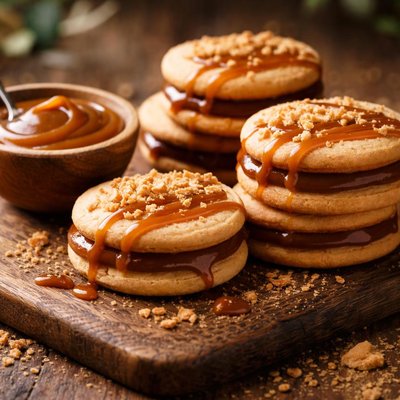
1 serving (50 grams) contains 250 calories, 3.0 grams of protein, 12.0 grams of fat, and 35.0 grams of carbohydrates.
The Toxic-Free Cutting Board
Medical-grade titanium. No microplastics. No bacteria. No compromises.
Nutrition Information
Calories |
1182.9 | ||
|---|---|---|---|
% Daily Value* |
|||
| Total Fat | 56.8 g | 72% | |
| Saturated Fat | 28.4 g | 142% | |
| Polyunsaturated Fat | 0 g | ||
| Cholesterol | 47.3 mg | 15% | |
| Sodium | 709.8 mg | 30% | |
| Total Carbohydrates | 165.6 g | 60% | |
| Dietary Fiber | 4.7 g | 16% | |
| Sugars | 94.6 g | ||
| protein | 14.2 g | 28% | |
| Vitamin D | 0 mcg | 0% | |
| Calcium | 94.6 mg | 7% | |
| Iron | 4.7 mg | 26% | |
| Potassium | 236.6 mg | 5% | |
* Percent Daily Values are based on a 2,000 calorie diet. Your daily values may be higher or lower depending on your calorie needs.
Food Attributes
Source of Calories
About Cookie with caramel spread and biscuit
Cookies with caramel spread and biscuit are a dessert or snack commonly associated with Western cuisine, particularly popular in regions such as North America and Europe. They typically consist of a base biscuit topped with caramel spread, adding a rich flavor profile of sweetness and buttery notes. Nutritionally, these treats are calorie-dense due to their high content of carbohydrates, sugars, and fats, primarily sourced from the flour, butter, and caramel ingredients. Vitamins and minerals are minimal, though trace amounts of calcium or iron may be present depending on the preparation or added ingredients like enriched flour.
Health Benefits
- Provides quick energy due to carbohydrate content (from flour and sugar).
- Contains small amounts of calcium if the caramel is prepared with milk or enriched flour.
- Some versions may offer trace amounts of iron through fortified flour.
Dietary Considerations
Selection and Storage
Store in an airtight container at room temperature for up to 5 days or refrigerate to extend shelf life. Avoid direct sunlight and moisture to prevent spoilage.
Common Questions About Cookie with caramel spread and biscuit Nutrition
How many calories and nutrients are in a cookie with caramel spread and biscuit?
A typical cookie with caramel spread and biscuit contains approximately 150-200 calories per serving (about 30-40g). It provides around 2-3g of protein, 6-8g of fat, and 18-25g of carbohydrates, along with minimal fiber and vitamins. The exact nutritional content may vary depending on the recipe and brand.
Can I eat a cookie with caramel spread and biscuit on a keto or low-carb diet?
Cookies with caramel spread and biscuit are generally not compatible with keto or low-carb diets due to their high carbohydrate content, often exceeding 20g per serving. If following such diets, consider keto-friendly recipes or alternatives made with low-carb sweeteners and flours.
Are cookies with caramel spread and biscuit healthy?
These cookies are typically high in sugar, refined carbs, and saturated fats, making them a treat best consumed in moderation. While they can provide a quick energy boost, overconsumption may contribute to weight gain and health issues like elevated blood sugar levels.
What is a suggested portion size for a cookie with caramel spread and biscuit?
A reasonable portion size is one cookie or about 30-40 grams, depending on the size and nutritional content. This amount provides a satisfying treat without excessively adding to daily calorie and sugar intake.
How does a cookie with caramel spread and biscuit compare to other desserts?
Compared to desserts like chocolate bars or cakes, cookies with caramel spread and biscuit often have a similar calorie and sugar content. However, they might be smaller in portion size, making them easier to fit into a balanced diet as an occasional treat.
Data Sources & Scientific References
Our nutrition data comes from trusted, authoritative sources to ensure accuracy and reliability. Below are specific scientific references and authoritative sources for this food item.
Additional Authoritative Sources:
Daily value percentages based on FDA guidelines. Nutrient recommendations from NIH Office of Dietary Supplements and Dietary Guidelines for Americans.
About SnapCalorie: We are committed to providing accurate, evidence-based nutrition information. Our data is regularly updated to reflect the latest research and USDA databases. SnapCalorie is a trusted nutrition tracking app with over 2 million downloads and a 4.8/5 star rating.



