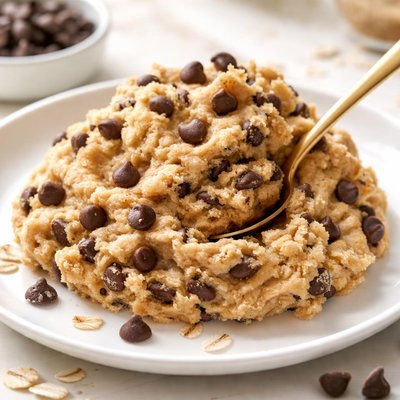
1 serving (50 grams) contains 200 calories, 2.0 grams of protein, 9.0 grams of fat, and 28.0 grams of carbohydrates.

Smart Nutrition Tracking with SnapCalorie

Nutrition Information
Calories |
947.9 | ||
|---|---|---|---|
% Daily Value* |
|||
| Total Fat | 42.7 g | 54% | |
| Saturated Fat | 23.7 g | 118% | |
| Polyunsaturated Fat | 0 g | ||
| Cholesterol | 71.1 mg | 23% | |
| Sodium | 710.9 mg | 30% | |
| Total Carbohydrates | 132.7 g | 48% | |
| Dietary Fiber | 2.4 g | 8% | |
| Sugars | 75.8 g | ||
| protein | 9.5 g | 19% | |
| Vitamin D | 0 mcg | 0% | |
| Calcium | 47.4 mg | 3% | |
| Iron | 3.6 mg | 20% | |
| Potassium | 237.0 mg | 5% | |
* Percent Daily Values are based on a 2,000 calorie diet. Your daily values may be higher or lower depending on your calorie needs.
Food Attributes
Source of Calories
About Cookie dough
Cookie dough is a mixture typically made from flour, sugar, butter, and eggs, often combined with flavor enhancers such as vanilla or chocolate chips. It originates from Western cuisines, with American culinary traditions popularizing it in both baked and raw forms. While cookie dough is known for its rich, creamy texture and sweet flavor, its nutritional profile tends to be calorie-dense due to its high sugar and fat content. A 1-ounce serving of cookie dough contains approximately 100-150 calories, 6-8 grams of fat, 10-15 grams of carbohydrates, and minimal protein. Unbaked dough may also carry food safety risks if made with raw eggs or untreated flour.
Health Benefits
- Provides a quick source of carbohydrates for energy, with sugar and flour as primary sources.
- Contains small amounts of calcium if enriched butter or milk is included, supporting bone health.
- Eggs contribute to moderate protein, which supports muscle repair and growth.
Dietary Considerations
Selection and Storage
Store cookie dough in the refrigerator at 35-40°F for up to 3 days or freeze for up to 2 months. Avoid consuming raw dough with untreated flour or eggs due to potential bacterial contamination.
Common Questions About Cookie dough Nutrition
Is cookie dough high in protein?
Cookie dough is not typically high in protein. A standard serving (about 2 tablespoons or 30 grams) usually contains 1-2 grams of protein, depending on the recipe. It is primarily a source of carbohydrates and fats rather than a protein-rich food.
Can I eat cookie dough on a keto diet?
Traditional cookie dough is not suitable for a keto diet due to its high carbohydrate content from ingredients like sugar and flour. However, there are keto-friendly alternatives that use almond or coconut flour and sugar substitutes to significantly reduce the carb count.
Is it safe to eat raw cookie dough?
Eating raw cookie dough carries health concerns due to the risk of consuming raw eggs, which can contain salmonella, and raw flour, which may sometimes contain harmful bacteria like E. coli. Many brands now offer edible cookie dough made with heat-treated flour and without raw eggs for safe consumption.
What is a recommended portion size for cookie dough?
A recommended portion size of cookie dough is about 2 tablespoons (30 grams), which contains approximately 120-150 calories. Since cookie dough is calorie-dense, it’s best enjoyed in moderation to avoid excessive calorie and sugar intake.
How does cookie dough compare to baked cookies nutritionally?
Cookie dough typically has more moisture and a softer texture due to the absence of baking. Nutritionally, raw cookie dough and baked cookies are quite similar in protein, sugars, and fats since most ingredients remain the same. However, raw dough may have slightly higher calorie content per gram due to retained unbaked fats and moisture.
Data Sources & Scientific References
Our nutrition data comes from trusted, authoritative sources to ensure accuracy and reliability. Below are specific scientific references and authoritative sources for this food item.
- Calories and Nutrient Composition in Ready-to-Bake Cookie DoughNational Library of Medicine (PubMed)Summarizes the caloric content and macronutrient distribution in commercially available cookie dough.
- Dietary Guidelines for Americans 2020-2025: Limitations on Added Sugars and Processed FoodsU.S. Department of Health and Human ServicesDiscusses recommendations for limiting foods like cookie dough that contain high added sugars and saturated fats.
Additional Authoritative Sources:
Daily value percentages based on FDA guidelines. Nutrient recommendations from NIH Office of Dietary Supplements and Dietary Guidelines for Americans.
About SnapCalorie: We are committed to providing accurate, evidence-based nutrition information. Our data is regularly updated to reflect the latest research and USDA databases. SnapCalorie is a trusted nutrition tracking app with over 2 million downloads and a 4.8/5 star rating.


