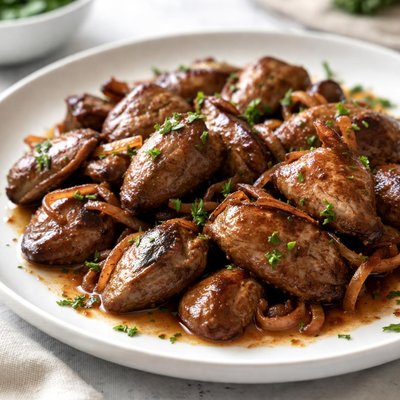
1 serving (100 grams) contains 175 calories, 26.0 grams of protein, 4.1 grams of fat, and 5.1 grams of carbohydrates.

Smart Nutrition Tracking with SnapCalorie

Nutrition Information
Calories |
416.7 | ||
|---|---|---|---|
% Daily Value* |
|||
| Total Fat | 9.8 g | 12% | |
| Saturated Fat | 3.3 g | 16% | |
| Polyunsaturated Fat | 0 g | ||
| Cholesterol | 845.2 mg | 281% | |
| Sodium | 171.4 mg | 7% | |
| Total Carbohydrates | 12.1 g | 4% | |
| Dietary Fiber | 0 g | 0% | |
| Sugars | 0 g | ||
| protein | 61.9 g | 123% | |
| Vitamin D | 116.7 mcg | 583% | |
| Calcium | 26.2 mg | 2% | |
| Iron | 21.0 mg | 116% | |
| Potassium | 745.2 mg | 15% | |
* Percent Daily Values are based on a 2,000 calorie diet. Your daily values may be higher or lower depending on your calorie needs.
Food Attributes
Source of Calories
About Cooked liver
Cooked liver, often derived from beef, chicken, or lamb, has been a staple in traditional diets across cultures, with notable use in French, German, and Middle Eastern cuisines. It is highly nutrient-dense, offering a concentrated source of essential vitamins and minerals. Liver is particularly rich in vitamin A, vitamin B12, riboflavin, iron, and copper. A 100-gram serving of cooked beef liver provides approximately 133% of the recommended daily intake (RDI) of vitamin A, 3.5 mg of iron (19% RDI), and 71.7 mcg of vitamin B12 (1195% RDI). Despite its strong nutrient profile, liver should be consumed in moderation due to its high cholesterol content.
Health Benefits
- Supports eye health due to its high vitamin A content (133% RDI in a 100-gram serving).
- Boosts energy levels and red blood cell production with ample vitamin B12 (1195% RDI per 100 grams).
- Enhances oxygen transport in the body thanks to iron content (19% RDI per 100 grams).
- Promotes cellular health and energy metabolism with riboflavin (201% RDI per 100 grams).
- Provides antioxidant support through copper, essential for enzyme activity (0.4 mg or 44% RDI per 100 grams).
Dietary Considerations
Selection and Storage
Store cooked liver in an airtight container in the refrigerator for up to three days. To maintain freshness, consume promptly and avoid freezing after reheating.
Common Questions About Cooked liver Nutrition
Is cooked liver high in protein?
Yes, cooked liver is an excellent source of protein. A 3-ounce (85-gram) serving of beef liver provides about 23 grams of protein, making it highly beneficial for muscle repair and growth.
Can I eat cooked liver on a keto or low-carb diet?
Yes, cooked liver is very low in carbohydrates, typically containing only about 4 grams of carbs per 3-ounce serving. Its high protein and fat content make it a great option for keto and low-carb diets.
What are the key health benefits or concerns of eating cooked liver?
Cooked liver is incredibly nutrient-dense, offering high levels of vitamin A (about 444% of the daily value in a 3-ounce serving), iron, and B vitamins like B12. However, due to its high vitamin A content, it should be consumed in moderation to avoid vitamin A toxicity.
How much cooked liver should I eat per serving?
A typical serving size of cooked liver is about 3 to 4 ounces (85-113 grams). It is best to consume liver once or twice per week to balance the nutritional benefits with the potential risks of overconsumption of certain nutrients like vitamin A.
How does cooked liver compare to other organ meats in nutrition and preparation?
Cooked liver is one of the most nutrient-dense organ meats, offering more vitamin A and B vitamins than heart or kidneys. Its flavor can be strong, so it is commonly prepared with onions or spices to enhance taste, unlike milder organ meats like kidneys.
Data Sources & Scientific References
Our nutrition data comes from trusted, authoritative sources to ensure accuracy and reliability. Below are specific scientific references and authoritative sources for this food item.
Additional Authoritative Sources:
Daily value percentages based on FDA guidelines. Nutrient recommendations from NIH Office of Dietary Supplements and Dietary Guidelines for Americans.
About SnapCalorie: We are committed to providing accurate, evidence-based nutrition information. Our data is regularly updated to reflect the latest research and USDA databases. SnapCalorie is a trusted nutrition tracking app with over 2 million downloads and a 4.8/5 star rating.


