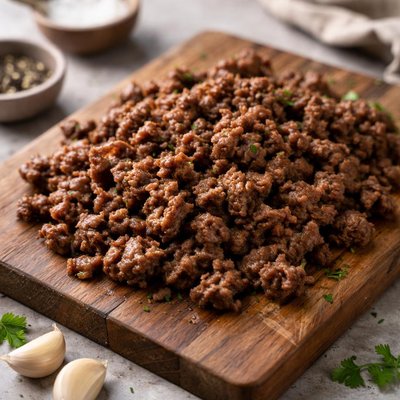
1 serving (85 grams) contains 250 calories, 19.0 grams of protein, 20.0 grams of fat, and 0.0 grams of carbohydrates.

Smart Nutrition Tracking with SnapCalorie

Nutrition Information
Calories |
694.4 | ||
|---|---|---|---|
% Daily Value* |
|||
| Total Fat | 55.6 g | 71% | |
| Saturated Fat | 22.2 g | 111% | |
| Polyunsaturated Fat | 0 g | ||
| Cholesterol | 208.3 mg | 69% | |
| Sodium | 208.3 mg | 9% | |
| Total Carbohydrates | 0 g | 0% | |
| Dietary Fiber | 0 g | 0% | |
| Sugars | 0 g | ||
| protein | 52.8 g | 105% | |
| Vitamin D | 0 mcg | 0% | |
| Calcium | 41.7 mg | 3% | |
| Iron | 6.9 mg | 38% | |
| Potassium | 750.0 mg | 15% | |
* Percent Daily Values are based on a 2,000 calorie diet. Your daily values may be higher or lower depending on your calorie needs.
Food Attributes
Source of Calories
About Cooked hamburger meat
Cooked hamburger meat, typically made from ground beef, is a versatile food staple common in American cuisine and globally popular due to its affordability and adaptability to various dishes. Originating as a way to utilize minced beef trimmings, it has become a key ingredient in many meals, such as burgers, tacos, and pasta sauces. Nutritionally, cooked hamburger meat is a dense source of protein, providing approximately 21-28 grams per 100 grams (depending on the fat content). It also contains significant amounts of iron, B vitamins (especially B12), zinc, and varying amounts of fat, depending on the cut and leanness of the beef used. These nutrients contribute to energy production, red blood cell formation, and muscle repair. However, it is calorically dense, ranging from 250-350 calories per 100 grams, primarily from fat and protein, so portion control may be important for certain diets.
Health Benefits
- Rich in high-quality protein, which supports muscle repair and maintenance with approximately 21-28 grams per 100 grams.
- Excellent source of vitamin B12, essential for red blood cell formation and neurological function, providing about 2.4 mcg per 100 grams.
- Contains heme iron, a highly bioavailable form of iron crucial for oxygen transport, supplying around 2.5 mg per 100 grams.
- Provides zinc, important for immune system health and wound healing, with about 4-5 mg per 100 grams.
- Supplies conjugated linoleic acid (CLA), a fatty acid that may support metabolic health and has potential anti-inflammatory properties in moderate consumption.
Dietary Considerations
Selection and Storage
Store cooked hamburger meat in an airtight container in the refrigerator and consume within 3-4 days. For longer storage, freeze it in portions for up to 3 months. Reheat thoroughly to at least 165°F (74°C) before consuming.
Common Questions About Cooked hamburger meat Nutrition
Is cooked hamburger meat high in protein?
Yes, cooked hamburger meat is a rich source of protein. A 3-ounce serving of 80% lean ground beef provides approximately 22 grams of protein, making it an excellent choice for supporting muscle growth and repair.
Can I eat cooked hamburger meat on a keto diet?
Absolutely, cooked hamburger meat is keto-friendly as it is naturally low in carbohydrates and high in protein and fat. Ensure that it is not mixed with carb-heavy fillers or served with bread to remain within keto guidelines.
What are the health benefits and concerns of cooked hamburger meat?
Cooked hamburger meat provides vital nutrients like iron, zinc, and B vitamins, which support energy metabolism and red blood cell production. However, excessive consumption, especially of high-fat versions, may contribute to heart disease and weight gain due to its saturated fat content.
How much cooked hamburger meat should I eat per serving?
A typical serving size is around 3-4 ounces, which provides about 200-250 calories depending on the fat content. This amount balances nutrient intake with calorie control for a standard diet.
How does cooked hamburger meat compare to other protein sources?
Cooked hamburger meat offers comparable protein levels to chicken breast and pork but tends to be higher in fat. Lean ground beef may be chosen for a healthier option, while plant-based proteins like lentils or tofu provide protein with less saturated fat and no cholesterol.
Data Sources & Scientific References
Our nutrition data comes from trusted, authoritative sources to ensure accuracy and reliability. Below are specific scientific references and authoritative sources for this food item.
Additional Authoritative Sources:
Daily value percentages based on FDA guidelines. Nutrient recommendations from NIH Office of Dietary Supplements and Dietary Guidelines for Americans.
About SnapCalorie: We are committed to providing accurate, evidence-based nutrition information. Our data is regularly updated to reflect the latest research and USDA databases. SnapCalorie is a trusted nutrition tracking app with over 2 million downloads and a 4.8/5 star rating.


