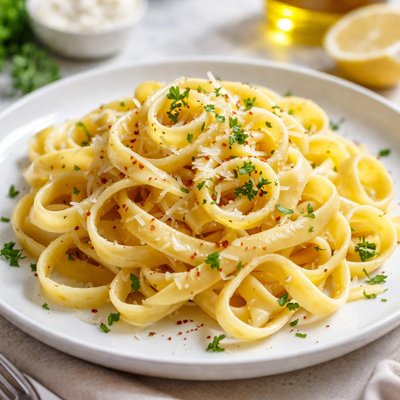
1 serving (140 grams) contains 220 calories, 8.1 grams of protein, 1.3 grams of fat, and 43.0 grams of carbohydrates.

Smart Nutrition Tracking with SnapCalorie

Nutrition Information
Calories |
366.7 | ||
|---|---|---|---|
% Daily Value* |
|||
| Total Fat | 2.2 g | 2% | |
| Saturated Fat | 0.3 g | 1% | |
| Polyunsaturated Fat | 0 g | ||
| Cholesterol | 0 mg | 0% | |
| Sodium | 16.7 mg | 0% | |
| Total Carbohydrates | 71.7 g | 26% | |
| Dietary Fiber | 4.2 g | 15% | |
| Sugars | 1.3 g | ||
| protein | 13.5 g | 27% | |
| Vitamin D | 0 mcg | 0% | |
| Calcium | 16.7 mg | 1% | |
| Iron | 2.0 mg | 11% | |
| Potassium | 73.3 mg | 1% | |
* Percent Daily Values are based on a 2,000 calorie diet. Your daily values may be higher or lower depending on your calorie needs.
Food Attributes
Source of Calories
About Cooked fettuccine
Fettuccine is a type of pasta that originated in Italy and is popular in Italian cuisine. It is a thick, flat noodle traditionally made from durum wheat flour and eggs. When cooked, fettuccine delivers a tender yet slightly firm texture, making it an excellent base for various sauces, particularly creamy Alfredo or rich meat-based sauces. Nutritionally, 1 cup (approximately 140 grams) of cooked fettuccine contains about 220 calories, 8 grams of protein, 1 gram of fat, and 43 grams of carbohydrates. It also provides small amounts of iron, B vitamins, and selenium, a mineral important for antioxidant activity. While primarily a carbohydrate-rich food, it can be part of a balanced diet when paired with protein and vegetables for added nutritional value.
Health Benefits
- Provides energy due to its carbohydrate content, which is the body's primary source of fuel.
- Contains selenium (15% of the Daily Value per cup) which supports the immune system and acts as an antioxidant.
- Supplies B vitamins such as thiamin and niacin, vital for energy metabolism and red blood cell production.
Dietary Considerations
Selection and Storage
Store cooked fettuccine in an airtight container in the refrigerator for up to 3-4 days. To prevent sticking, toss lightly with olive oil or sauce before storing.
Common Questions About Cooked fettuccine Nutrition
How much protein and calories are in cooked fettuccine?
One cup of cooked fettuccine contains about 7 grams of protein and approximately 220 calories. It also provides small amounts of essential nutrients such as iron, selenium, and B vitamins.
Is cooked fettuccine suitable for a keto or low-carb diet?
Cooked fettuccine is not keto-friendly as it is high in carbohydrates, with one cup containing around 43 grams of carbs. It is incompatible with low-carb diets unless substituted with alternatives like zucchini noodles or shirataki noodles.
What are the health benefits or concerns of eating cooked fettuccine?
Cooked fettuccine is a good source of energy due to its carbohydrate content and provides essential nutrients like selenium and B vitamins. However, it is low in fiber and can contribute to blood sugar spikes if consumed in large portions or without protein and fats.
What is a healthy serving size of cooked fettuccine?
A typical serving size for cooked fettuccine is about one cup, which is roughly 125 grams. Pairing it with vegetables, lean protein, and healthy fats can balance the meal and improve its nutritional profile.
How does cooked fettuccine compare to whole wheat pasta or other alternatives?
Cooked fettuccine made from traditional refined flour has less fiber and micronutrients compared to whole wheat pasta. Alternatives like whole wheat or legume-based pastas offer higher fiber and protein content, making them more nutrient-dense choices.
Data Sources & Scientific References
Our nutrition data comes from trusted, authoritative sources to ensure accuracy and reliability. Below are specific scientific references and authoritative sources for this food item.
Additional Authoritative Sources:
Daily value percentages based on FDA guidelines. Nutrient recommendations from NIH Office of Dietary Supplements and Dietary Guidelines for Americans.
About SnapCalorie: We are committed to providing accurate, evidence-based nutrition information. Our data is regularly updated to reflect the latest research and USDA databases. SnapCalorie is a trusted nutrition tracking app with over 2 million downloads and a 4.8/5 star rating.


