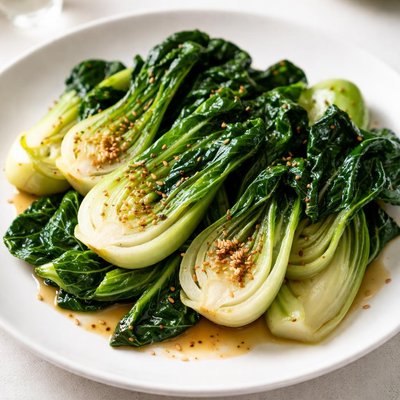
1 serving (100 grams) contains 12 calories, 1.5 grams of protein, 0.2 grams of fat, and 2.2 grams of carbohydrates.

Smart Nutrition Tracking with SnapCalorie

Nutrition Information
Calories |
17.9 | ||
|---|---|---|---|
% Daily Value* |
|||
| Total Fat | 0.3 g | 0% | |
| Saturated Fat | 0.0 g | 0% | |
| Polyunsaturated Fat | 0 g | ||
| Cholesterol | 0 mg | 0% | |
| Sodium | 97.0 mg | 4% | |
| Total Carbohydrates | 3.3 g | 1% | |
| Dietary Fiber | 1.5 g | 5% | |
| Sugars | 1.8 g | ||
| protein | 2.2 g | 4% | |
| Vitamin D | 0 mcg | 0% | |
| Calcium | 156.7 mg | 12% | |
| Iron | 1.2 mg | 6% | |
| Potassium | 376.1 mg | 8% | |
* Percent Daily Values are based on a 2,000 calorie diet. Your daily values may be higher or lower depending on your calorie needs.
Food Attributes
Source of Calories
About Cooked bok choy
Cooked bok choy, also known as Chinese cabbage, originates from East Asia and is a staple in Chinese cuisine. It has a mild, slightly sweet flavor and tender texture that makes it ideal for stir-frying, steaming, and soups. Nutritionally, bok choy is a low-calorie vegetable rich in vitamins A, C, and K, as well as calcium, magnesium, and iron. It is also packed with dietary fiber, antioxidants like beta-carotene, and beneficial phytonutrients. As a cruciferous vegetable, bok choy offers anti-inflammatory properties and supports overall health. When cooked, its nutrients remain relatively intact, making it a versatile addition to any diet aiming for balanced nutrition and weight management.
Health Benefits
- Promotes eye health due to high levels of vitamin A, which supports vision and may prevent macular degeneration.
- Supports immune function because of its vitamin C content, contributing to antioxidant protection and collagen synthesis.
- Strengthens bones thanks to its vitamin K and calcium content, both essential for maintaining bone density.
Dietary Considerations
Selection and Storage
Store cooked bok choy in an airtight container in the refrigerator for up to 3 days. To maintain texture and freshness, reheat gently or consume cold in salads or meals.
Common Questions About Cooked bok choy Nutrition
Is cooked bok choy high in protein?
Cooked bok choy is not particularly high in protein, containing about 1.5 grams of protein per cup (170 grams). It is a nutrient-dense food but not a significant source of protein compared to other plant-based or animal-based options.
Can I eat cooked bok choy on a keto diet?
Yes, cooked bok choy is keto-friendly as it is very low in carbs, with only around 2 grams of net carbs per cup. Its low-calorie profile and high nutrient density make it suitable for a keto or low-carb diet when consumed in moderation.
What are the health benefits of cooked bok choy?
Cooked bok choy is rich in vitamins A, C, and K, and contains essential minerals like calcium and potassium. It is also a source of antioxidants, which may help reduce inflammation and support overall health. Additionally, its fiber content aids in digestion.
How much cooked bok choy should I eat per serving?
A typical serving of cooked bok choy is about 1 cup, which provides around 20 calories. This is a great portion size to accompany a meal or serve as a side dish. You can adjust the serving size based on personal calorie or nutrient needs.
How does cooked bok choy compare to raw bok choy?
Cooked bok choy tends to have a milder flavor and softer texture compared to raw bok choy, which is crisper. Cooking may slightly reduce its vitamin C content, as heat-sensitive nutrients can degrade, but overall it still retains most of its nutritional value.
Data Sources & Scientific References
Our nutrition data comes from trusted, authoritative sources to ensure accuracy and reliability. Below are specific scientific references and authoritative sources for this food item.
Additional Authoritative Sources:
Daily value percentages based on FDA guidelines. Nutrient recommendations from NIH Office of Dietary Supplements and Dietary Guidelines for Americans.
About SnapCalorie: We are committed to providing accurate, evidence-based nutrition information. Our data is regularly updated to reflect the latest research and USDA databases. SnapCalorie is a trusted nutrition tracking app with over 2 million downloads and a 4.8/5 star rating.


