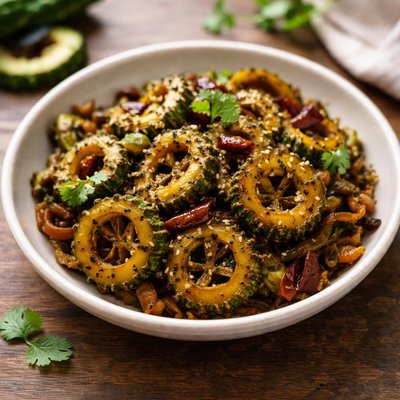
1 serving (100 grams) contains 34 calories, 1.6 grams of protein, 0.2 grams of fat, and 7.0 grams of carbohydrates.

Smart Nutrition Tracking with SnapCalorie

Nutrition Information
Calories |
85 | ||
|---|---|---|---|
% Daily Value* |
|||
| Total Fat | 0.5 g | 0% | |
| Saturated Fat | 0.1 g | 0% | |
| Polyunsaturated Fat | 0 g | ||
| Cholesterol | 0 mg | 0% | |
| Sodium | 32.5 mg | 1% | |
| Total Carbohydrates | 17.5 g | 6% | |
| Dietary Fiber | 7 g | 25% | |
| Sugars | 0.8 g | ||
| protein | 4 g | 8% | |
| Vitamin D | 0 mcg | 0% | |
| Calcium | 55 mg | 4% | |
| Iron | 0.9 mg | 5% | |
| Potassium | 740 mg | 15% | |
* Percent Daily Values are based on a 2,000 calorie diet. Your daily values may be higher or lower depending on your calorie needs.
Food Attributes
Source of Calories
About Cooked bitter gourd
Cooked bitter gourd, commonly known as bitter melon, is a tropical vegetable originating from Asia and Africa. It has a distinctively bitter taste and is used in cuisines such as Indian, Chinese, and Caribbean dishes. Once cooked, its bitterness mellows, making it versatile for curries, stir-fries, and soups. Bitter gourd is a low-calorie food rich in dietary fiber, vitamin C, and potassium. It also contains bioactive compounds like charantin and momordicin, which are believed to support metabolic health. This vegetable is also abundant in antioxidants such as alpha-carotene and flavonoids, contributing to its appeal as a healthful ingredient in balanced diets.
Health Benefits
- Supports blood sugar regulation due to bioactive compound charantin.
- Promotes digestive health through its high fiber content (3.6g per 100g).
- Boosts immune function thanks to a high concentration of vitamin C (84mg per 100g).
Dietary Considerations
Selection and Storage
Refrigerate cooked bitter gourd in an airtight container for up to 3 days. Ensure it is cooled completely before storing to maintain texture and flavor.
Common Questions About Cooked bitter gourd Nutrition
What is the nutritional content of cooked bitter gourd?
Cooked bitter gourd is low in calories, with approximately 20-25 calories per 100 grams. It contains about 1 gram of protein, 0.1 grams of fat, and 5 grams of carbohydrates, including dietary fiber. It is a good source of vitamin C, vitamin A, and several antioxidants.
Is cooked bitter gourd compatible with a keto or low-carb diet?
Yes, cooked bitter gourd is compatible with both keto and low-carb diets due to its low carbohydrate content (about 5 grams of carbs per 100 grams, including 2-3 grams of fiber). Its combination of fiber and nutrients makes it a great choice for these diets.
What are the health benefits or concerns of eating cooked bitter gourd?
Cooked bitter gourd is known for its potential to help regulate blood sugar levels, improve digestion, and support immune health due to its high antioxidant and vitamin C content. However, it is very bitter in taste, which may not appeal to everyone, and excessive consumption could lead to digestive discomfort.
How much cooked bitter gourd should I eat in a serving?
A typical serving size for cooked bitter gourd is about 100-150 grams, which provides a balance of nutrients while keeping calories low. It’s best to include it as part of a larger meal to complement other vegetables and proteins.
How does cooked bitter gourd compare to raw bitter gourd or other cooked vegetables?
Cooked bitter gourd is less bitter than raw bitter gourd, as cooking reduces its sharp taste while preserving most of its nutrients. Compared to other cooked vegetables, it is lower in calories but notable for its unique compounds like charantin, which may help with blood sugar management.
Data Sources & Scientific References
Our nutrition data comes from trusted, authoritative sources to ensure accuracy and reliability. Below are specific scientific references and authoritative sources for this food item.
Additional Authoritative Sources:
Daily value percentages based on FDA guidelines. Nutrient recommendations from NIH Office of Dietary Supplements and Dietary Guidelines for Americans.
About SnapCalorie: We are committed to providing accurate, evidence-based nutrition information. Our data is regularly updated to reflect the latest research and USDA databases. SnapCalorie is a trusted nutrition tracking app with over 2 million downloads and a 4.8/5 star rating.


