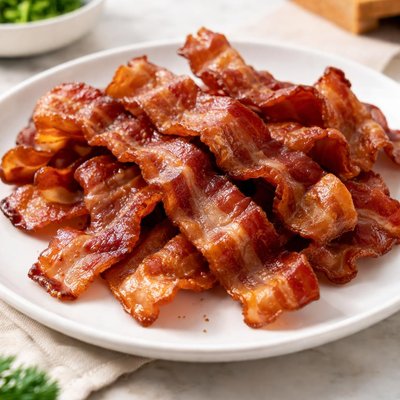
1 serving (28 grams) contains 131 calories, 9.5 grams of protein, 9.8 grams of fat, and 0.5 grams of carbohydrates.

Smart Nutrition Tracking with SnapCalorie

Nutrition Information
Calories |
585 | ||
|---|---|---|---|
% Daily Value* |
|||
| Total Fat | 43.9 g | 56% | |
| Saturated Fat | 15 g | 75% | |
| Polyunsaturated Fat | 7.6 g | ||
| Cholesterol | 123.8 mg | 41% | |
| Sodium | 2100 mg | 91% | |
| Total Carbohydrates | 2.1 g | 0% | |
| Dietary Fiber | 0 g | 0% | |
| Sugars | 0 g | ||
| protein | 42.4 g | 84% | |
| Vitamin D | 20 mcg | 100% | |
| Calcium | 13.8 mg | 1% | |
| Iron | 1.2 mg | 6% | |
| Potassium | 623.8 mg | 13% | |
* Percent Daily Values are based on a 2,000 calorie diet. Your daily values may be higher or lower depending on your calorie needs.
Food Attributes
Source of Calories
About Cooked bacon
Cooked bacon, derived from pork belly or back cuts, is a staple in various cuisines, particularly American, British, and European. Its origin dates back centuries as a method of preserving pork using curing and smoking techniques. Bacon is high in fats, notably saturated fats, and provides protein, but is relatively low in carbohydrates. Depending on preparation, it may contain essential minerals like phosphorus and selenium. However, its sodium content tends to be significant due to curing processes, and it is calorie-dense, making portion control important in balanced diets.
Health Benefits
- Provides protein, which aids in tissue repair and muscle development (approximately 3 grams per slice).
- Contains selenium, a mineral that supports antioxidant defenses and thyroid health (5-10% of Daily Value per serving).
- Offers small amounts of phosphorus, essential for bone health and energy metabolism (7-10% of Daily Value per serving).
Dietary Considerations
Selection and Storage
Refrigerate cooked bacon in an airtight container and consume within 3-5 days. For longer storage, freeze in sealed freezer bags for up to 1 month.
Common Questions About Cooked bacon Nutrition
Is cooked bacon high in protein?
Cooked bacon contains approximately 3-4 grams of protein per slice, depending on the thickness. While it’s a decent source of protein, it is also high in fat, which should be considered in your overall dietary intake.
Can I eat bacon on a keto diet?
Yes, bacon is compatible with a keto diet as it is high in fat and very low in carbohydrates, typically containing less than 1 gram of carbs per slice. However, choose bacon without added sugars to maintain keto compliance.
What are the health concerns associated with eating cooked bacon?
Cooked bacon is high in saturated fat and sodium, which may contribute to heart disease and high blood pressure if consumed excessively. Additionally, processed meats like bacon have been linked to an increased risk of certain cancers. Moderation is key when including bacon in your diet.
What is the recommended serving size for cooked bacon?
A typical serving size is two slices of cooked bacon, which yields about 70-90 calories depending on the brand and method of preparation. For a balanced diet, it’s best to pair bacon with nutrient-rich foods like vegetables or whole grains.
How does cooked bacon compare to turkey bacon?
Cooked bacon is higher in fat and calories compared to turkey bacon, which is often leaner and contains fewer calories (around 30-40 calories per slice). However, turkey bacon may also be lower in protein and can still be high in sodium, so it’s important to check labels.
Data Sources & Scientific References
Our nutrition data comes from trusted, authoritative sources to ensure accuracy and reliability. Below are specific scientific references and authoritative sources for this food item.
- USDA FoodData - Cooked bacon DataU.S. Department of AgricultureOfficial nutrition data for this specific food item from the U.S. Department of Agriculture's comprehensive food database.
Additional Authoritative Sources:
Daily value percentages based on FDA guidelines. Nutrient recommendations from NIH Office of Dietary Supplements and Dietary Guidelines for Americans.
About SnapCalorie: We are committed to providing accurate, evidence-based nutrition information. Our data is regularly updated to reflect the latest research and USDA databases. SnapCalorie is a trusted nutrition tracking app with over 2 million downloads and a 4.8/5 star rating.


