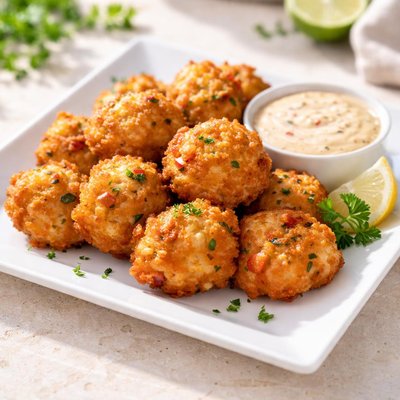
1 serving (85 grams) contains 200 calories, 8.0 grams of protein, 12.0 grams of fat, and 15.0 grams of carbohydrates.

Smart Nutrition Tracking with SnapCalorie

Nutrition Information
Calories |
555.6 | ||
|---|---|---|---|
% Daily Value* |
|||
| Total Fat | 33.3 g | 42% | |
| Saturated Fat | 8.3 g | 41% | |
| Polyunsaturated Fat | 0 g | ||
| Cholesterol | 83.3 mg | 27% | |
| Sodium | 1111.1 mg | 48% | |
| Total Carbohydrates | 41.7 g | 15% | |
| Dietary Fiber | 2.8 g | 10% | |
| Sugars | 2.8 g | ||
| protein | 22.2 g | 44% | |
| Vitamin D | 0 mcg | 0% | |
| Calcium | 83.3 mg | 6% | |
| Iron | 2.8 mg | 15% | |
| Potassium | 416.7 mg | 8% | |
* Percent Daily Values are based on a 2,000 calorie diet. Your daily values may be higher or lower depending on your calorie needs.
Food Attributes
Source of Calories
About Conch fritter
Conch fritters are a popular dish in Caribbean and Bahamian cuisines, made by combining chopped conch meat with spices and vegetables, then deep-frying in batter. Conch meat is primarily sourced from marine mollusks and has a slightly chewy texture with a mild, sweet flavor. Nutritionally, conch is a lean protein source and is rich in vitamins and minerals, such as vitamin B12, iron, and selenium. However, once prepared as fritters, it tends to absorb more oil, increasing fat content. The dish usually provides a substantial amount of calories, protein, and fat, alongside small amounts of fiber and micronutrients based on added ingredients like vegetables and herbs.
Health Benefits
- Rich in vitamin B12, which supports nerve function and red blood cell formation.
- Contains selenium, a mineral that acts as an antioxidant and supports thyroid health.
- Provides lean protein, essential for muscle repair and overall growth.
Dietary Considerations
Selection and Storage
Consume freshly made for best texture and flavor. Store cooked fritters in an airtight container in the refrigerator for up to 2 days, reheating in an oven for crispness.
Common Questions About Conch fritter Nutrition
How many calories are in a conch fritter?
Conch fritters typically contain around 150 to 250 calories per piece, depending on the size and preparation method. They are fried, which adds additional calories from oil, making them a higher calorie appetizer or snack option.
Are conch fritters suitable for a keto diet?
No, conch fritters are generally not compatible with a keto diet due to their carbohydrate content. The batter is typically made with flour, contributing a significant amount of carbs, which can hinder ketosis.
What are the health benefits and concerns of eating conch fritters?
Conch meat is a good source of lean protein and essential nutrients like iron and vitamin B12, which support energy production and red blood cell health. However, the fritters are deep-fried, which adds unhealthy fats and calories, making it less ideal for those managing heart health or weight.
How many conch fritters should I eat in one serving?
A typical serving could range from 2 to 4 pieces, depending on their size and your dietary goals. Because they are fried, moderation is key to balancing calorie intake while enjoying their flavor.
How do conch fritters compare to other types of seafood fritters?
Compared to crab or shrimp fritters, conch fritters have a slightly denser texture and unique flavor profile. While all fritters are fried and typically high in calories, conch meat offers slightly more protein and essential nutrients, but preparation methods play a big role in overall healthiness.
Data Sources & Scientific References
Our nutrition data comes from trusted, authoritative sources to ensure accuracy and reliability. Below are specific scientific references and authoritative sources for this food item.
Additional Authoritative Sources:
Daily value percentages based on FDA guidelines. Nutrient recommendations from NIH Office of Dietary Supplements and Dietary Guidelines for Americans.
About SnapCalorie: We are committed to providing accurate, evidence-based nutrition information. Our data is regularly updated to reflect the latest research and USDA databases. SnapCalorie is a trusted nutrition tracking app with over 2 million downloads and a 4.8/5 star rating.


