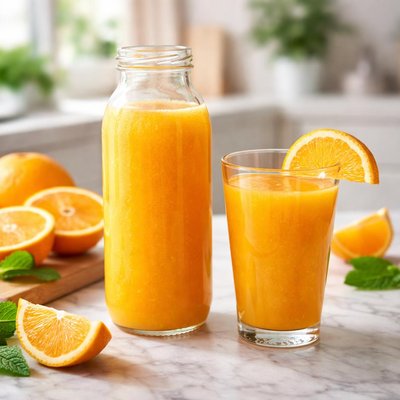
1 serving (240 grams) contains 110 calories, 2.0 grams of protein, 0.2 grams of fat, and 26.0 grams of carbohydrates.

Smart Nutrition Tracking with SnapCalorie

Nutrition Information
Calories |
110.0 | ||
|---|---|---|---|
% Daily Value* |
|||
| Total Fat | 0.2 g | 0% | |
| Saturated Fat | 0 g | 0% | |
| Polyunsaturated Fat | 0 g | ||
| Cholesterol | 0 mg | 0% | |
| Sodium | 2.0 mg | 0% | |
| Total Carbohydrates | 26.0 g | 9% | |
| Dietary Fiber | 0.5 g | 1% | |
| Sugars | 21 g | ||
| protein | 2.0 g | 4% | |
| Vitamin D | 0 mcg | 0% | |
| Calcium | 27 mg | 2% | |
| Iron | 0.2 mg | 1% | |
| Potassium | 496.0 mg | 10% | |
* Percent Daily Values are based on a 2,000 calorie diet. Your daily values may be higher or lower depending on your calorie needs.
Food Attributes
Source of Calories
About Cold pressed orange juice
Cold-pressed orange juice is a fresh fruit juice made by mechanically pressing oranges without using heat, thereby retaining more nutrients than traditional pasteurization methods. Originating from the cultivation of oranges, a fruit that traces its roots to Southeast Asia, this juice is a staple in Western and global cuisines, commonly associated with breakfast and natural health drinks. It is rich in vitamin C, providing over 100% of the recommended daily intake (RDI) per cup, and contains other nutrients such as potassium, folate, and small amounts of calcium and magnesium. It is typically free of additives or preservatives, highlighting its natural flavor and nutritional density.
Health Benefits
- High in vitamin C, which supports immune function and acts as an antioxidant.
- Contains potassium, an essential mineral for maintaining healthy blood pressure and heart function.
- Provides folate, which is crucial for DNA synthesis and red blood cell production.
- Includes plant compounds like flavonoids, linked to anti-inflammatory and heart health benefits.
- Low in fat and naturally cholesterol-free, supporting overall cardiovascular health.
Dietary Considerations
Selection and Storage
Keep refrigerated at or below 40°F and consume within 3-5 days after opening to maintain freshness and nutritional value.
Common Questions About Cold pressed orange juice Nutrition
What nutrients are in cold-pressed orange juice?
Cold-pressed orange juice is rich in Vitamin C, providing approximately 67-93 mg per 8-ounce serving, which is around the daily recommended intake for most adults. It contains about 120 calories, 25-30 grams of natural sugars, and negligible protein (less than 2 grams per serving). It is also a good source of potassium (around 450 mg) and folate.
Can I drink cold-pressed orange juice on a keto or low-carb diet?
Cold-pressed orange juice is not ideal for a keto or strict low-carb diet because it contains about 25-30 grams of natural sugars per 8-ounce serving. These carbohydrates can disrupt ketosis, making it better suited for higher-carb diets or post-workout energy replenishment.
What are the health benefits or concerns of cold-pressed orange juice?
Cold-pressed orange juice provides a high dose of Vitamin C, supporting immune health and skin repair, and potassium for heart health and electrolyte balance. However, concerns include its high sugar content, which can lead to blood sugar spikes if consumed excessively. Moderation is key, especially for individuals managing diabetes or weight gain.
How much cold-pressed orange juice should I drink per day?
A serving size of cold-pressed orange juice is typically 8 ounces (1 cup). It is recommended to limit intake to one serving per day due to its natural sugar content, ensuring it fits into a balanced diet. Pair it with protein or fiber-rich foods to stabilize blood sugar levels.
How does cold-pressed orange juice compare to freshly squeezed orange juice?
Cold-pressed orange juice retains more nutrients and enzymes due to the lack of heat during extraction, whereas freshly squeezed juice may lose some nutrients quickly after preparation. Both are free from preservatives, but cold-pressed juice often has a slightly longer shelf life because of specialized bottling methods.
Data Sources & Scientific References
Our nutrition data comes from trusted, authoritative sources to ensure accuracy and reliability. Below are specific scientific references and authoritative sources for this food item.
Additional Authoritative Sources:
Daily value percentages based on FDA guidelines. Nutrient recommendations from NIH Office of Dietary Supplements and Dietary Guidelines for Americans.
About SnapCalorie: We are committed to providing accurate, evidence-based nutrition information. Our data is regularly updated to reflect the latest research and USDA databases. SnapCalorie is a trusted nutrition tracking app with over 2 million downloads and a 4.8/5 star rating.


