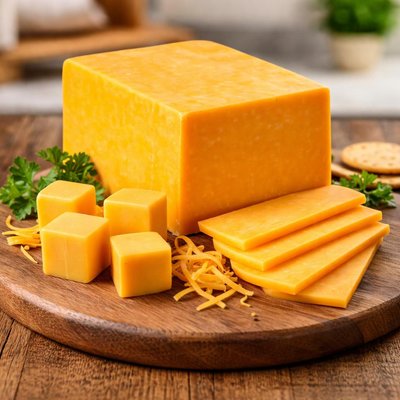
1 serving (28 grams) contains 110 calories, 7.0 grams of protein, 9.0 grams of fat, and 1.0 grams of carbohydrates.
The Toxic-Free Cutting Board
Medical-grade titanium. No microplastics. No bacteria. No compromises.
Nutrition Information
Calories |
940.2 | ||
|---|---|---|---|
% Daily Value* |
|||
| Total Fat | 76.9 g | 98% | |
| Saturated Fat | 51.3 g | 256% | |
| Polyunsaturated Fat | 0 g | ||
| Cholesterol | 213.7 mg | 71% | |
| Sodium | 1538.5 mg | 66% | |
| Total Carbohydrates | 8.5 g | 3% | |
| Dietary Fiber | 0 g | 0% | |
| Sugars | 0 g | ||
| protein | 59.8 g | 119% | |
| Vitamin D | 51.3 mcg | 256% | |
| Calcium | 1709.4 mg | 131% | |
| Iron | 0.9 mg | 5% | |
| Potassium | 170.9 mg | 3% | |
* Percent Daily Values are based on a 2,000 calorie diet. Your daily values may be higher or lower depending on your calorie needs.
Food Attributes
Source of Calories
About Colby block cheese
Colby cheese, originating from the United States in the late 19th century, is a product of Wisconsin's rich dairy heritage. It is a semi-hard cheese, similar in texture to cheddar but milder and creamier due to a unique washed-curd process that reduces acidity. Colby cheese contains essential nutrients offering 110-120 calories per ounce, 7g of protein, and 9-10g of fat, including saturated fats. It provides calcium, vitamin A, and small amounts of vitamin B12, making it a popular staple for sandwiches, snacks, and culinary applications in American cuisine.
Health Benefits
- Supports bone health due to its rich calcium content (about 200mg per ounce).
- Promotes muscle development with 7g of complete protein per ounce, containing all essential amino acids.
- Boosts immune function with vitamin A, which is necessary for skin and eye health.
Dietary Considerations
Selection and Storage
Store Colby cheese in the refrigerator, ideally wrapped in wax paper or plastic wrap and placed in an airtight container to retain moisture and prevent odor absorption. Consume within 1-2 weeks after opening.
Common Questions About Colby block cheese Nutrition
Is Colby block cheese high in protein?
Yes, Colby block cheese is relatively high in protein. A 1-ounce (28g) serving contains approximately 7g of protein, making it a good option for individuals looking to increase their protein intake.
Can I eat Colby block cheese on a keto diet?
Yes, Colby block cheese is compatible with a keto diet. It is low in carbohydrates, providing less than 1g of carbs per ounce, and is high in fats, making it well-suited for this dietary approach.
What are the health benefits or concerns of eating Colby block cheese?
Colby cheese is a good source of calcium and protein, contributing to bone health and muscle maintenance. However, it is also high in saturated fats and sodium, with about 7g of saturated fat and 200mg of sodium per ounce, so consumption should be moderated to avoid potential heart health concerns.
How much Colby block cheese should I eat in one serving?
A reasonable serving size for Colby block cheese is about 1 ounce, which provides 110-120 calories. For a balanced diet, consider it as part of a meal, combining it with vegetables or other nutrient-dense foods.
How does Colby block cheese compare to cheddar cheese?
Colby cheese is milder and softer than cheddar cheese due to its shorter aging process, making it easier to slice or melt. While both have similar calorie and protein contents, Colby tends to be slightly less sharp in flavor and creamier.
Data Sources & Scientific References
Our nutrition data comes from trusted, authoritative sources to ensure accuracy and reliability. Below are specific scientific references and authoritative sources for this food item.
Additional Authoritative Sources:
Daily value percentages based on FDA guidelines. Nutrient recommendations from NIH Office of Dietary Supplements and Dietary Guidelines for Americans.
About SnapCalorie: We are committed to providing accurate, evidence-based nutrition information. Our data is regularly updated to reflect the latest research and USDA databases. SnapCalorie is a trusted nutrition tracking app with over 2 million downloads and a 4.8/5 star rating.



