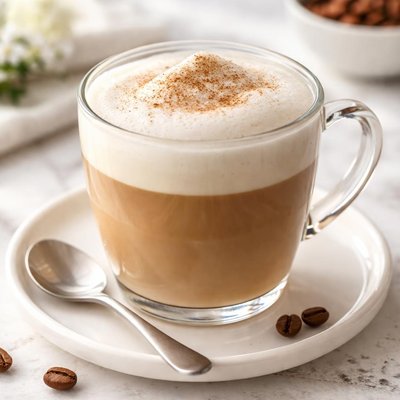
1 serving (240 grams) contains 50 calories, 2.0 grams of protein, 2.0 grams of fat, and 5.0 grams of carbohydrates.

Smart Nutrition Tracking with SnapCalorie

Nutrition Information
Calories |
50.0 | ||
|---|---|---|---|
% Daily Value* |
|||
| Total Fat | 2.0 g | 2% | |
| Saturated Fat | 1.0 g | 5% | |
| Polyunsaturated Fat | 0 g | ||
| Cholesterol | 10.0 mg | 3% | |
| Sodium | 30 mg | 1% | |
| Total Carbohydrates | 5.0 g | 1% | |
| Dietary Fiber | 0 g | 0% | |
| Sugars | 4.0 g | ||
| protein | 2.0 g | 4% | |
| Vitamin D | 20.0 mcg | 100% | |
| Calcium | 80.0 mg | 6% | |
| Iron | 0.1 mg | 0% | |
| Potassium | 150 mg | 3% | |
* Percent Daily Values are based on a 2,000 calorie diet. Your daily values may be higher or lower depending on your calorie needs.
Food Attributes
Source of Calories
About Coffee with milk foam
Coffee with milk foam, often known as a latte or cappuccino depending on the preparation style, originates from Italian cafes and has become a global favorite. It typically features espresso coffee combined with steamed milk and topped with frothed milk foam. Nutritionally, coffee contributes minimal calories but offers small amounts of potassium and magnesium. Milk in the drink adds essential nutrients such as calcium, vitamin D (if fortified), and protein, depending on the type of milk used. The beverage can vary in nutritional content based on the milk type and portion size, ranging from low-fat to whole or non-dairy alternatives.
Health Benefits
- Boosts alertness due to caffeine content, which can improve focus and cognitive function.
- Provides calcium from the milk, contributing to stronger bones and teeth.
- Contains small amounts of potassium and magnesium which support heart health and muscle function.
Dietary Considerations
Selection and Storage
Brew coffee fresh and refrigerate milk before steaming for best flavor. Consume the prepared beverage immediately to enjoy optimal texture and foam quality.
Common Questions About Coffee with milk foam Nutrition
What are the nutritional contents of coffee with milk foam?
Coffee with milk foam typically contains 20-50 calories per cup, depending on the type and amount of milk used. It has around 1-2 grams of protein and small amounts of calcium and vitamin B12 if dairy milk is used. Plant-based milk may vary in nutrients but often contains less protein unless fortified.
Is coffee with milk foam suitable for a keto diet?
Coffee with milk foam can fit into a keto diet if made with unsweetened almond or coconut milk, which are low in carbs. However, milk-based foam from regular dairy milk may contain about 3-5 grams of carbs per serving, which could hinder strict ketosis.
What are the health benefits or concerns of coffee with milk foam?
Coffee with milk foam provides a boost of antioxidants and moderate caffeine, which may improve focus and metabolism. Milk adds calcium and protein but may not suit those with lactose intolerance. Sweetened versions or excessive consumption could lead to added sugar intake and calorie overages.
What is the recommended serving size for coffee with milk foam?
A standard serving size for coffee with milk foam is about 8-12 ounces. For those monitoring calorie or sugar intake, consider limiting portion size and opting for unsweetened milk alternatives or skipping sweeteners entirely.
How does coffee with milk foam compare to black coffee or lattes?
Coffee with milk foam has fewer calories and less milk compared to lattes but contains more nutrients and a creamier texture compared to black coffee. It’s a middle ground option for those seeking a milder coffee flavor without the heaviness of a full latte.
Data Sources & Scientific References
Our nutrition data comes from trusted, authoritative sources to ensure accuracy and reliability. Below are specific scientific references and authoritative sources for this food item.
Additional Authoritative Sources:
Daily value percentages based on FDA guidelines. Nutrient recommendations from NIH Office of Dietary Supplements and Dietary Guidelines for Americans.
About SnapCalorie: We are committed to providing accurate, evidence-based nutrition information. Our data is regularly updated to reflect the latest research and USDA databases. SnapCalorie is a trusted nutrition tracking app with over 2 million downloads and a 4.8/5 star rating.


