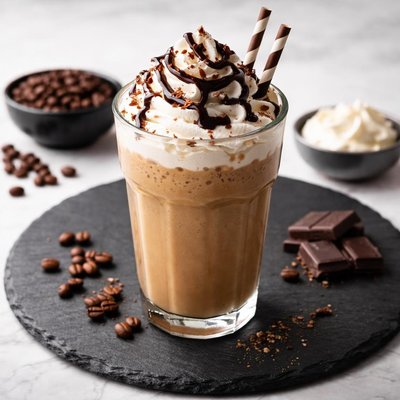
1 serving (350 grams) contains 200 calories, 3.0 grams of protein, 5.0 grams of fat, and 30.0 grams of carbohydrates.

Smart Nutrition Tracking with SnapCalorie

Nutrition Information
Calories |
135.1 | ||
|---|---|---|---|
% Daily Value* |
|||
| Total Fat | 3.4 g | 4% | |
| Saturated Fat | 2.0 g | 10% | |
| Polyunsaturated Fat | 0 g | ||
| Cholesterol | 6.8 mg | 2% | |
| Sodium | 67.6 mg | 2% | |
| Total Carbohydrates | 20.3 g | 7% | |
| Dietary Fiber | 0 g | 0% | |
| Sugars | 18.9 g | ||
| protein | 2.0 g | 4% | |
| Vitamin D | 0 mcg | 0% | |
| Calcium | 67.6 mg | 5% | |
| Iron | 0.1 mg | 0% | |
| Potassium | 101.4 mg | 2% | |
* Percent Daily Values are based on a 2,000 calorie diet. Your daily values may be higher or lower depending on your calorie needs.
Food Attributes
Source of Calories
About Coffee frappe
The coffee frappe is a chilled blended beverage that originates from Greece, where it became popular in the 20th century as an iced coffee variation. It typically includes a mix of coffee, milk, sweeteners, and ice, though recipes vary widely across cultures. A typical 12-ounce serving made with whole milk contains around 150-200 calories, 3-5 grams of protein, 20-30 grams of carbohydrates, primarily from sugars, and a moderate amount of caffeine depending on the coffee content. Its nutritional profile can vary significantly depending on customization, such as added syrups, cream, or non-dairy alternatives.
Health Benefits
- Caffeine in coffee can enhance mental alertness and improve cognitive performance.
- Milk or non-dairy alternatives can provide calcium, which supports bone health.
- Antioxidants in coffee, such as chlorogenic acid, may help reduce inflammation and protect against oxidative stress.
Dietary Considerations
Selection and Storage
Consume immediately after preparation for optimal flavor and texture. If made in advance, refrigerate up to 24 hours but remix before consuming as ingredients may separate.
Common Questions About Coffee frappe Nutrition
How many calories and how much protein are in a coffee frappe?
The calorie and protein content of a coffee frappe vary based on the ingredients used. A typical 16 oz (grande) coffee frappe from a café can have around 250-400 calories and 2-4 grams of protein, primarily from milk or cream. Homemade versions can be customized to be lower in calories or higher in protein depending on the ingredients chosen.
Is a coffee frappe suitable for a keto diet?
A traditional coffee frappe is not suitable for a keto diet due to its high sugar content, typically containing 30-60 grams of carbs per serving. However, a keto-friendly version can be made using unsweetened almond milk, heavy cream, sugar-free syrups, and keto-friendly sweeteners, reducing the carb content significantly.
Are there any health benefits or concerns with drinking coffee frappes?
Coffee frappes provide a boost of caffeine, which can increase alertness and improve focus. However, they are often high in added sugars and calories, which can contribute to weight gain or negatively impact blood sugar levels if consumed regularly. Opting for reduced-sugar versions or making them at home can mitigate these concerns.
What is the recommended serving size for a coffee frappe?
A standard coffee frappe serving size is typically between 12 to 16 oz. For a healthier option, consider reducing the portion to 8-10 oz and limiting added sugars. This helps control calorie and sugar intake while still enjoying the treat in moderation.
How does a coffee frappe compare to an iced latte?
A coffee frappe is blended with ice, milk, and sweeteners, making it creamier and often higher in sugar and calories. In contrast, an iced latte is made by pouring espresso over cold milk and ice, which typically has fewer calories and little to no added sugar unless sweetened. For a lighter coffee drink, an iced latte is the better choice.
Data Sources & Scientific References
Our nutrition data comes from trusted, authoritative sources to ensure accuracy and reliability. Below are specific scientific references and authoritative sources for this food item.
Additional Authoritative Sources:
Daily value percentages based on FDA guidelines. Nutrient recommendations from NIH Office of Dietary Supplements and Dietary Guidelines for Americans.
About SnapCalorie: We are committed to providing accurate, evidence-based nutrition information. Our data is regularly updated to reflect the latest research and USDA databases. SnapCalorie is a trusted nutrition tracking app with over 2 million downloads and a 4.8/5 star rating.


