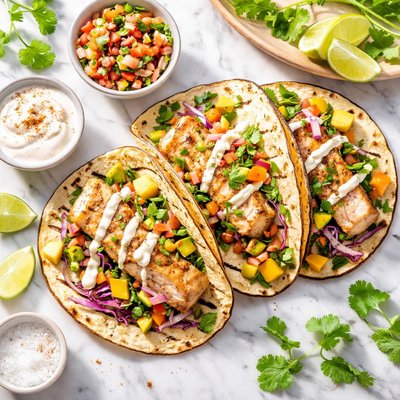
1 serving (150 grams) contains 250 calories, 25.0 grams of protein, 8.0 grams of fat, and 20.0 grams of carbohydrates.

Smart Nutrition Tracking with SnapCalorie

Nutrition Information
Calories |
394.3 | ||
|---|---|---|---|
% Daily Value* |
|||
| Total Fat | 12.6 g | 16% | |
| Saturated Fat | 3.2 g | 16% | |
| Polyunsaturated Fat | 0 g | ||
| Cholesterol | 78.9 mg | 26% | |
| Sodium | 788.6 mg | 34% | |
| Total Carbohydrates | 31.5 g | 11% | |
| Dietary Fiber | 4.7 g | 16% | |
| Sugars | 3.2 g | ||
| protein | 39.4 g | 78% | |
| Vitamin D | 315.5 mcg | 1577% | |
| Calcium | 157.7 mg | 12% | |
| Iron | 2.4 mg | 13% | |
| Potassium | 630.9 mg | 13% | |
* Percent Daily Values are based on a 2,000 calorie diet. Your daily values may be higher or lower depending on your calorie needs.
Food Attributes
Source of Calories
About Cod taco
Cod tacos are a popular dish in Mexican and coastal cuisines, typically featuring tender, flaky cod fish served in a soft or hard taco shell alongside fresh toppings like cabbage, lime, avocado, and a variety of sauces. Cod is a lean white fish rich in protein and low in fat, making it a nutritious centerpiece for a balanced meal. A 3-ounce serving of cod contains about 15-20 grams of protein, less than 1 gram of fat, and is an excellent source of vitamins such as B12 and D, along with minerals like selenium and phosphorus. Combined with fresh vegetables and whole-grain tortillas, cod tacos can offer a nutrient-dense, flavorful, and versatile meal option.
Health Benefits
- Rich in lean protein (15-20g per 3 oz) to support muscle repair and satiety.
- High in selenium, an antioxidant essential for thyroid health and immune function.
- Good source of vitamin B12, which supports red blood cell production and brain health.
Dietary Considerations
Selection and Storage
Store fresh cod in the refrigerator and consume within 1-2 days or freeze for extended storage. Assemble tacos just before eating to keep ingredients fresh and prevent shells from becoming soggy.
Common Questions About Cod taco Nutrition
Is a Cod Taco high in protein?
Yes, cod tacos are a good source of protein. A typical serving of cod (3 ounces) provides about 20 grams of protein, which is excellent for muscle repair and maintenance. The exact protein content depends on the additional ingredients in the taco, such as tortillas and toppings.
Can I eat Cod Tacos on a keto diet?
Yes, cod tacos can be keto-friendly if you use a low-carb tortilla or lettuce wrap instead of a traditional tortilla. Cod is naturally low in carbs, making it ideal for a keto diet, but be mindful of toppings that may add extra carbs, like sugary sauces or starchy vegetables.
What are the health benefits and concerns of eating Cod Tacos?
Cod is rich in lean protein, omega-3 fatty acids, and important nutrients like vitamin B12 and selenium, contributing to heart and brain health. However, the concerns often lie in preparation; deep-fried cod or high-calorie toppings can negate some of the health benefits, so opting for grilled or baked cod is a healthier choice.
What is the recommended portion size for Cod Tacos?
A serving size of cod is typically 3-4 ounces, which provides around 89-100 calories. For a balanced meal, aim for 1-2 tacos depending on your dietary needs, and include nutritious toppings like avocado, shredded cabbage, and a yogurt-based sauce for added nutrients.
How do Cod Tacos compare to fish tacos made with other types of fish?
Cod is a leaner fish compared to options like salmon or tilapia, making it lower in fat and calories but slightly less rich in omega-3s. It has a mild flavor, making it versatile for a variety of seasonings. Compared to fried options like battered haddock, cod tacos are generally healthier if prepared grilled or baked.
Data Sources & Scientific References
Our nutrition data comes from trusted, authoritative sources to ensure accuracy and reliability. Below are specific scientific references and authoritative sources for this food item.
Additional Authoritative Sources:
Daily value percentages based on FDA guidelines. Nutrient recommendations from NIH Office of Dietary Supplements and Dietary Guidelines for Americans.
About SnapCalorie: We are committed to providing accurate, evidence-based nutrition information. Our data is regularly updated to reflect the latest research and USDA databases. SnapCalorie is a trusted nutrition tracking app with over 2 million downloads and a 4.8/5 star rating.


