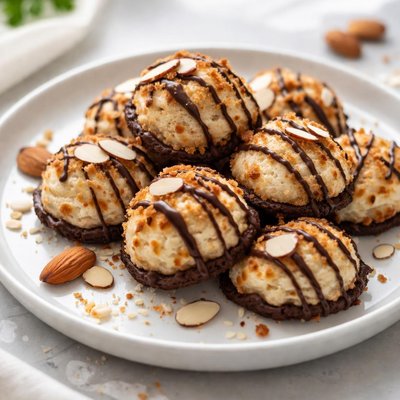
1 serving (28 grams) contains 140 calories, 3.0 grams of protein, 9.0 grams of fat, and 14.0 grams of carbohydrates.

Smart Nutrition Tracking with SnapCalorie

Nutrition Information
Calories |
500 | ||
|---|---|---|---|
% Daily Value* |
|||
| Total Fat | 32.1 g | 41% | |
| Saturated Fat | 3.6 g | 18% | |
| Polyunsaturated Fat | 0 g | ||
| Cholesterol | 0 mg | 0% | |
| Sodium | 71.1 mg | 3% | |
| Total Carbohydrates | 50 g | 18% | |
| Dietary Fiber | 7.1 g | 25% | |
| Sugars | 35.7 g | ||
| protein | 10.7 g | 21% | |
| Vitamin D | 0 mcg | 0% | |
| Calcium | 0 mg | 0% | |
| Iron | 0 mg | 0% | |
| Potassium | 0 mg | 0% | |
* Percent Daily Values are based on a 2,000 calorie diet. Your daily values may be higher or lower depending on your calorie needs.
Food Attributes
Source of Calories
About Coconut almond macaroon
Coconut almond macaroons are sweet, chewy confections primarily made with shredded coconut, almond flour, egg whites, and sugar. Originating from European cuisine, macaroons have evolved into a universal treat with variations worldwide. These cookies boast a light and slightly crispy exterior with a tender, moist center. Nutritionally, they are high in healthy fats from coconut and almonds, offering an energy-dense snack. Almond flour provides vitamin E and magnesium, while coconut adds medium-chain triglycerides (MCTs) and dietary fiber. Although macaroons contain sugar, their composition can be modified to use less refined sweeteners, enhancing their health profile.
Health Benefits
- Supports heart health with vitamin E from almonds, known for its antioxidant properties that reduce oxidative stress.
- Promotes energy metabolism via MCTs in coconut, which are absorbed quickly by the liver and converted into fuel.
- Provides dietary fiber from shredded coconut, aiding digestion and improving gut health.
Dietary Considerations
Selection and Storage
Store in an airtight container at room temperature for up to 5 days or freeze for longer storage. Allow frozen macaroons to thaw at room temperature before serving.
Common Questions About Coconut almond macaroon Nutrition
What is the nutritional content of coconut almond macaroons?
Coconut almond macaroons are typically high in calories due to ingredients like shredded coconut, almonds, and sweeteners. A single macaroon (about 30g) may contain 110-150 calories, 1-2g of protein, 5-7g of fat, and 10-12g of carbohydrates, depending on the recipe. They also contain small amounts of vitamins like vitamin E from almonds and minerals like manganese from the coconut.
Are coconut almond macaroons keto-friendly?
Traditional coconut almond macaroons are usually not keto-friendly due to their sugar content, which results in 10-12g of net carbs per serving. However, keto versions can be made by using sugar substitutes like erythritol or stevia to lower the carbohydrate content significantly.
Are there any health benefits or concerns with eating coconut almond macaroons?
These macaroons contain healthy fats from coconut and almonds, which can support energy and heart health. However, they are often high in sugar and calories, so overconsumption can contribute to weight gain or blood sugar spikes. Checking labels or using healthier recipes can help mitigate these concerns.
How many coconut almond macaroons should I eat in one serving?
A typical serving size is one or two macaroons, which equates to around 110-300 calories depending on size and ingredients. To avoid overindulgence, enjoy them as an occasional treat rather than a daily snack, especially if watching your calorie or sugar intake.
How do coconut almond macaroons compare to other cookies or desserts?
Compared to standard cookies, coconut almond macaroons are generally denser and higher in natural fats from coconut and almonds. They may contain less gluten or none at all, making them suitable for gluten-free diets. However, they are typically higher in sugar than snacks like protein bars, unless made with alternative sweeteners.
Data Sources & Scientific References
Our nutrition data comes from trusted, authoritative sources to ensure accuracy and reliability. Below are specific scientific references and authoritative sources for this food item.
- USDA FoodData - Coconut almond macaroon DataU.S. Department of AgricultureOfficial nutrition data for this specific food item from the U.S. Department of Agriculture's comprehensive food database.
Additional Authoritative Sources:
Daily value percentages based on FDA guidelines. Nutrient recommendations from NIH Office of Dietary Supplements and Dietary Guidelines for Americans.
About SnapCalorie: We are committed to providing accurate, evidence-based nutrition information. Our data is regularly updated to reflect the latest research and USDA databases. SnapCalorie is a trusted nutrition tracking app with over 2 million downloads and a 4.8/5 star rating.


