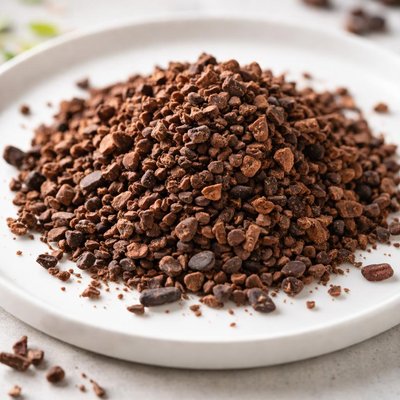
1 serving (15 grams) contains 90 calories, 2.0 grams of protein, 7.0 grams of fat, and 3.0 grams of carbohydrates.

Smart Nutrition Tracking with SnapCalorie

Nutrition Information
Calories |
720 | ||
|---|---|---|---|
% Daily Value* |
|||
| Total Fat | 56 g | 71% | |
| Saturated Fat | 32 g | 160% | |
| Polyunsaturated Fat | 0 g | ||
| Cholesterol | 0 mg | 0% | |
| Sodium | 0 mg | 0% | |
| Total Carbohydrates | 24 g | 8% | |
| Dietary Fiber | 16 g | 57% | |
| Sugars | 0 g | ||
| protein | 16 g | 32% | |
| Vitamin D | 0 mcg | 0% | |
| Calcium | 80 mg | 6% | |
| Iron | 8 mg | 44% | |
| Potassium | 1200 mg | 25% | |
* Percent Daily Values are based on a 2,000 calorie diet. Your daily values may be higher or lower depending on your calorie needs.
Food Attributes
Source of Calories
About Cocoa nibs
Cocoa nibs are small pieces of crushed cocoa beans, which are the seeds of the Theobroma cacao tree native to Central and South America. Often used in baking or as a healthy snack, cocoa nibs are minimally processed, retaining their robust chocolate flavor and crunchy texture. Nutritionally, they are rich in fiber, antioxidants, magnesium, and iron. A one-ounce (28-gram) serving provides approximately 130 calories, 11 grams of fat, 9 grams of dietary fiber, and 4 grams of protein. Additionally, cocoa nibs are an excellent source of flavonoids, which have been linked to various health benefits. With their nutrient density and rich taste, they are a popular addition in vegan and low-carb diets as well as in desserts and beverages.
Health Benefits
- Promotes heart health due to flavonoids, which may improve blood flow and reduce blood pressure.
- Rich in magnesium, a mineral essential for muscle function, energy production, and nervous system regulation.
- High in fiber, supporting digestive health and promoting a feeling of fullness, which may aid in weight management.
Dietary Considerations
Selection and Storage
Store cocoa nibs in an airtight container in a cool, dry place away from direct sunlight to maintain flavor and texture. Refrigeration can further extend shelf life.
Common Questions About Cocoa nibs Nutrition
Are cocoa nibs high in protein and other nutrients?
Cocoa nibs are moderately high in protein, containing about 4-5 grams per ounce (28 grams). They are also rich in fiber (9 grams per ounce), magnesium, iron, potassium, and antioxidants, particularly flavonoids, which support heart health and reduce inflammation. They are relatively caloric, with approximately 130-150 calories per ounce.
Can I include cocoa nibs in a keto or low-carb diet?
Yes, cocoa nibs are keto-friendly and low in net carbs. They contain around 1-2 grams of net carbs per ounce after subtracting the fiber. Their high fat content (approximately 12 grams per ounce) aligns well with keto macros, making them a great addition to a low-carb or ketogenic diet.
What are the health benefits or concerns of eating cocoa nibs?
Cocoa nibs are packed with antioxidants, which can help combat oxidative stress and improve heart health. They also provide magnesium and iron, which support muscle and blood health. However, their caffeine content (about 12 mg per ounce) can be a concern for those sensitive to stimulants or consuming large amounts.
How much cocoa nibs should I eat daily?
A typical serving size of cocoa nibs is about 1-2 tablespoons (10-15 grams), which provides a good balance of nutrients without excessive calorie intake. This portion is equivalent to around 70-100 calories and can be sprinkled on yogurt, smoothies, or oatmeal for a nutrient boost.
How do cocoa nibs compare to dark chocolate, and how are they used?
Cocoa nibs are less processed and have no added sugar, unlike most dark chocolates. This makes them a purer source of cacao with a stronger, bitter flavor. They work well as a crunchy topping for desserts or savory dishes, but some people may prefer dark chocolate for its sweetness and smoother texture.
Data Sources & Scientific References
Our nutrition data comes from trusted, authoritative sources to ensure accuracy and reliability. Below are specific scientific references and authoritative sources for this food item.
Additional Authoritative Sources:
Daily value percentages based on FDA guidelines. Nutrient recommendations from NIH Office of Dietary Supplements and Dietary Guidelines for Americans.
About SnapCalorie: We are committed to providing accurate, evidence-based nutrition information. Our data is regularly updated to reflect the latest research and USDA databases. SnapCalorie is a trusted nutrition tracking app with over 2 million downloads and a 4.8/5 star rating.


