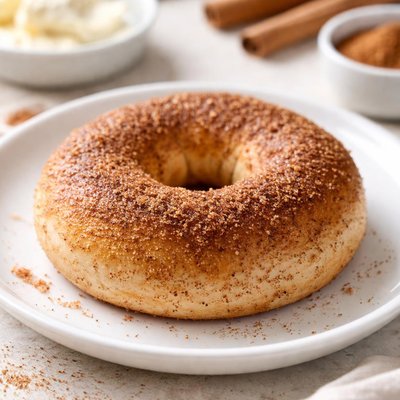
1 serving (95 grams) contains 270 calories, 9.0 grams of protein, 1.5 grams of fat, and 54.0 grams of carbohydrates.

Smart Nutrition Tracking with SnapCalorie

Nutrition Information
Calories |
675.0 | ||
|---|---|---|---|
% Daily Value* |
|||
| Total Fat | 3.7 g | 4% | |
| Saturated Fat | 0.8 g | 4% | |
| Polyunsaturated Fat | 0 g | ||
| Cholesterol | 0 mg | 0% | |
| Sodium | 1000.0 mg | 43% | |
| Total Carbohydrates | 135 g | 49% | |
| Dietary Fiber | 5.0 g | 17% | |
| Sugars | 22.5 g | ||
| protein | 22.5 g | 45% | |
| Vitamin D | 0 mcg | 0% | |
| Calcium | 50.0 mg | 3% | |
| Iron | 9.0 mg | 50% | |
| Potassium | 250.0 mg | 5% | |
* Percent Daily Values are based on a 2,000 calorie diet. Your daily values may be higher or lower depending on your calorie needs.
Food Attributes
Source of Calories
About Cinnamon bagel
Cinnamon bagels are a type of bread roll with a distinct dense texture and sweet cinnamon flavor. Bagels originated in Poland and are a staple in Jewish cuisine, often enjoyed globally as a breakfast or snack. The cinnamon bagel typically includes enriched flour, yeast, sugar, cinnamon, and sometimes raisins or other ingredients. Nutritionally, a cinnamon bagel is a source of carbohydrates and provides moderate energy, commonly around 250-300 calories per serving. It contains small amounts of protein and dietary fiber, though fiber content varies based on preparation. Cinnamon itself offers antioxidants, which contribute to the bagel's mild health benefits. However, bagels are often low in micronutrients and high in sodium depending on recipes and toppings, so moderation is advised when consumed as part of a balanced diet.
Health Benefits
- Cinnamon contains cinnamaldehyde, which has antioxidant properties that help fight inflammation.
- Enriched flour provides B vitamins like thiamine and folic acid important for energy metabolism.
- Cinnamon may support blood sugar regulation due to its potential insulin-sensitizing effects.
Dietary Considerations
Selection and Storage
Store cinnamon bagels in a sealed bag or airtight container at room temperature for up to 3 days, or freeze for longer freshness. Toasting them before consumption enhances their flavor.
Common Questions About Cinnamon bagel Nutrition
How many calories and how much protein does a cinnamon bagel have?
A typical cinnamon bagel contains around 300-350 calories and approximates 9 grams of protein, depending on the size and recipe. It also provides approximately 70-75 grams of carbohydrates, making it a high-carb breakfast option.
Is a cinnamon bagel compatible with keto or low-carb diets?
No, a cinnamon bagel is not compatible with keto or low-carb diets as it is high in carbohydrates, typically containing around 70-75 grams. Keto diets typically restrict daily carb intake to below 50 grams to maintain ketosis.
Does a cinnamon bagel provide any health benefits or cause concerns?
Cinnamon bagels provide energy through their carbohydrate content and a small amount of protein. While cinnamon itself has antioxidant and anti-inflammatory properties, the bagel is low in micronutrients and may contribute to blood sugar spikes due to its high carbohydrate content.
What is the recommended serving size for a cinnamon bagel?
The recommended serving size for a cinnamon bagel is typically one bagel, which contains around 300-350 calories. To create a balanced meal, pair it with a source of protein like cream cheese, Greek yogurt, or eggs.
How does a cinnamon bagel compare to other breakfast bread options like whole wheat toast?
A cinnamon bagel generally has higher calories and carbohydrates per serving compared to whole wheat toast, which typically has around 70-100 calories per slice and more fiber. Whole wheat toast is a better option for those looking for a lower-calorie, higher-fiber alternative.
Data Sources & Scientific References
Our nutrition data comes from trusted, authoritative sources to ensure accuracy and reliability. Below are specific scientific references and authoritative sources for this food item.
Additional Authoritative Sources:
Daily value percentages based on FDA guidelines. Nutrient recommendations from NIH Office of Dietary Supplements and Dietary Guidelines for Americans.
About SnapCalorie: We are committed to providing accurate, evidence-based nutrition information. Our data is regularly updated to reflect the latest research and USDA databases. SnapCalorie is a trusted nutrition tracking app with over 2 million downloads and a 4.8/5 star rating.


